
 AI photo
Soft Lemon Cookies
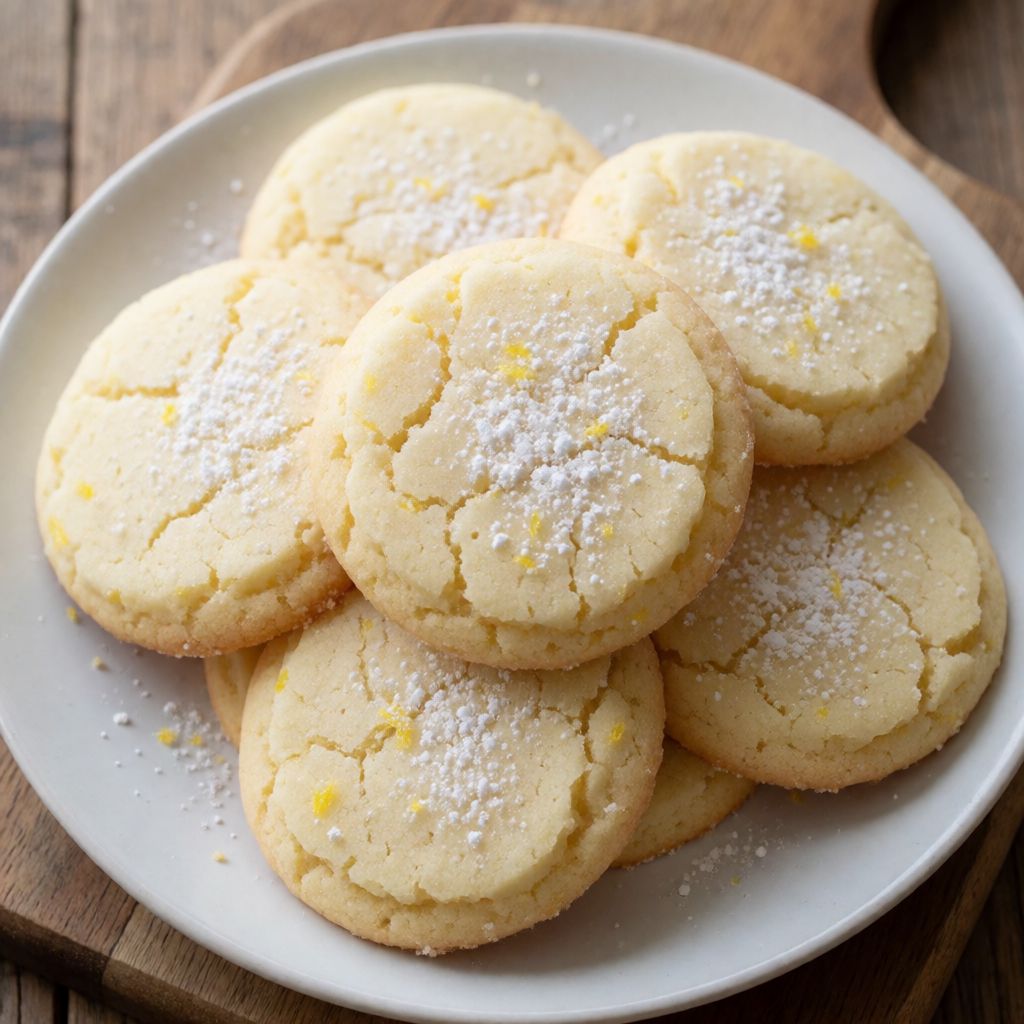
Soft, fragrant lemon cookies with a delicate citrus flavour, coated in sugar and icing sugar.
Labels are worked out automatically from the ingredients and can be wrong. Check the packaging if it matters to you.
Ingredients
- 250 g Plain flour
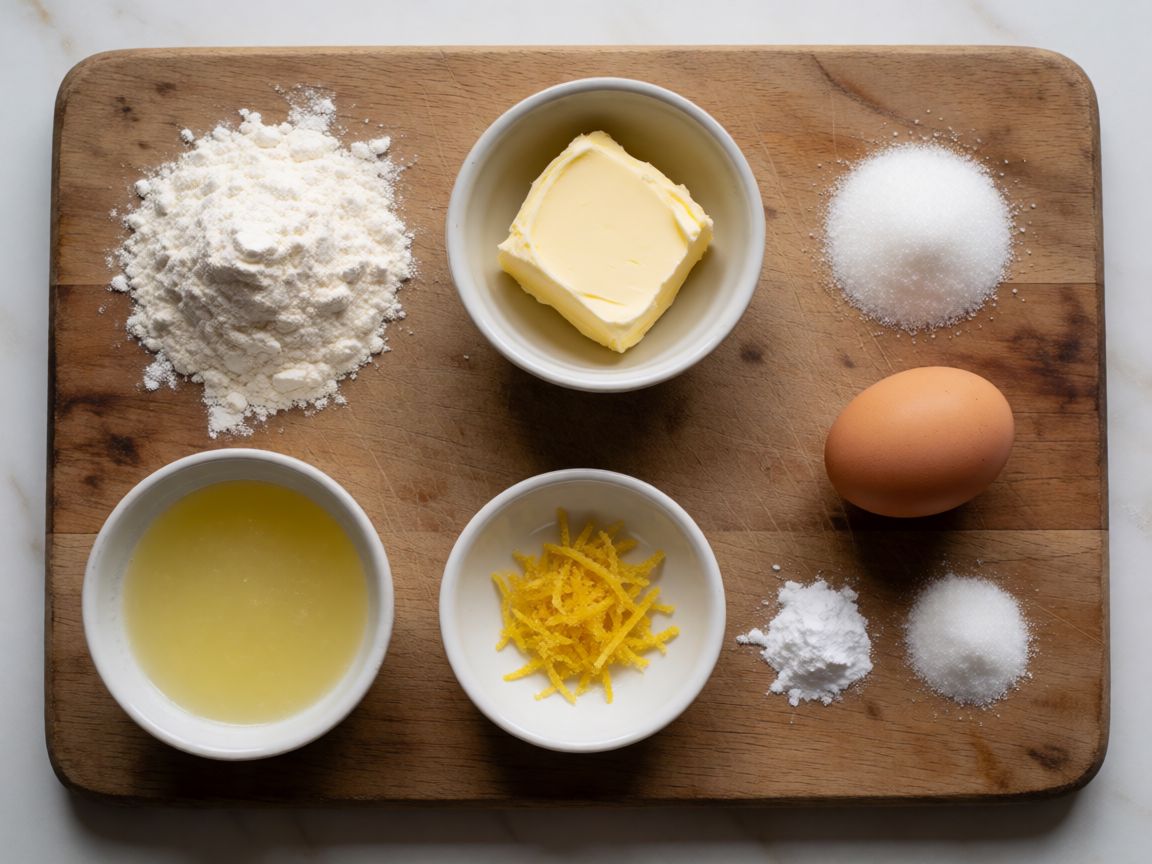
- 100 g Butter softened
- 100 g Caster sugar
- 1 pcs Eggs
- 1 pcs Lemon juice from one lemon
- 1 pcs Lemon zest from one lemon
- 8 g Baking powder
- Caster sugar for coating
- Icing sugar for dusting








Steps
Put the softened butter and caster sugar in a bowl and beat with a mixer until smooth.
Add the egg, lemon juice and lemon zest, and continue beating until the ingredients are well combined.
Add the sifted flour and baking powder. Knead the dough until soft and smooth.
Cover the dough and leave it in the fridge for about an hour.
60 minShape walnut-sized balls, roll them in sugar and icing sugar, and place them on a baking tray lined with parchment paper.
Bake in a preheated fan oven at 180°C for 8–10 minutes.
9 minLet the cookies cool before serving.
This is a soft, pale little cookie that cracks on top and gives slightly under a thumb — closer to a tender shortbread with lemon stirred through than to a crisp biscuit. The whole dish turns on two things: how much air you beat into the butter at the start, and how little you let it colour at the end.
Creaming butter and sugar isn't decoration — it's the only rising agent that actually does the heavy lifting here. Eight grams of baking powder nudges the dough, but the fine bubbles beaten into soft butter are what keep the crumb from going dense and biscuity. That's why the butter has to be properly soft, not melted: melted butter won't hold air, it'll just coat the sugar crystals and sit there.
The hour in the fridge isn't about flavour developing, whatever anyone tells you — it's about the butter going firm again after all that beating warmed it. Skip it and the dough is too soft to roll into balls; it slumps in the oven before the crumb has set, and you get flat, greasy puddles instead of domed cookies. An hour is the floor, not a target — if your kitchen runs warm, give it longer, until the dough feels like cold putty, not dough.
On the ingredients, one at a time. Plain flour, not strong or self-raising — you want a soft, short crumb, not structure, and the raising is already handled separately by the baking powder. If you've only got self-raising in the cupboard, leave out the baking powder and accept the dough will be slightly more delicate to shape; it's not a straight swap, it's a compromise.
Butter: it has to be the kind that's soft enough to dent with a finger but not greasy-looking — that's the window where it'll hold air when beaten. Unsalted is the honest choice, because you're already balancing sweet against sharp lemon and don't want a third flavour arguing in the mix. Margarine will work structurally but tastes of nothing in particular, which in a cookie this plain matters more than you'd think — butter is doing half the flavour work here, not just the texture.
The egg binds the dough and adds the moisture that keeps these soft rather than crumbly-dry; a UK medium egg is what the proportions assume. Lemon juice and zest together, from one lemon — the juice brings the sharp top note and a little acidity that the baking powder can lean on, the zest brings the oil-based lemon smell that actually lasts through baking (juice alone cooks off its scent fast). Buy an unwaxed lemon if you can, or scrub a waxed one properly in hot water first — that wax coating on supermarket lemons is there for shelf life, not for your dough, and it zests into the batter otherwise.
Caster sugar, not granulated, both inside the dough and for rolling — the smaller crystal dissolves into the butter cleanly during creaming, and on the outside it gives a fine, even grain rather than a crunchy shell. The icing sugar you roll the balls in second does something different: it sits as a dry powder on top and cracks visibly as the cookie spreads slightly in the oven, which is where that classic crackled-sugar look on this kind of cookie comes from — it's not icing in the frosting sense, it's a dusting that tells you, visually, exactly how far the dough has moved.
Baking powder: eight grams is a measured, modest amount — enough to lift, not enough to make these puff up like a scone. Don't substitute bicarbonate of soda gram-for-gram; it needs an acid to react against and reacts faster and differently, and you'll change both the rise and the aftertaste.
A fan oven at 180°C matters because fan ovens move hot air around the tray evenly — no hot back corner, no pale front — which is exactly what you need when the difference between right and overbaked is measured in a slight shift of colour, not minutes. On an ordinary domestic oven without a fan, you're looking at roughly 10°C higher to get the same effect, and you'll want to turn the tray round partway through, because static ovens are honest about having uneven heat and yours probably does too. These keep well in a tin for a few days, and go better with tea with milk than with anything stronger — the softness and the plain lemon don't need competing with.