
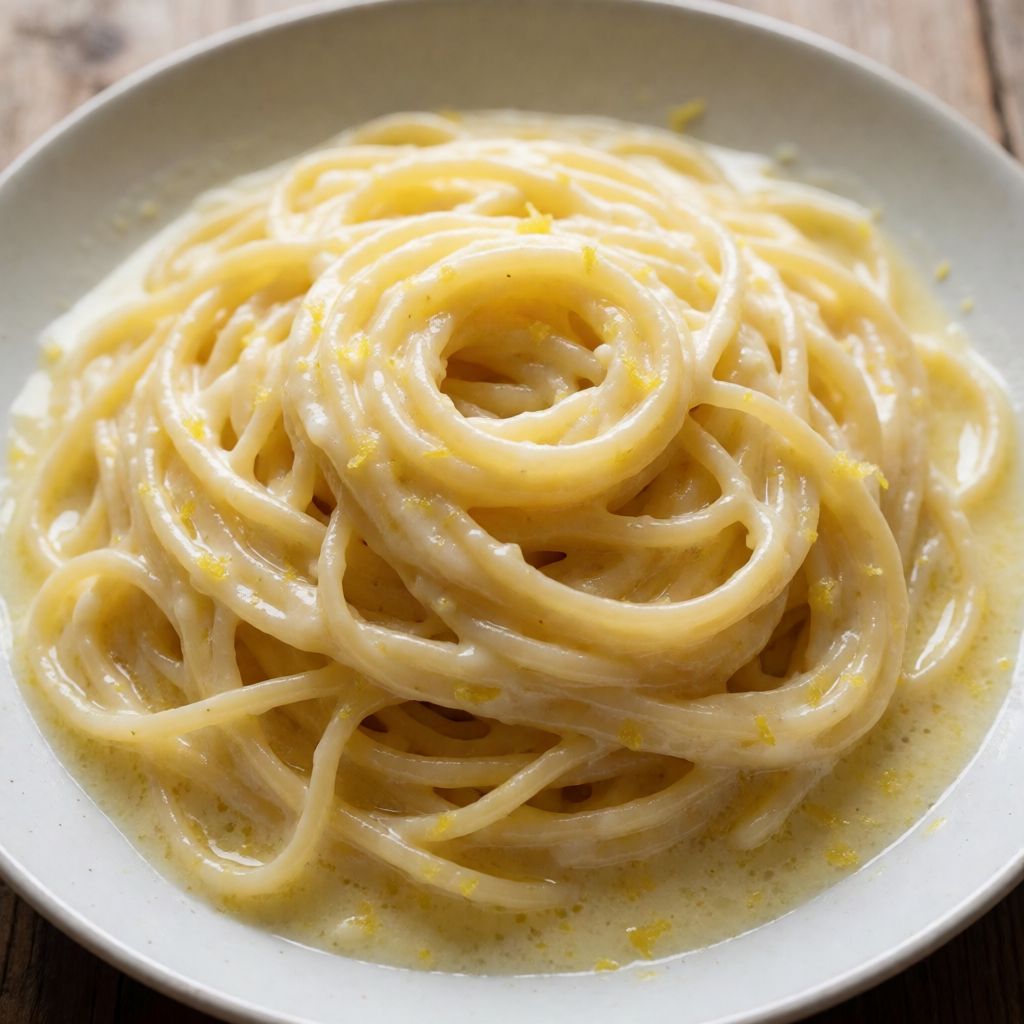
 AI photo
Lemon Cream Pasta
A quick pasta tossed in a tangy lemon and cream sauce.
Labels are worked out automatically from the ingredients and can be wrong. Check the packaging if it matters to you.
Ingredients
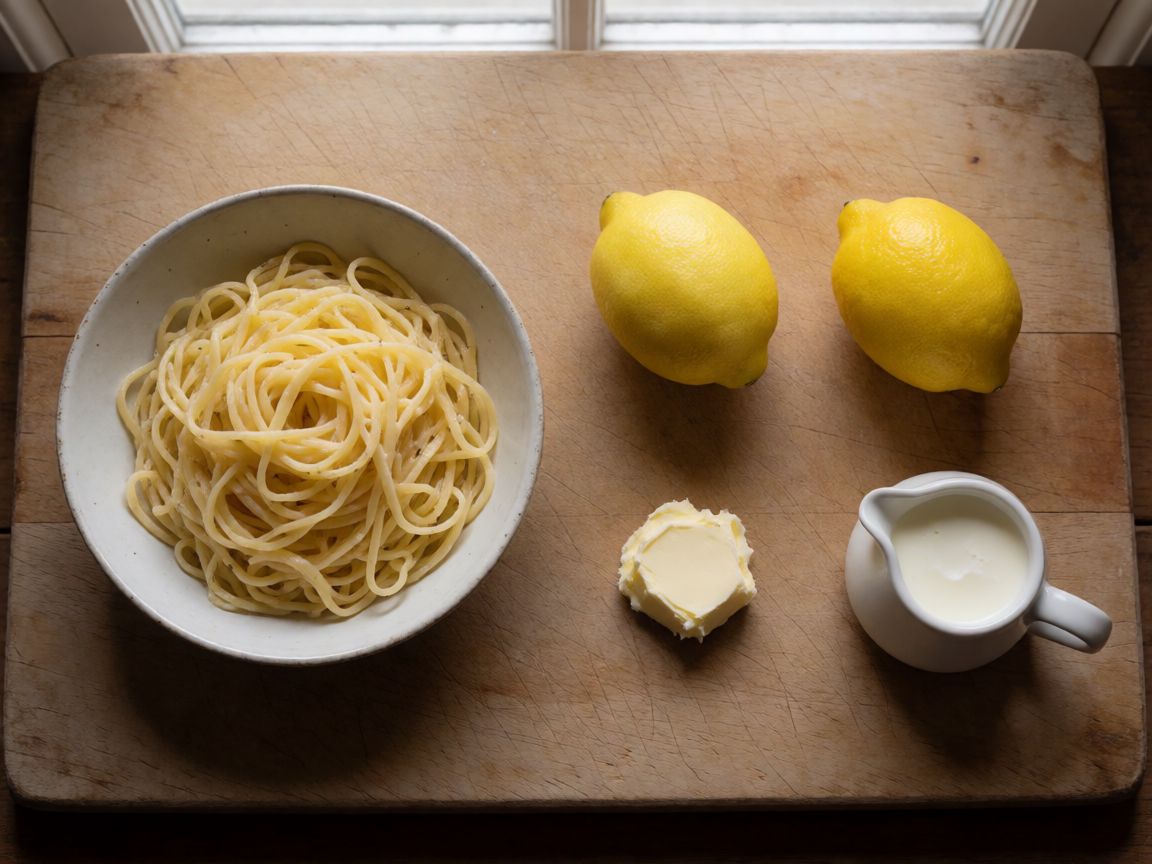
- 200 g Pasta
- 1 pcs Lemon for juice
- 1 pcs Lemon for zest
- 30 g Butter
- 8 tbsp Double cream
- Salt to taste
- Black pepper to taste






Steps
Bring a large pot of water to the boil, season with salt, and cook the pasta until al dente.
While the pasta cooks, melt the diced butter in a small saucepan.
Add the lemon juice and double cream.
Keeping the pan on the heat, stir well until a smooth sauce forms.
Season with salt to taste and a good grind of black pepper.
When the pasta is done, drain it, reserving a couple of ladles of the cooking water.
Return the pasta to the pan, add the lemon sauce and a splash of the reserved water, then mix well.
Add a generous amount of grated lemon zest, plate up and serve.
This is not sauce poured over pasta — it's an emulsion you build right there in the small pan: fat from butter and cream, acid from lemon juice, and starchy pasta water to glue the two together so they coat the strands instead of pooling at the bottom of the bowl. What decides whether it works isn't a list of steps done in order — it's whether that emulsion holds or breaks.
Here's the mechanism. Cream is already an emulsion — fat suspended in water, stabilised by its own proteins. Lemon juice is acid, and acid makes dairy proteins clump. Heat makes them clump faster. So when you tip lemon juice straight into hot cream on a fierce flame, the proteins seize around the acid before the fat can smooth things out, and you get grain instead of silk. The butter melted first, and the gentle heat kept all the way through, are what stop that from happening — the fat already present buffers the shock.
Some say lemon and cream simply don't mix, that citrus always curdles dairy — no, because it's not a fixed law, it's a question of fat percentage and how hard you heat it. Double cream carries enough fat to shrug off the acid if you keep the pan gentle and keep stirring. Single cream, or milk, doesn't have that buffer, and that's where the myth comes from — people tried it with the wrong cream.
Pasta: pick a shape with a surface that holds a thin sauce — long strands like spaghetti or linguine work because the sauce clings along their length rather than sitting in a dip the way it would in a shell pasta. Nothing exotic needed; this is a weeknight dish, not a performance.
The two lemons do different jobs and that's why they're not one lemon used twice. Juice goes into the pan early, cooked gently with the fat — cooking rounds off its sharpness so you get brightness, not a sour slap. Zest goes on at the very end, off the heat, because the aromatic oils in the peel are volatile — they're what give you that lemon smell rather than just lemon sourness, and they cook off fast. Grate it over a cooked, plated dish and you keep the perfume; grate it in early and you've thrown it away into the steam.
Butter isn't just there for taste. Melting it first and keeping the pan on a gentle heat gives you a fat base that's already smooth before the acid arrives — it's the first line of defence against the sauce splitting. If you're out of butter, any fat with no competing smell of its own will do the basic job, but you'll lose the richness that milk solids in butter bring; a neutral oil plus a touch more cream is the honest substitute, not a perfect swap.
Double cream is the one ingredient here you shouldn't improvise down. Its high fat content — roughly half the pot by weight — is what lets it sit next to hot acid without curdling. Single cream, crème fraîche straight from the fridge, or anything thinner is more likely to split under the same treatment; if that's all you have, pull the pan off the heat before you stir the acid in, and work faster. Mascarpone, used sparingly and loosened with a splash of the reserved pasta water, is a closer cousin and more forgiving.
The pasta water you save before draining isn't an afterthought — it's the glue. Its starch lets you loosen the sauce to coat the pasta properly without watering down the flavour the way a splash of tap water would. This is the same logic behind any Italian sauce that looks impossibly silky with so little in the pan: starchy water, not more cream, is usually the answer.
A note on where this dish sits: pasta al limone is originally a southern Italian thing, built around lemons that grow there in abundance and need using. The British version leans harder on double cream because that's what sits in a UK fridge as standard — not a substitution of necessity so much as one of habit, the way tea here comes with milk because that's simply what's in the house. Neither is more correct; one is just more local.
And patience is doing real work in step 4, more than any ingredient on the list. Keep stirring, keep the heat low enough that you could still hold a hand near the pan without flinching, and don't walk off to check your phone while 'cooking the sauce' — that's exactly the window where it splits if you're not there.