
 AI photo
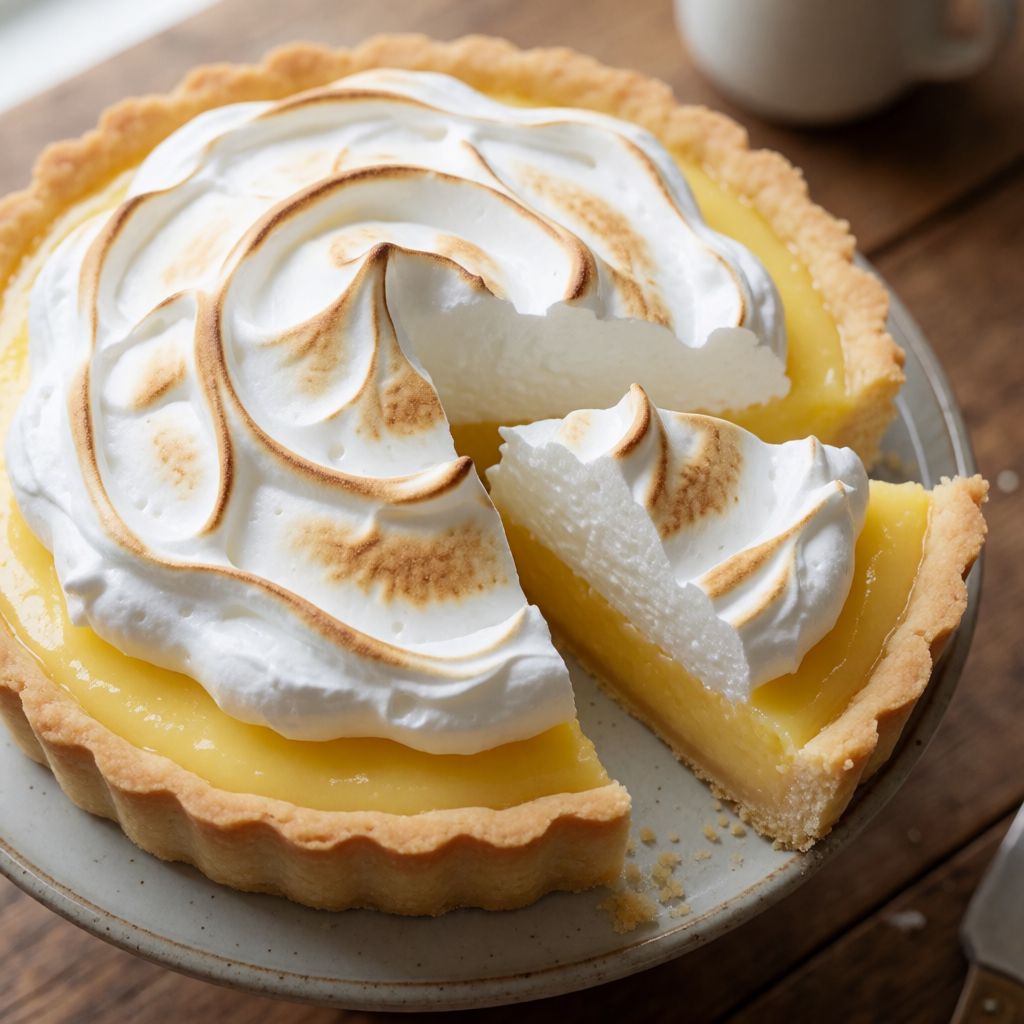
Lemon Meringue Tart
A classic lemon tart topped with lightly torched meringue, made with a buttery pastry base and a bright lemon curd filling.
Labels are worked out automatically from the ingredients and can be wrong. Check the packaging if it matters to you.
Ingredients
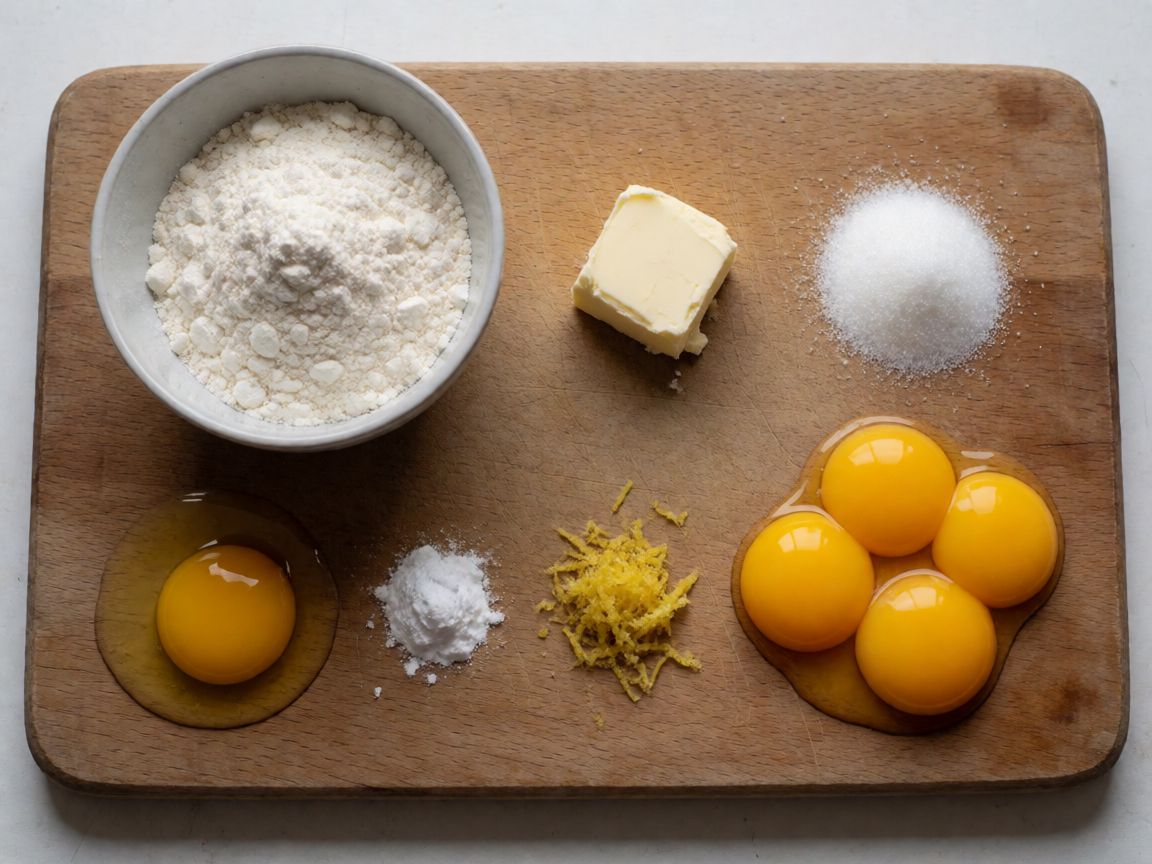
- 320 g Plain flour
- 100 g Butter
- 80 g Caster sugar
- 2 pcs Egg yolks
- 1 pcs Egg
- 4 g Baking powder
- 1 pinch Salt
- 1 pcs Lemon zest
- 3 pcs Egg yolks
- 3 pcs Lemons
- 100 g Caster sugar
- 35 g Cornflour
- 30 ml Water
- 40 g Butter
- 3 pcs Egg whites
- 36 ml Water
- 135 g Caster sugar
- 1 pinch Salt










Steps
In a mixer bowl combine the flour, butter, sugar, egg yolks, egg, baking powder, salt and lemon zest, and mix until you get a smooth, even dough.
Shape into a ball, wrap in cling film and chill in the fridge for at least 2 hours.
120 minGrease and flour a 20 cm springform tin.
Knead the dough briefly, roll out most of it into a disc about 1 cm thick for the base, shape sides 2.5 cm high and line the edge of the tin.
Lay in the base, press it against the sides with your finger, prick with a fork and chill in the fridge for 30 minutes.
30 minGrate the zest of three lemons into a saucepan and pour in the strained juice. In a separate small bowl, mix the cornflour with the water until smooth.
Warm the saucepan for a few minutes, add the cornflour mixture and cook over low heat, stirring constantly, until you get a thick curd.
3 minAdd all the egg yolks at once and cook a little longer over low heat, stirring. Remove from the heat and add the butter in pieces, stirring until fully melted.
In a mixer bowl, put the egg whites with a spoonful of sugar and a drop of lemon juice and whisk until foamy.
In a separate saucepan, dissolve the sugar in the water over heat, without letting it caramelise; remove when the first bubbles appear.
Pour the hot syrup into the whisked egg whites and whisk on maximum speed.
5 minLine the pastry with baking paper, fill with rice or baking beads, and bake in the oven at 180°C for 20 minutes.
Remove, take out the paper and filling, and bake for a further 8-10 minutes, watching that the edges do not burn.
9 minRemove from the oven and leave to cool completely.
30 minSpread the lemon curd into the base and level with a palette knife.
Transfer the meringue to a piping bag fitted with a wide smooth nozzle and pipe peaks, covering the layer of curd.
Lightly torch the meringue peaks in places with a cook's blowtorch.
Chill the tart in the fridge for at least 2 hours.
120 min
A lemon meringue tart is really three separate kitchen jobs stacked on top of each other, and the dish works only if you understand that each layer is cooked by a different logic. There's a sweet pastry shell, a lemon curd that sets by heat and starch, and a meringue that's cooked not in the oven but in the whisk, by a hot syrup. Get the order and the states right and the tart holds its shape when you cut it. Get them wrong — curd too thin, meringue weeping — and it's a lovely-looking puddle.
The base is a pâte sucrée, which is just French for "biscuit dough pretending to be pastry." Butter, sugar, egg and a little baking powder give you something closer to shortbread than to a flaky pie crust, and that's deliberate: it needs to carry a wet curd without going soggy, so it's built dense and a little cake-like rather than laminated and fragile. The chilling isn't fussiness, it's physics — warm butter smears when you roll it, cold butter holds its shape, so the dough rests twice: once after mixing, once after lining the tin.
Flour, butter, sugar, egg, baking powder, salt, lemon zest — that's the base, and every one of them has one job. Plain flour, not strong bread flour: you want no stretch, no chew, because this is a biscuit base, not bread. The butter must be cold going in and the dough rested cold after, because warm butter means a dough that slides rather than holds a wall 2.5 cm high — and a collapsed wall is how curd ends up leaking over the sides of your tin instead of sitting in it. Baking powder here is a small insurance policy, giving the base a slight lift so it doesn't bake into something leathery; leave it out and you get a denser, more biscuity shell, which isn't wrong, just different. Lemon zest in the dough is a quiet echo of the filling — rub it in with your fingers against the sugar if you can, that bruises the oil out of the skin rather than just scattering dry flecks through the dough.
The curd is built from lemon zest and juice, egg yolks, sugar, cornflour, water and butter, and here the quantities are doing real chemistry. Three lemons, zested and juiced, give you both the aromatic oils (zest) and the acid and bulk (juice) — zest alone tastes thin, juice alone tastes flat. Cornflour mixed into cold water first, always, because dropped straight into a hot pan it clumps into little gel balls instead of dissolving smooth — that lump you sometimes bite into in a bad curd, that's cornflour that never got a chance to hydrate. The egg yolks go in once the cornflour mixture has already thickened the base slightly, because yolks in a pan that's still too fierce will scramble before they've had a chance to enrich the curd — you're using the starch as a buffer that lets you cook the eggs gently rather than violently. Butter goes in off the heat, in pieces, not because of tradition but because melting it slowly stops it splitting the fat out from the curd, which is how you get that slightly greasy sheen on a bad lemon tart. If you've no cornflour, any pure starch — cornstarch by another name, or potato starch at a pinch — does the same binding job; just don't swap in plain flour, which needs longer cooking and brings its own taste with it.
The meringue needs egg whites, sugar, water and a pinch of salt, and the method — hot syrup whisked into foaming whites — is what separates this from the meringue on a pavlova. Dissolving sugar in water without letting it caramelise means you're after a clear syrup, not a toffee: the moment you see the first proper bubbles, that's your cue, not a clock. Pour it in a thin stream onto whisking whites and you're pasteurising the whites and setting their structure at the same time, which is why this meringue survives sitting cold in a fridge for two hours without turning watery at the base — an ordinary French meringue, just whites and sugar whisked raw, would start weeping liquid under its own weight by then. The drop of lemon juice in the whites before whisking isn't for flavour, it's acid helping the proteins unfold and hold air more stably — cream of tartar does the identical job if that's what's in your cupboard.
Some say you need a kazan or a professional kitchen for a tart like this — no, because a wide domestic pan and an ordinary 20 cm springform tin do the job; the things that actually matter are temperatures and states, not equipment you don't own. Your home oven at 180°C and a cook's blowtorch bought for £15 are entirely sufficient; what you can't substitute is patience — the two hours of chilling the dough, the full cooling of the baked shell before curd goes anywhere near it, the two hours setting in the fridge at the end. Rush any of those and you're not saving time, you're borrowing structural failure for later: a curd that slides off a warm shell, a meringue that slumps because the curd beneath hasn't set. This feeds six, cut in thin wedges — it's rich enough that nobody's asking for a second slice the size of the first.