
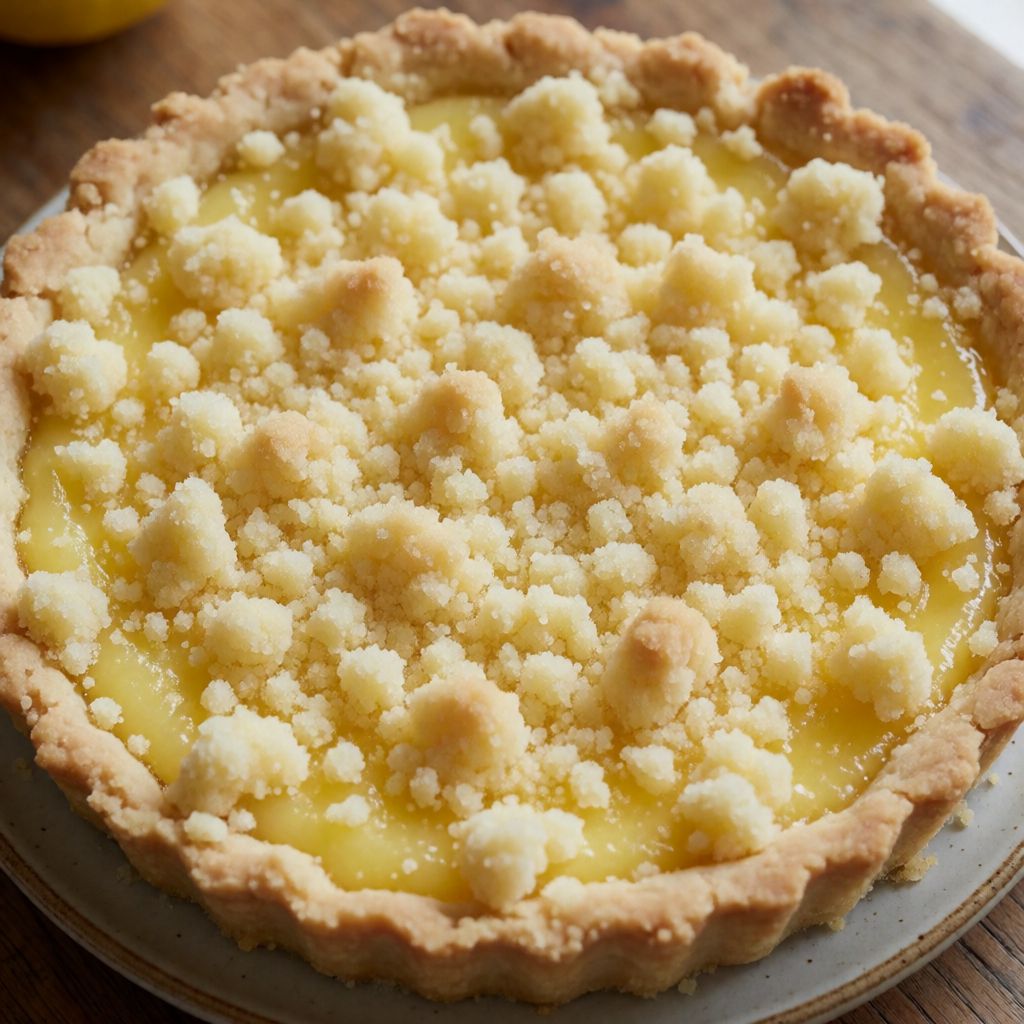
 AI photo
Crumbly Lemon Pie
A crumbly shortcrust pie filled with a tangy lemon custard cream, baked until golden.
Labels are worked out automatically from the ingredients and can be wrong. Check the packaging if it matters to you.
Ingredients
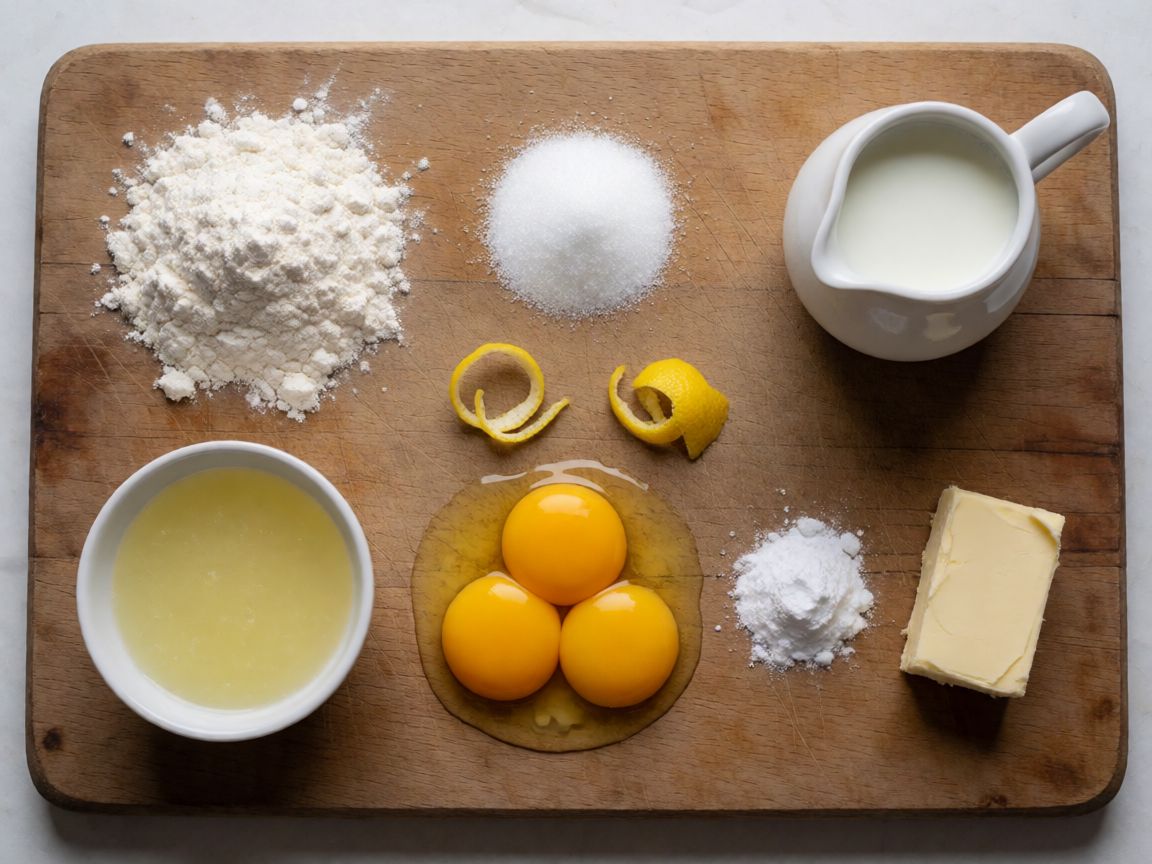
- 330 g Plain flour
- 210 g Caster sugar
- 300 ml Milk
- 100 ml Lemon juice
- 2 pcs Lemon zest
- 3 pcs Egg yolks
- 16 g Baking powder
- 100 g Butter cold
- 1 pcs Eggs









Steps
Make the cream: in a saucepan bring the milk to the boil, add the lemon juice and zest, stir and set aside.
In a bowl, beat the egg yolks with the sugar using an electric mixer, add the sifted flour and mix until smooth.
Combine the mixture with the milk, place over heat and cook, stirring constantly, until the cream thickens, then let it cool.
Sift the flour, add the baking powder and sugar, and mix.
Add the egg and the cold butter, cut into cubes, and rub together by hand until you get a crumbly texture.
Spread 2/3 of the crumble into a 24 cm tin and press down firmly.
Spread the cream on top, level it and cover with the remaining crumble.
Bake in a fan oven preheated to 170°C for about 30 minutes, until the surface turns golden.
30 minRemove the pie from the oven and let it cool.
This is two desserts stacked on top of each other: a shortbread crumble doing the job of a pastry case, and a lemon curd standing in for the usual lemon filling you'd thicken with cornflour. The split matters more than any single step — two-thirds of the crumb goes down and gets pressed, one-third goes on top and stays loose, and that asymmetry is the whole architecture of the pie. Press the base too lightly and the cream soaks through it before it sets; press the top and you've made a lid, not a crumble, and it bakes into a flat biscuit instead of staying craggy and golden.
The filling here isn't a custard that happens to taste of lemon — it's built the way a lemon curd is built, but cut with flour instead of all butter and more yolk, which is why it's cooked on the hob before it ever sees the oven. Flour, not cornflour or butter alone, is doing the thickening, and that's deliberate: it gives you a cream that can survive a second heating in the oven without curdling or weeping. If you've only ever made lemon curd in a bain-marie, nervous about scrambling the yolks, this recipe answers that nerve by using flour as insurance — forgiving of a slightly too-eager flame.
Flour is the backbone twice over in this pie, and it's worth separating its two jobs. In the cream, it's the thickener that lets you boil lemon juice and yolks together without fear — egg yolks alone, hit with acid and heat, can split into something grainy, but a few tablespoons of flour bound through them first protects the proteins and gives you a cream that holds a spoon-trail rather than a curdled mess. In the crumble, flour plus cold butter plus baking powder is simply shortbread logic: rubbed by hand, not creamed, so the butter stays in separate flecks that melt in the oven and leave gaps — that's the "crumbly" in the name, not a texture you get from a food processor pulsing everything into paste.
Butter has to be cold, and this isn't fussiness — it's physics you can feel with your fingers. Cold butter cut into cubes stays as distinct lumps when you rub it into the flour; as it melts in the oven, it leaves little pockets of steam and fat that make the crumble shatter rather than compact. Warm or soft butter smears into the flour as you work it, coating every grain evenly, and that gives you a dense, biscuity crust instead of a loose one. If your kitchen is warm — and most UK kitchens in summer get warm enough — cube the butter and put it back in the fridge for ten minutes before you start rubbing.
Lemon: zest and juice do different jobs, and conflating them is where people go wrong. The zest carries the lemon oil — the actual aromatic, the smell of lemon — while the juice carries only the sourness and the acid that helps the cream set. Using bottled lemon juice without zest gives you sour without scent; using only zest without juice gives you fragrance but a cream too soft to hold its shape. Buy lemons with tight, unwaxed-feeling skin if you can — waxed supermarket lemons work, but give the zest a scrub in hot water first, since you're eating that peel, not just squeezing past it.
Caster sugar earns its place over granulated for one plain reason: it dissolves faster into both the yolks and the dry crumble mix, so you're not left with a gritty cream or sugar crystals that haven't melted by the time the crumble browns. If all you've got is granulated, it'll work, just give the yolks and sugar a longer beat before the flour goes in.
Baking powder at 16g for 330g flour is a generous amount for a crumble that's meant to stay a crumble, not rise into a cake — its job is purely to lighten each individual crumb so it stays short and sandy rather than compacting under its own weight as it bakes. Don't swap in self-raising flour and add baking powder on top; you'll double up and the top will puff rather than crumble.
On the tin: a 24cm tin on a domestic fan oven at 170°C is a comfortable, forgiving setup — fan ovens run a touch hotter and more even than they claim, so start checking at the lower end of your timing, not the upper. "About 30 minutes" is the floor, not the target — you're watching for the top to turn an even gold, the same colour shift you'd look for on a batch of shortbread biscuits, not a timer going off. If your oven has a notorious hot back corner — most do — give the tin a quarter turn halfway through rather than trusting the dial alone.
Patience shows up twice here, and skipping either cooling stage is the single most common way to ruin this pie: the cream must cool before it meets the crumble base, and the whole pie must cool again after baking before you cut it. Hot cream on raw crumble turns to porridge; a hot pie cut too soon collapses under the knife because the cream hasn't had the time to firm back up as it cools. There is no shortcut on that second wait — put the kettle on, make the tea you'll have with it, and let the pie sit.