
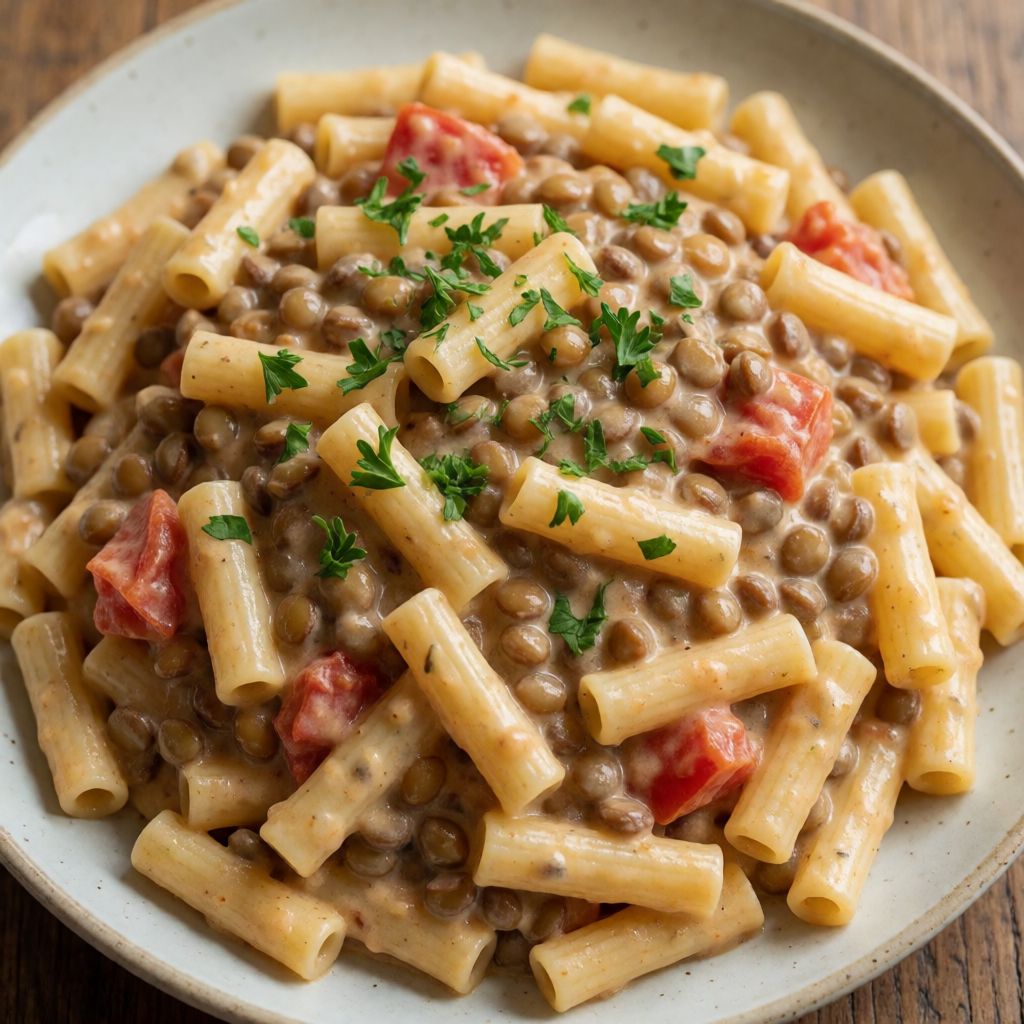
 AI photo
Creamy and Rich Lentil Pasta – Day One
A comforting pasta with lentils, cherry tomatoes and vegetable stock, cooked risotto-style until creamy and rich.
Labels are worked out automatically from the ingredients and can be wrong. Check the packaging if it matters to you.
Ingredients
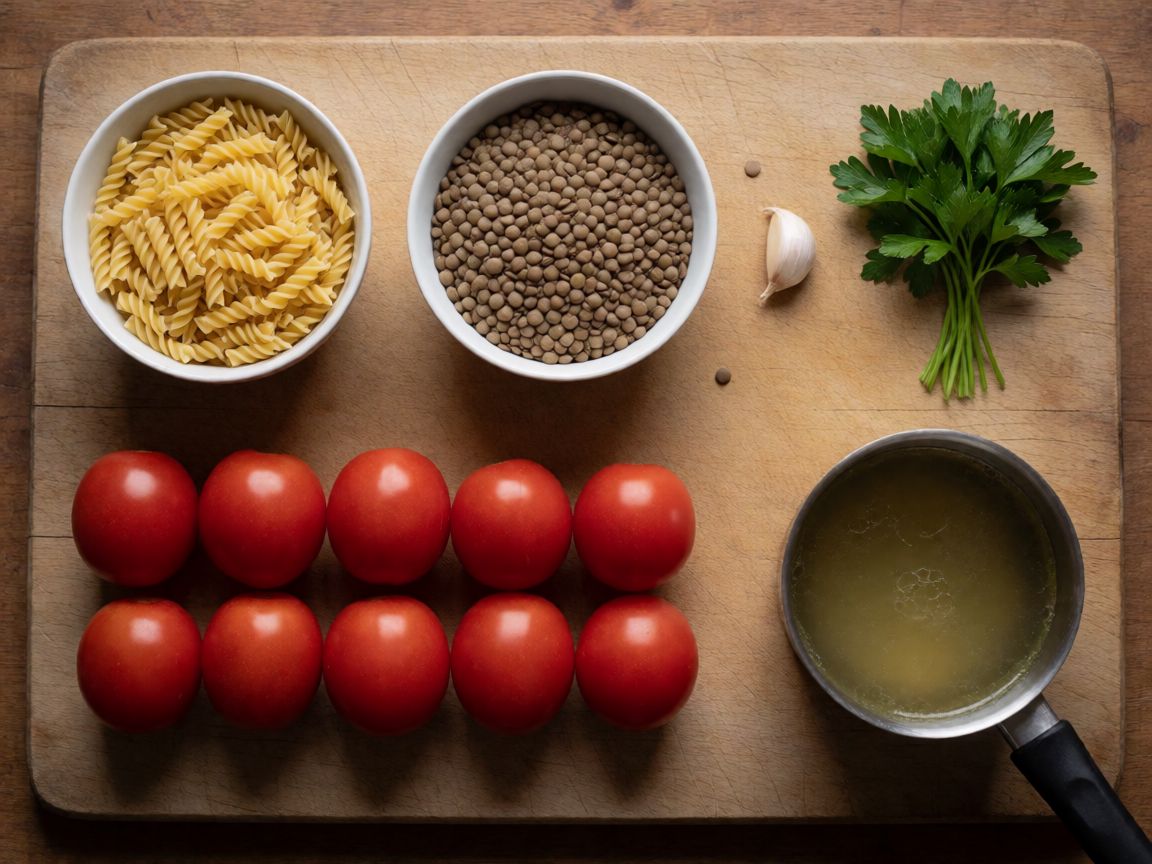
- 300 g Tubetti
- 250 g Lentils
- 1 clove Garlic
- 1 bunch Parsley
- 10 pcs Red cherry tomatoes
- 10 pcs Tomatoes
- 500 ml Vegetable stock
- Salt to taste
- Black pepper to taste
- Olive oil to taste









Steps
In a pot, lightly sauté the garlic in olive oil until golden.
Add the cherry tomatoes (halve any large ones) and cook for a few minutes over high heat.
Add the pre-cooked lentils and season with parsley to taste.
Pour in a ladleful of vegetable stock and simmer for 5 minutes.
5 minAdd the tubetti and cook until done, gradually adding vegetable stock as it is absorbed.
When the pasta is ready but still al dente and creamy, season with salt and black pepper and serve immediately.
This is pasta cooked the way risotto is cooked — not boiled in a separate pot and drained, but simmered directly in stock it drinks down slowly. The lentils give it weight and a bit of earth, the tomatoes give it acid and juice, and the starch the tubetti sheds as it swells is what makes the whole thing cling together and look glossy. That's the "creamy" in the title. There's no cream in the list, and you don't need any.
What actually decides whether this works is how you feed the stock in. A ladleful at a time, letting it nearly disappear before the next goes in — not because tradition says so, but because a flood of liquid just boils the pasta in excess water, and when you drain that off (or it evaporates unevenly) you lose the starch with it. You end up with wet pasta sitting in tomato soup, instead of pasta wearing a sauce it made itself. Patience here isn't a virtue tacked on for the sake of it — it is the method. Rush the stock and the dish simply doesn't exist; you get two separate things on a plate instead of one.
Some cooks will tell you a creamy pasta needs a knob of butter or a fistful of cheese stirred in at the end to get that silky look. No — because the silkiness is chemistry, not addition: starch granules split open in the heat and thicken whatever liquid is touching them. If you've fed the stock in slowly, that's already happened by the time the pasta is done. Cheese on top of that just adds salt and fat; it doesn't make it creamy, because it was creamy before the cheese arrived.
The garlic at the start is there to perfume the oil, not to cook into a paste. Golden is the word to watch for — past gold, into brown, and it turns bitter, and that bitterness doesn't cook out later; it sits under everything else for the rest of the dish. So keep the heat gentle enough that you can pull the pan off before it tips over, not so gentle that the garlic just sits there pale and raw-tasting.
The cherry tomatoes go in on high heat for a reason: you want the skins to split and the juice to hit the hot pan and start reducing fast, not stew gently into a watery mush. A few minutes of aggressive heat concentrates them; a long slow simmer would just thin them out. If your pan is thin domestic stuff rather than something heavy-bottomed, watch the edges — they catch before the middle does, so keep things moving.
Worth flagging honestly: the ingredient list has two kinds of tomato — ten cherry tomatoes and ten regular ones — but the steps only name the cherry tomatoes going into the pot. Ten cherry tomatoes alone won't give four people much sauce body, so the regular tomatoes almost certainly belong in that same step, roughly chopped, for bulk and juice. I'd rather tell you that than invent a separate step with a time and heat the recipe never gave you.
Lentils here are "pre-cooked" — meaning cooked separately beforehand, with their own bite still in them, not boiled to collapse. Go for brown or green lentils if you're choosing dried ones: they hold their shape under a second round of heat. Red split lentils will dissolve into the sauce almost on contact, which gives you a different, thicker, more porridge-like result — not wrong exactly, but not what this dish is asking for. Tinned lentils, drained and rinsed, are a completely fair shortcut; nobody's keeping score on who cooked them from dry.
Tubetti is a small tube, chosen because its hollow lets it grab stock and starch on both the inside and outside — that's a big part of why this cooks up thick rather than thin. Any small, short pasta with some surface for liquid to cling to will do the same job: ditumi, small shells, even broken-up macaroni. Long pasta won't behave the same way in this method; it needs more room and more stirring than a domestic pan comfortably gives you.
Stock, parsley, oil: the stock is the actual cooking liquid, so a thin cube-and-water version will leave the whole dish tasting of salt and not much else — use the best vegetable stock you have, homemade if you've got it in the freezer, because its flavour is what the pasta is absorbing, not just its heat. Parsley goes in late and loose, as a fresh note on top of cooked flavours, not as something you want to cook down — chop it and add it close to the end. And the olive oil only needs one quality: no aggressive smell of its own at the sautéing stage, so it doesn't fight the garlic; any plain cooking oil manages that, though a drizzle of good olive oil over the finished bowl is worth doing precisely because there, raw, you can actually taste it.