
 AI photo
Lentil Patties
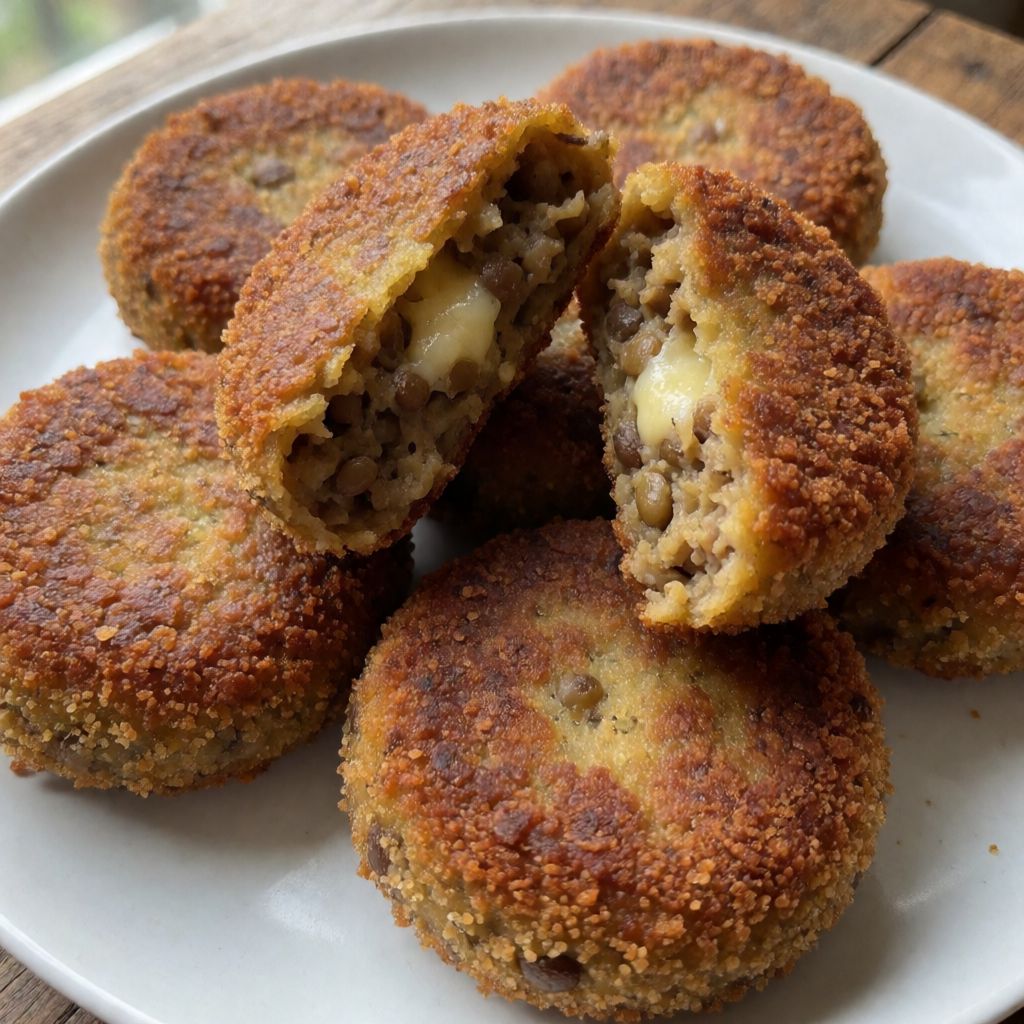
Simple patties made from cooked lentils, cheese and breadcrumbs, pan-fried until golden.
Labels are worked out automatically from the ingredients and can be wrong. Check the packaging if it matters to you.
Ingredients
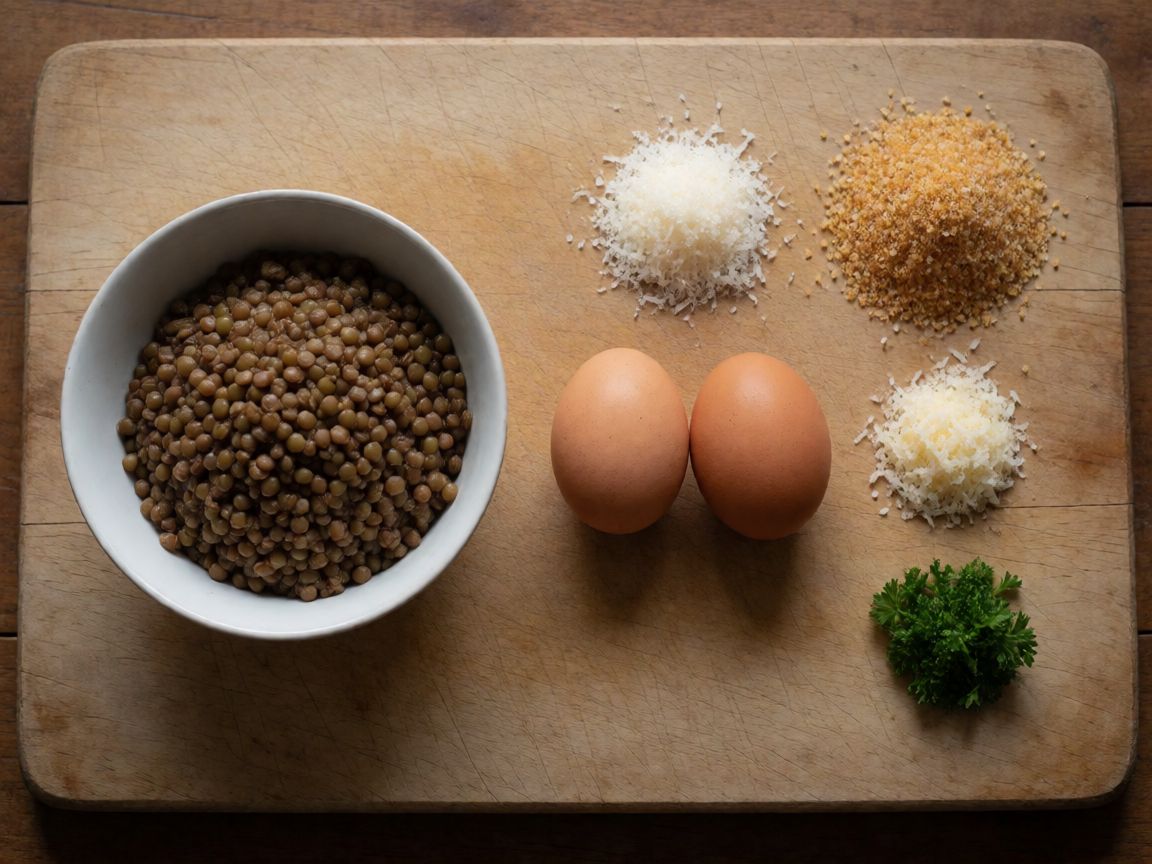
- 400 g Lentils cooked
- 2 pcs Eggs
- 100 g Parmesan
- 70 g Breadcrumbs
- 50 g Emmental
- Olive oil to taste
- Salt to taste
- Black pepper to taste
- Parsley to taste
- Vegetable oil for frying










Steps
Prepare the cooked lentils and drain them well of any excess liquid.
Put the lentils and eggs into a blender and blitz for a few seconds.
Add the Parmesan, olive oil, salt, black pepper and chopped parsley.
Add the breadcrumbs and blitz once more until combined.
Shape the mixture into balls, tuck 2-3 cubes of fontina inside, close them up and coat in breadcrumbs.
Fry the patties in hot vegetable oil until golden.
Place the cooked patties on paper towels.
As an alternative: bake the patties in the oven at 180°C.
15 minServe the patties hot.
Think of these as the vegetarian cousin of an arancini — a cooked pulse mashed into a paste, bound with egg and cheese, stuffed with a cube of melting cheese, then fried until the outside sets hard and the inside goes molten. The whole dish stands or falls on two things: how dry your lentils are before they go in the blender, and whether the cheese core actually melts without the patty blowing open in the oil.
Lentils cooked properly hold water the way a sponge does — even "drained well" ones. If you skip drying them, that water comes out again the second they hit the egg and breadcrumb mix, and your paste turns from mouldable to sloppy. You then compensate with more breadcrumbs, and the patty turns from a lentil cake into a bread cake with lentil flavouring. So drain, then actually press or pat the lentils — a clean tea towel works fine, you don't need special kit.
The cheese core is the fun bit and the risk. A cube of Emmental (the recipe calls it fontina at the stuffing stage, which tells you something: these cheeses are interchangeable here, picked for melt, not flavour) sits in the middle so that frying time is really just "time to melt a small cube of cheese through a wall of lentil paste." Make the wall too thick and the middle stays cold and rubbery; too thin and it splits in the oil, the cheese runs out, and you get a sad flat puddle in your pan instead of a patty.
Some say frying is risky and the oven is the safe choice. No — the oven is the gentler choice, not the safer one. In oil, the outside of the patty crusts almost immediately, sealing the cheese in before it has time to escape through a crack; that's what "fry until golden" is really buying you — a seal, not just a colour. In the oven at 180°C, that seal forms slower, so patties are more likely to list or seep a little cheese onto the tray, but nothing's going to catch fire on you, and clean-up is less of an event in a flat with one small kitchen. Choose the oven for an easier evening, choose the pan for a tighter patty.
On heat for frying: no thermometer is needed, but "hot" means the surface of the oil should shimmer and a breadcrumb dropped in should sizzle at once, not sink and sit. If it sinks and sits, the patty will soak oil before it crusts, and you'll taste it — heavy, greasy, not golden. If the oil smokes before anything's in it, it's too hot and the outside will burn while the cheese inside is still cold. You're aiming for the gap between those two states, and it's a narrower gap on a domestic hob than people expect, because home rings swing in temperature more than a restaurant burner does — keep adjusting, don't set and forget.
On the lentils themselves: any well-cooked brown or green lentil works, the kind that holds its shape but gives when pressed between two fingers — not the fast-cooking split red lentils, which collapse into a mush too wet for this job. If you're using tinned lentils, which is sensible and common in a UK kitchen, rinse and drain them properly; tinned ones carry even more water than home-cooked, and that water is exactly what undoes the patty's structure.
Parmesan here isn't a flourish — it's doing savoury-weight and some binding, since it melts slightly into the mix as you blitz with warm-ish lentils. Any hard, dry grating cheese with real salt and age to it will stand in — Grana Padano, a mature Pecorino if you want more bite. Don't reach for a soft or pre-shredded "parmesan-style" cheese for this; it won't carry the same savoury punch and brings extra moisture you don't want.
For the stuffing cheese, the only real criterion is: does it melt smoothly rather than turning oily and separating? Emmental and fontina both qualify — mild, melt cleanly, don't fight the lentil flavour. Mozzarella works too if that's what's in the fridge; cheddar, which is the obvious British reach, melts more unevenly and can turn a bit greasy under heat, so if you use it, cut the cube small.
Breadcrumbs do two jobs — binding the paste and coating the outside — and plain dried breadcrumbs are fine for both; panko gives a crunchier shell on the outside coat if you want that contrast, but it won't bind the inner mixture as tightly, so keep panko for the outer coat only and use a finer crumb inside.
Patience here is short but real: don't rush straight from blender to frying pan. Give the shaped patties a minute to firm up before they hit the oil — a loose, warm ball falls apart the moment a spatula touches it, and that minute of sitting is the difference between a patty and a mess in your pan.