
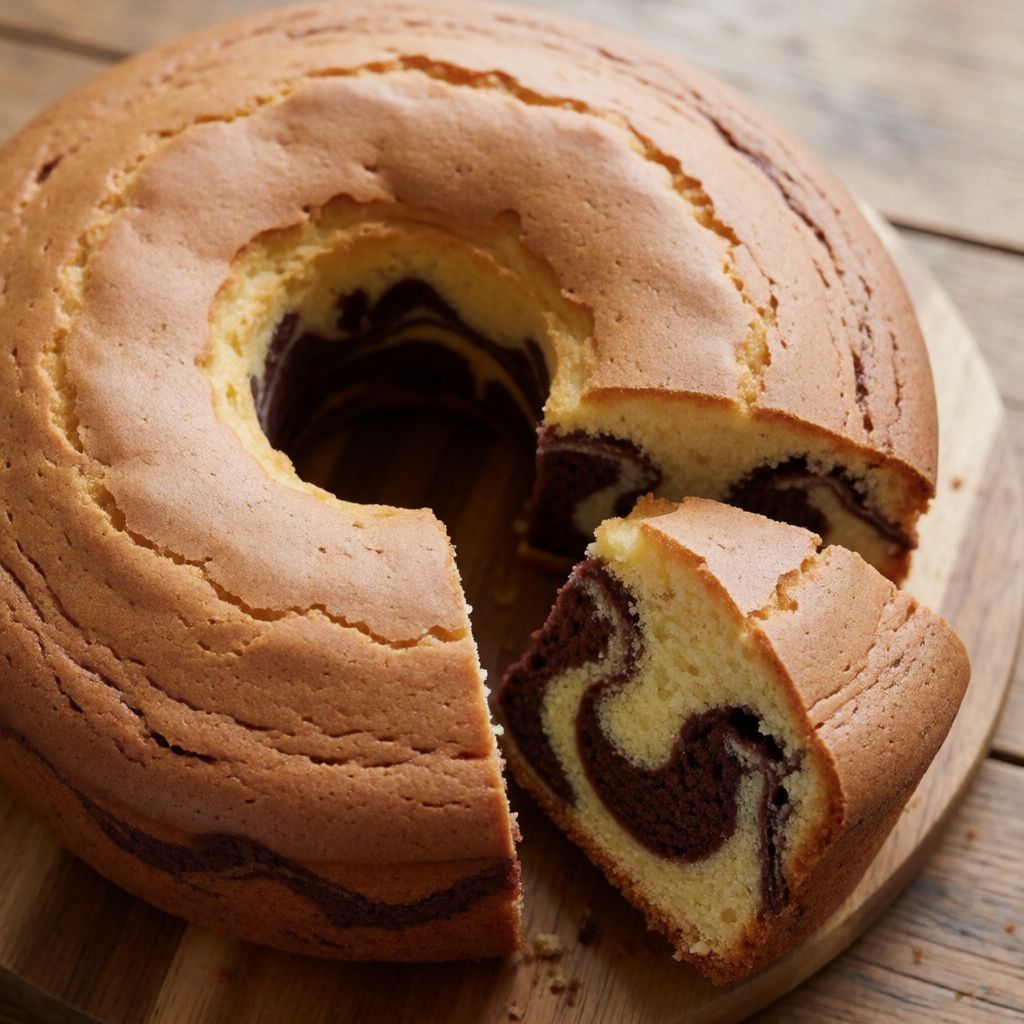
 AI photo
Marble Cake
A classic marble cake with swirls of vanilla and chocolate sponge, baked in a loaf tin.
Labels are worked out automatically from the ingredients and can be wrong. Check the packaging if it matters to you.
Ingredients
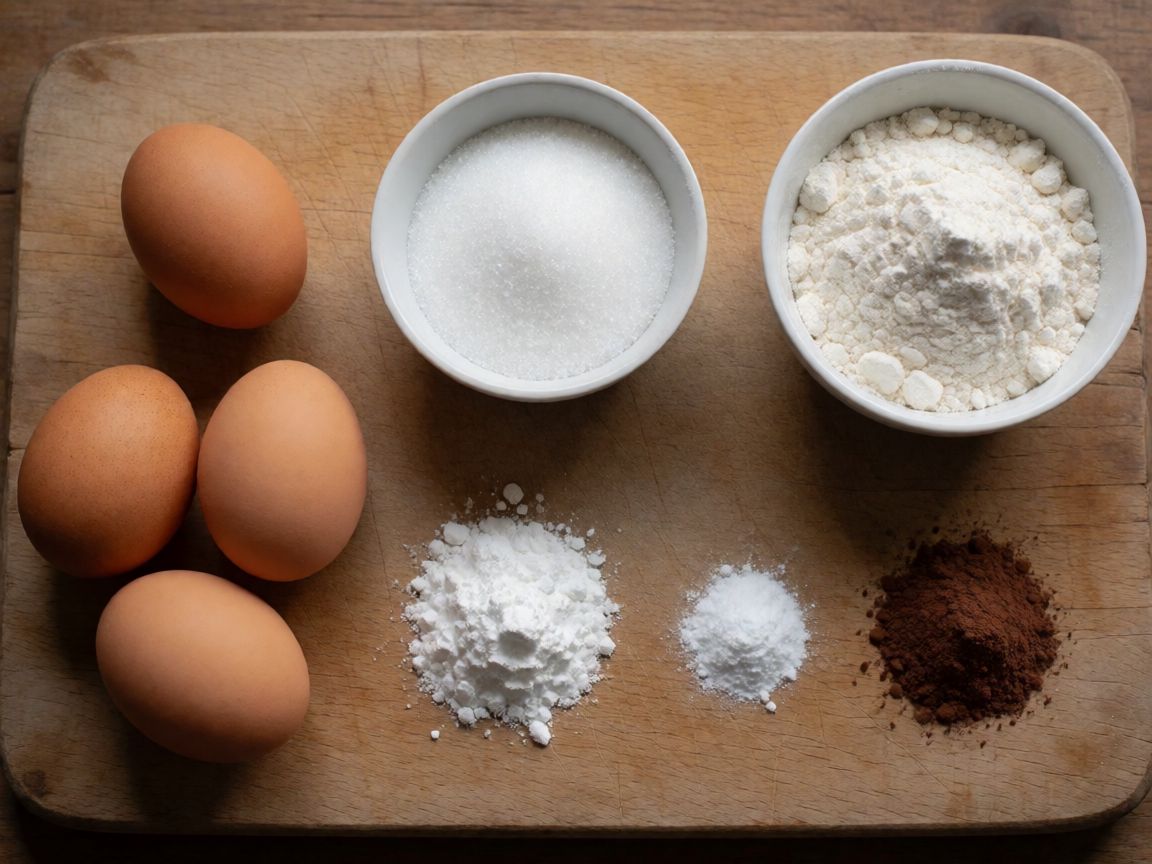
- 4 pcs Eggs
- 220 g Caster sugar
- 100 g Vegetable oil
- 100 ml Water
- 300 g Plain flour
- 50 g Potato starch
- 15 g Baking powder
- 20 g Cocoa powder







Steps
Crack the eggs into a bowl and beat with an electric mixer, adding the sugar; keep beating until the mixture doubles in volume, turns pale and creamy.
Pour in the vegetable oil and water.
Gradually sift in the flour, potato starch and baking powder, mixing well.
Divide the batter in half; stir the cocoa powder into one half.
Grease and flour a 28x10 cm loaf tin, then pour in both batters, alternating spoonfuls.
Bake in a preheated oven at 180°C (fan) for 40–45 minutes.
42 minCheck it's done by inserting a wooden skewer.
Let the cake cool before carefully turning it out of the tin.
This is a sponge split in two and never properly mixed back together — that's the whole trick. One half stays plain, one half gets cocoa, and the pattern you see when you slice it comes from spooning them in side by side, not swirling them with a knife. Swirl too much and you get khaki, not marble. The lift doesn't come mainly from the 15g of baking powder — it comes from what you do to the eggs first.
What decides whether this works is the first two minutes at the mixer, not the oven. Beat the eggs with the sugar until the mass visibly doubles and turns pale, almost like soft whipped cream holding its own weight for a second before it falls back. That's not decoration, that's structure — every bubble you beat in now is a bubble the baking powder only has to hold open later, not create from nothing. Skip this and the cake will still rise, because 15g of raising agent is generous, but it'll rise coarse and collapse a little at the centre as it cools, because the crumb has nothing fine to set around.
Oil instead of butter is also not a style choice, it's a shelf-life choice: oil stays liquid at room temperature, so the crumb stays soft for the two or three days a cake actually gets eaten in a house, where butter cakes start to dry and crumble by day two as the fat crystals reset. This is a tea-time cake in the old Eastern European sense — plain enough for a weekday, kept in a tin on the side, cut into whenever the kettle goes on. It sits happily next to a British teapot with milk; nothing about it asks for cream or ceremony.
Eggs and sugar: the sugar isn't just sweetness, it's stabiliser. As you beat, it dissolves into the egg and coats the air bubbles you're whisking in, so they don't collapse the moment you stop the mixer. This is why the recipe tells you to add sugar gradually while beating rather than dumping it all in cold — sugar poured in too fast weighs the foam down before it's formed. Four eggs here are doing the lifting a kazan of yeast dough would do by fermentation; no patience with yeast needed, but you do need the patience to let the mixer run until the colour actually changes, not for a fixed count of seconds.
Oil and water: any oil with no smell of its own works — sunflower, rapeseed, a mild light olive oil at a push. Something like a strong extra virgin or a walnut oil will fight the cocoa and you'll taste it where you shouldn't. The water thins the batter enough to pour in neat spoonfuls rather than dollops you have to push into place — pouring, not spreading, is what keeps the marbling clean, because the moment you drag a spoon through it you're folding grey into both halves.
Flour, potato starch, baking powder: plain flour gives the gluten that holds the crumb together; the starch is there to interrupt that gluten just enough so the cake stays tender instead of chewy — cornflour does the same job if that's what's in the cupboard. Sift these together before they go into the batter, not because sifting is a ritual, but because baking powder lumps in a 15g dose are exactly the kind of thing that leaves a bitter little pocket in one bite and nothing in the next. Some say you can just stir it in dry — no, because an uneven rise is usually not a bad oven, it's an unsifted tin.
Cocoa: stirred into only half the batter, it also quietly thickens that half, because cocoa drinks liquid. That's the real reason you alternate spoonfuls rather than pour one batter on top of the other — a denser cocoa layer poured last would just sink through the lighter half and you'd get stripes at the bottom of the tin, not marble through the middle. If your cocoa is very acidic or very alkaline you might see a slightly different rise between the two colours; a plain unsweetened cocoa, nothing dutched or flavoured, keeps both halves behaving the same.
Tin and cooling: a 28x10cm loaf tin is the ordinary domestic size, and a fan oven at 180°C is doing you a favour a conventional oven can't — even heat around the loaf shape, which otherwise tends to cook faster at the ends than the middle. Let it cool properly in the tin before turning out. The starch structure is still soft and setting while the cake is hot; turn it out too early and you'll either tear the crust or watch the middle sag under its own weight. This is the patience part of the recipe, and it's not optional — it's where the cake finishes becoming a cake rather than a very warm batter.