
 AI photo
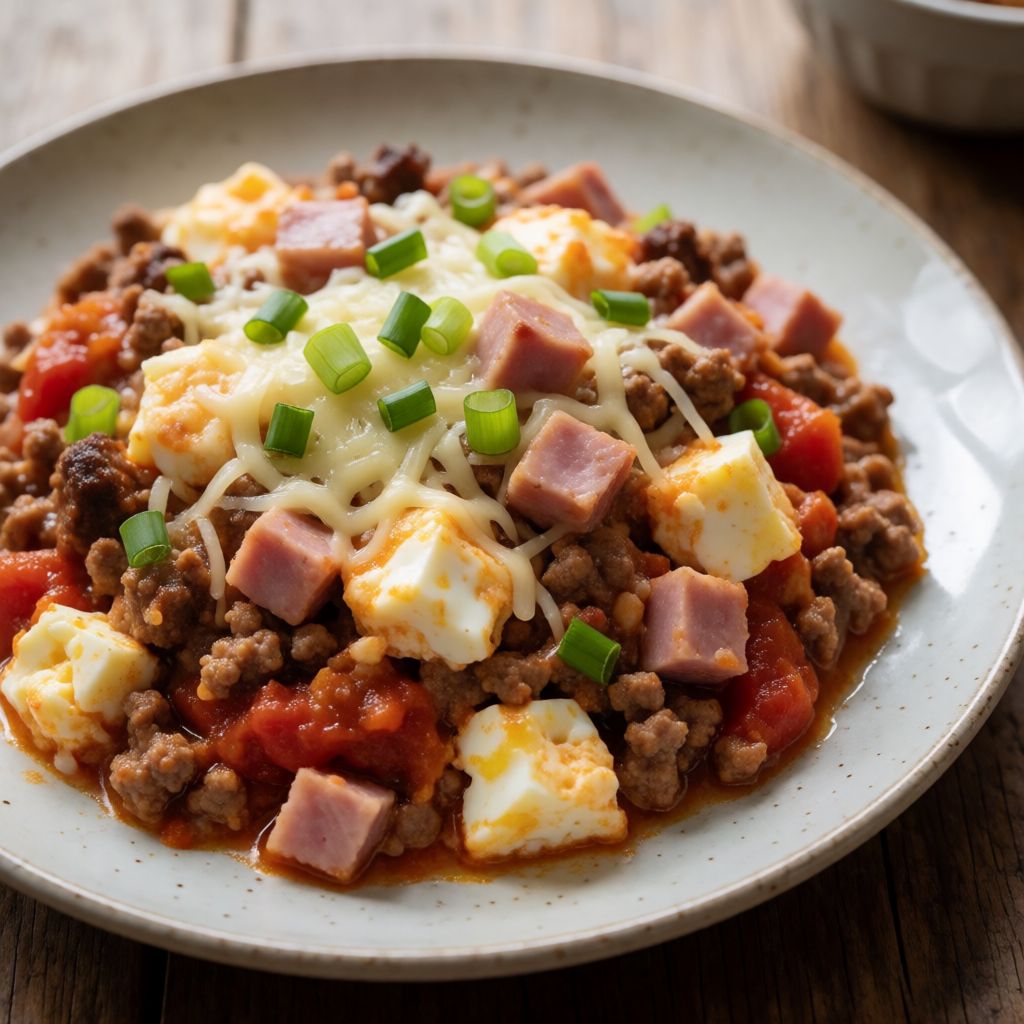
Pizzaiola-Style Meat Bake
A hearty Italian-style meat bake layered with ham, mozzarella and tomato sauce, pizzaiola-style.
Labels are worked out automatically from the ingredients and can be wrong. Check the packaging if it matters to you.
Ingredients
- 400 g Veal and pork mince
- 1 pcs Egg
- 1 pcs Spring onion finely chopped
- Grated cheese to taste
- 4-5 pcs Ham slices
- Tomato sauce to taste
- 1 pcs Mozzarella for pizza
- Olive oil to taste
- Salt to taste









Steps
In a bowl, combine the veal and pork mince with the egg, finely chopped spring onion, grated cheese and salt. Mix until smooth and evenly combined.
Line a round baking tin with damp baking parchment. Layer the mince mixture, tomato sauce, ham and mozzarella.
Drizzle with olive oil and bake at 200°C until the mince is cooked through (71°C at the centre).
20 minServe hot.
What was changed
Young onion has been swapped for Spring onion, which is easier to find in UK shops.
This is a pizza wearing a meatloaf's clothes: the base isn't dough, it's a slab of mince bound tight enough to hold its shape under sauce and cheese, baked the way you'd bake a lasagne, not fried the way you'd fry a cutlet. Everything above the meat behaves like pizza topping — tomato as a thin coat, ham for salt, mozzarella for the stretch and the browning. What decides whether it works is not the sauce or the cheese. It's whether the meat holds together as one piece when you cut it, or falls apart into seasoned mince with toppings on top.
That holding-together comes from two things: the egg, which sets into a net as it heats, and the mixing — really mixing, not just stirring, until the mass turns smooth and slightly tacky under your hand. Skip that step and you've made a tray of mince with sauce on it, which tastes fine and looks like nothing.
The other decision point is the centre of the cake reaching 71°C. Some say pork mince has to be cooked grey and dry all the way through to count as properly done — no, because the number that matters is the temperature, not the colour, and a probe thermometer tells you the truth a clock never will. Pull it at 71°C in the middle and the fat in the pork, plus whatever the egg has trapped, keeps it from turning to sawdust.
Start with the mince itself. Veal brings lean structure — a young animal, low in fat, firm once cooked — and pork brings the fat veal doesn't have. Together they give a mince that holds a shape without drying out at 71°C the way all-lean mince would. If veal isn't easy to find, use beef with some pork folded in, or straight pork with visible fat running through it. The criterion is "some fat, not all lean," whatever label it sits under in the supermarket.
The egg isn't flavour here, it's structure — one egg to 400g is the ratio that gives enough protein net without making the mix too wet to shape. The spring onion goes in raw, for a bite mild enough not to fight the meat; a shallot gives you more kick, chives give you less. Grated cheese mixed into the mince (a different job from the mozzarella on top) carries salt and fat through every bite instead of leaving it all at the surface — any hard grating cheese does this, parmesan, a mature cheddar, a firm pecorino.
The ham sits between sauce and cheese as a thin, salty barrier with a touch of extra fat. Any thin-cut cured or cooked meat does the job — prosciutto for more character, back bacon if that's what's open in the fridge. Keep it thin: its work is seasoning, not bulk.
Tomato sauce here is a coat, not a stew — thin enough not to pool, because a soggy base comes from too much sauce sitting in the tin, not from an oven running cold. The mozzarella follows the same logic: buy the firm, low-moisture block sold "for pizza," not fresh buffalo mozzarella out of its brine. Fresh mozzarella is wet by design, built to be eaten cold with tomatoes and oil, and it will flood a hot bake instead of melting into it.
Two small, unglamorous mechanics round it off. The damp parchment under everything isn't protecting the meat — it's protecting the tin, buying the paper a few minutes against scorching where it touches hot metal before the dish is done. And once it comes out, give it five minutes before you cut — the centre is still redistributing its juices, and a knife straight from the oven lets them run onto the board instead of staying in the meat. Even a twenty-minute bake has room for a little patience.
The idea is borrowed from Neapolitan pizzaiola, a way of making a cheap, tough cut of meat taste like something by cooking it fast in tomato and garlic. Here the tough cut is swapped for mince — cheaper still, and needing no tenderising because there was no toughness to begin with — and the tomato-and-cheese habit gets bolted onto what is really a meatloaf. It's a sensible trade for a flat with an oven already warm on a Sunday, and nobody keen to stand at the hob.