
 AI photo
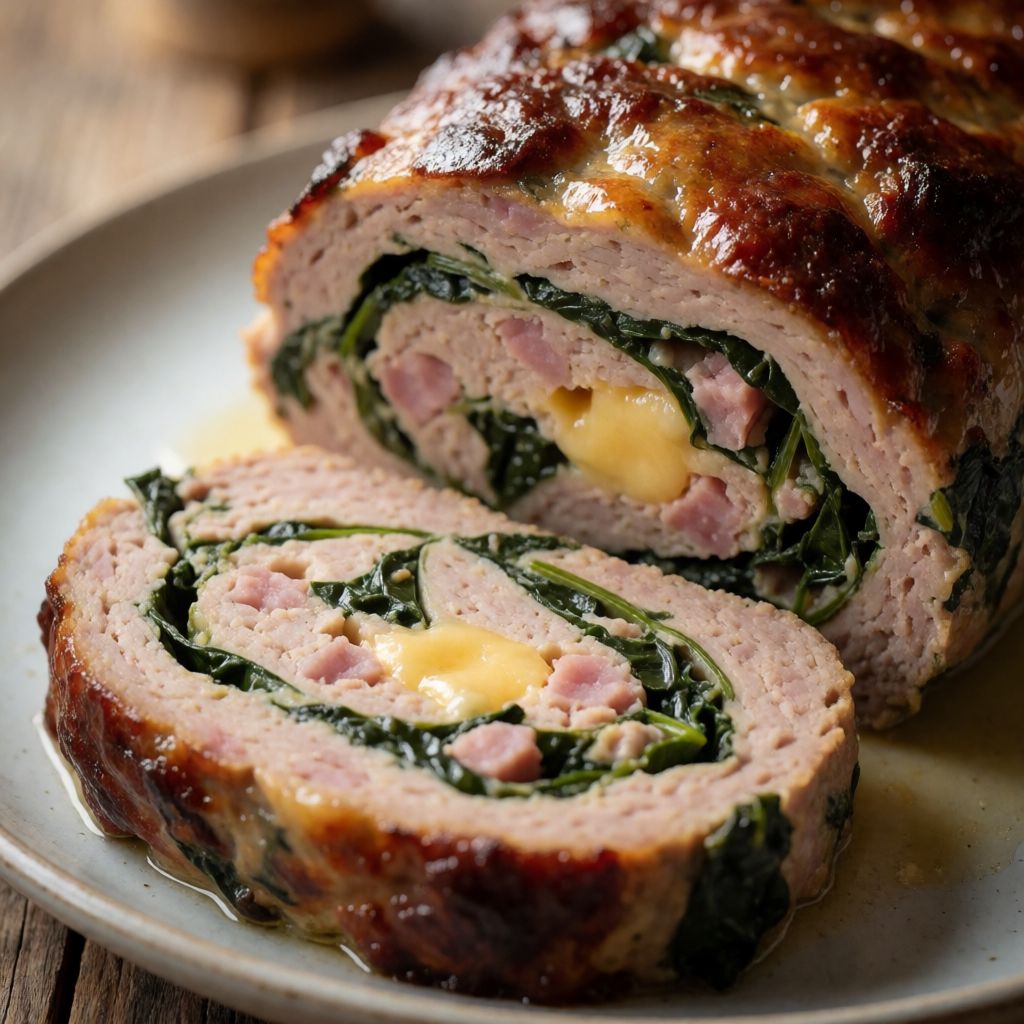
Polpettone with Chard and Fontina
A hearty Italian-style meatloaf baked with chard, ham and melting fontina cheese.
Labels are worked out automatically from the ingredients and can be wrong. Check the packaging if it matters to you.
Ingredients
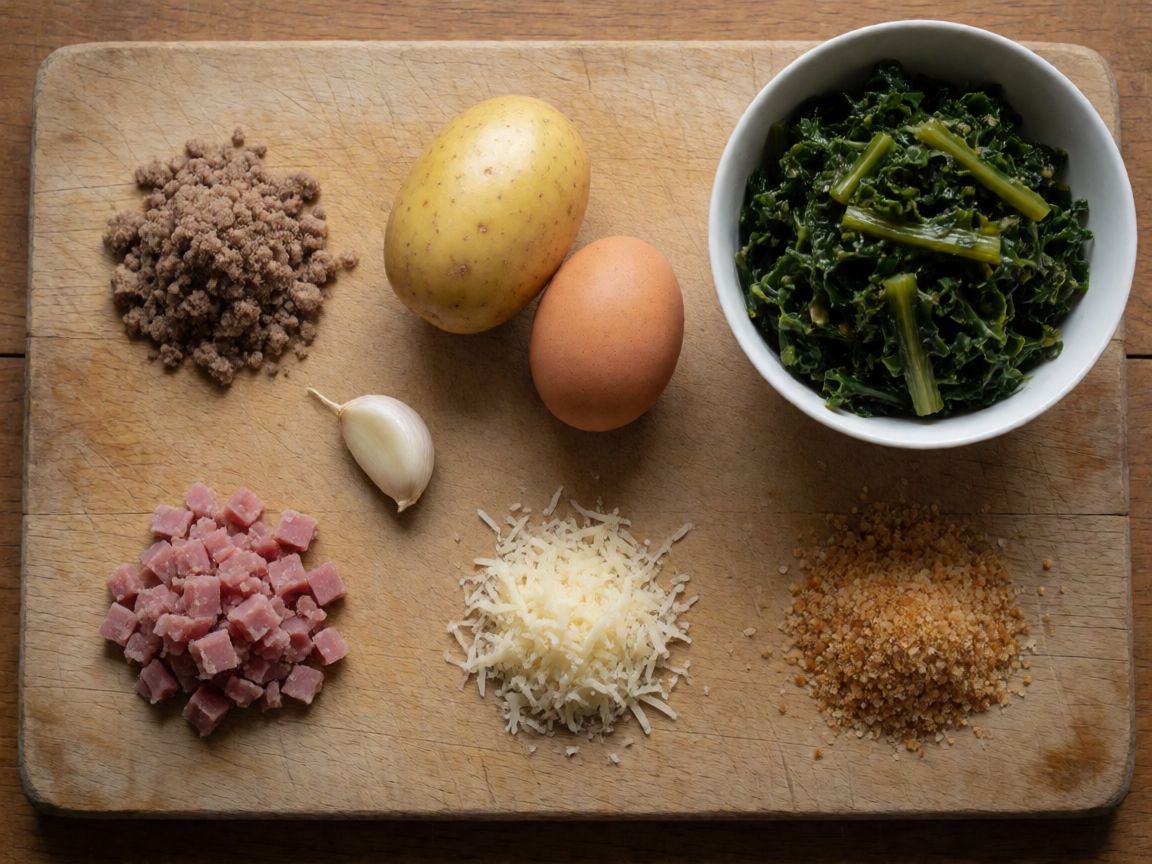
- 600 g Minced veal and pork
- 1 pcs Potato
- 1 pcs Egg
- 200 g Chard
- 1 clove Garlic
- 100 g Ham
- Salt to taste
- Black pepper to taste
- 100 g Fontina
- Breadcrumbs to taste
- 1 tbsp Olive oil
- 8 tbsp Red wine












Steps
In a bowl, combine the minced meat, chopped ham, minced garlic, mashed potato, salt, black pepper and egg.
Knead the mixture, turn it out onto the work surface, add the chard and cubes of fontina, shape into a loaf and coat in breadcrumbs.
Place the loaf in a baking dish greased with olive oil and pour in the red wine.
Bake at 200°C in a preheated oven, making sure the internal temperature reaches 71°C.
50 min
Polpettone is just a meatball that grew up and got ambitious — same mix, same logic, but shaped into a loaf instead of a ball. That shape isn't decoration. A loaf has more surface for crust than a sphere of the same weight, and it cooks through more evenly, because no point inside it is as far from the hot air as the centre of a big round meatball would be. If you tried to bake this as one giant ball, you'd get a scorched outside and a raw middle arguing with each other.
What decides whether this works is two numbers you're told to ignore at your peril: the oven at 200°C, and the inside of the loaf at 71°C. The crumb coating and the dry heat are there to build a crust — that's the only job of 200°C, drying and browning the surface starch and fat, the Maillard business that gives you flavour, not just colour. Meanwhile the wine sitting in the dish is not seasoning the loaf from outside, it's steaming underneath it, keeping the oven's air around the loaf humid enough that the crust doesn't turn to a biscuit before the inside has caught up. Take the wine away and you'll get a dry armour-plated shell around meat that's still pink near the bone of a potato.
The binder is potato and egg, not the soaked bread you'll find in classic Italian polpette. Mashed potato does the same job — it holds water inside the mince so the loaf doesn't dry to sawdust — but it's cheaper and it's also simply what a household had leftover from Sunday. This is kitchen economics, not a chef's flourish: mince was always stretched with something starchy, because meat was the expensive part and potato wasn't. If you've got leftover roast potato mash sitting in the fridge from your own Sunday, that's exactly the right amount of thinking to put into this step.
Ham and garlic go into the meat itself, kneaded through, because their job is to season the whole mass evenly — cured ham brings salt and a background meatiness, garlic a sharp note that the oven will round off. Chard and fontina, though, go in after the kneading, folded through roughly rather than worked in. That's deliberate. Knead cheese into mince and it melts invisibly into the fat — you lose it. Fold it in at the end in cubes and you get pockets of stretchy cheese when you cut the slice, which is the whole point of putting fontina in a meatloaf rather than just parmesan dust. Fontina itself is a semi-soft alpine cheese from the Aosta valley, chosen because it melts into strings rather than oil. Any semi-soft cheese with the same manners — young gouda, taleggio, a block mozzarella rather than the wet ball kind — will behave the same way. A hard aged cheese won't melt, it'll just toast, and you'll end up with gritty specks instead of pockets.
Chard brings bitterness and iron and, structurally, a bit of backbone — the leaf holds its shape in the loaf rather than collapsing to paste the way spinach would. If chard isn't in the shop, spinach will do, but use less and squeeze the water out of it first, or you'll water down the mince and the loaf won't hold together.
The breadcrumb coat on the outside isn't there for crunch alone — it's the layer that catches the heat first and protects what's underneath from drying out before the centre reaches temperature. Any dry, plain breadcrumb does this; stale bread grated at home works as well as the shop kind, and arguably better, because fresh bread turns to paste instead of crust.
The wine wants to be something you'd actually drink, not a bottle kept for cooking — sweetness or heavy tannin will concentrate as it reduces in the dish and throw the whole thing off balance. Eight tablespoons is roughly half a small glass, enough to steam, not drown. If you've only got stock in the house, use it, but you'll lose the slight acidity that cuts through the ham and fontina; a splash of vinegar in stock gets you partway back.
The mince itself — veal and pork together — is a fat-and-lean balance, not a flavour choice alone. Pork brings fat that keeps the loaf moist as it bakes; veal brings the lean structure that holds a slice together. All-beef will work, but it's drier and wants a touch more potato to compensate. Whatever you use, that 71°C core temperature is non-negotiable the moment pork mince is involved — it's not a chef's habit, it's where pork is reliably safe to eat, and conveniently it's also roughly where the egg in the mix has fully set and will hold your slice together on the plate.