
 AI photo
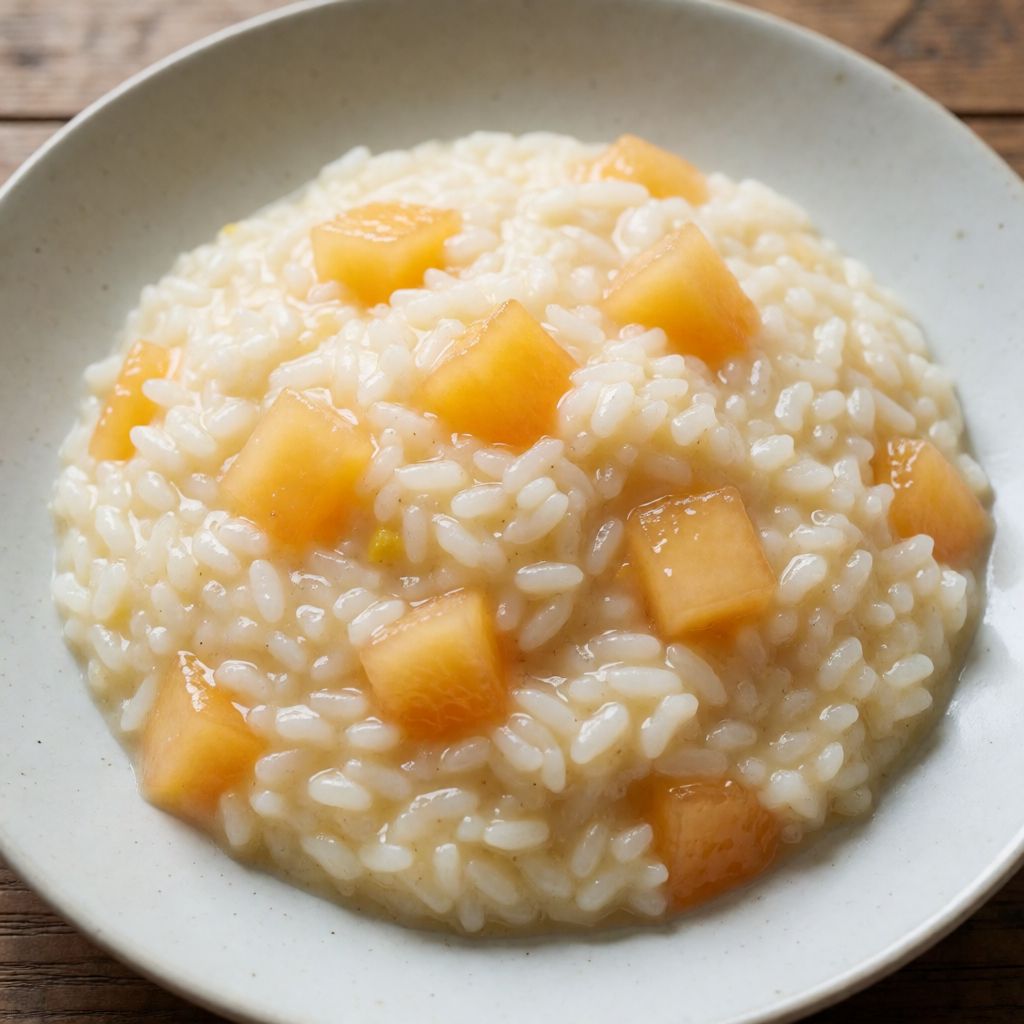
Sweet-and-Sour Melon Risotto
A sweet-and-sour risotto made with melon, finished with a touch of rosé wine and parmesan.
Labels are worked out automatically from the ingredients and can be wrong. Check the packaging if it matters to you.
Ingredients
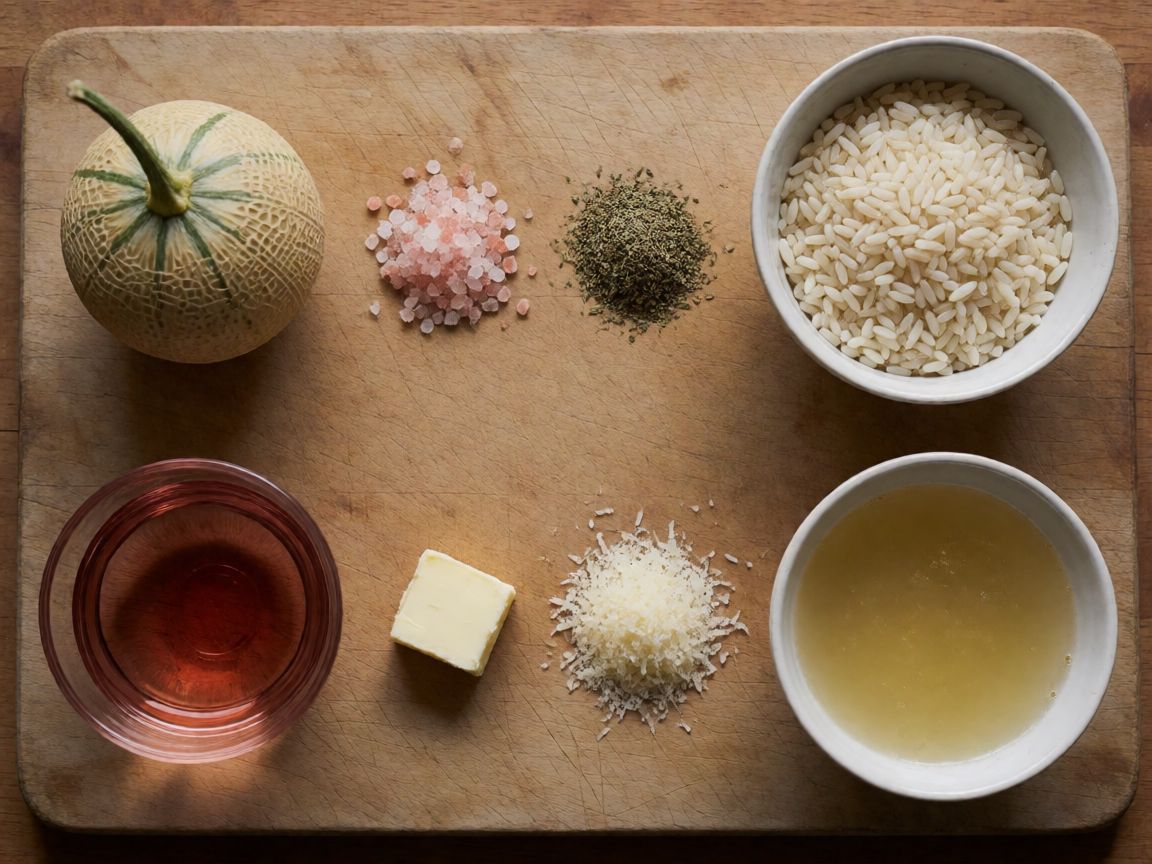
- 1 pcs Melon small
- Olive oil
- Salt
- Pink pepper
- Dried basil
- 350 g Carnaroli risotto rice
- 120 ml Rosé wine
- 20 g Butter
- 1 tbsp Parmesan
- Vegetable stock as needed
- 1 pcs Shallot
- Salmon fresh, for garnish












Steps
Peel the melon and remove the seeds; dice 3 slices into cubes. Add olive oil, salt and pepper, sprinkle with basil, and mix.
Leave to marinate for 25 minutes.
25 minIn a pan, heat olive oil and sauté the finely chopped shallot until translucent.
Add the rice and toast for a few minutes until the grains become glassy.
Pour in the rosé wine and let it evaporate completely.
Continue cooking the risotto, gradually adding vegetable stock a little at a time, as needed.
Halfway through cooking, add half of the marinated melon together with its juice.
Continue cooking the risotto until the rice is done.
Season with salt to taste, add ground pink pepper, stir in the butter, parmesan and the remaining marinated melon.
Serve immediately, garnished if you like with slices of fresh salmon.
Risotto is not really a rice dish — it's a starch-release dish. Carnaroli grains have a thick layer of amylopectin on the outside and a firm core that resists collapse, which is why the rice goes creamy without going to mush. Melon here isn't decoration, it's the whole point: it's doing the job lemon or white wine usually does in a risotto, cutting fat and salt with something bright, except it's sweeter and softer-textured, so you get a dish that tastes like it shouldn't work and then does.
What decides whether it works is restraint in two places: the marinating and the stock. Marinate the melon too long and it turns watery and loses the shape that gives the dish texture against the rice — 25 minutes is enough for salt and oil to pull out some juice and season the fruit, not dissolve it. And the stock has to go in "a little at a time, as needed" because that's literally how starch release works: each ladleful gets absorbed and scraped off the grain by your stirring, then you add the next. Dump it all in at once like boiling pasta and you've made wet rice, not risotto — the agitation is the mechanism, not a ritual.
Some say risotto needs constant, frantic stirring or it burns. No — it needs *regular* stirring so the rice doesn't catch on the bottom of the pan and so starch comes off evenly; a pause of a minute while you answer the door won't ruin it. What ruins it is heat that's too high, because then the stock flashes off before it's had time to be absorbed, and you end up adding far more liquid than the recipe needs just to compensate — which waters down the flavour.
On the rice: Carnaroli is chosen over ordinary long-grain or pudding rice because of that high-amylopectin coating with a resistant core — it releases starch into the stock while the centre of the grain stays with a bit of bite, what Italians call *al dente* applied to rice. Arborio is the usual substitute and will do, though it has less structural integrity and tips into mush more easily if you're not watching it, so treat it a little more gently near the end. Pudding rice, risotto-in-name supermarket mixes, paella rice — none of these behave the same way, so don't reach for them out of habit.
The shallot earns its place by being milder and sweeter than onion once cooked gently — you want the base translucent and soft, not browned, because browning here would add a bitterness that fights the melon rather than supporting it. If you've only got a small onion, use it, just chop it finer and give it a touch longer over gentle heat so it doesn't catch before it softens.
Rosé wine isn't an aesthetic choice — it sits between a dry white's sharp acidity and a red's tannin, which suits fruit that's already sweet. A dry white will work and is the safer swap; a sweet or fortified wine will push the dish too far into dessert territory, so avoid that.
The melon itself: pick one that's ripe enough to smell through the rind but still firm enough to hold a cube shape — overripe melon collapses the moment it hits warm stock, underripe melon stays crunchy and watery and never becomes part of the dish. Cantaloupe or a firm honeydew both work; what matters is firmness, not variety.
Butter and Parmesan go in off the heat, right at the end — this is the *mantecatura*, the step that turns risotto from "rice in liquid" into something that coats a spoon. Adding them too early, over heat, just melts the fat out and splits it instead of binding it into the starch; added at the end, off the heat, the fat emulsifies with the released starch into a sauce that clings. If you're avoiding dairy, a knob of a neutral oil and a hard non-dairy cheese alternative will approximate the texture, though you lose some of the binding.
Salmon as garnish is optional and sits there for contrast — raw-cured or lightly seared, its fattiness and savour balance the sweet-sour of the melon the way it might sit alongside fruit on a cheese board. If you'd rather skip fish altogether, Parma ham does a similar job: salt and fat against sweetness, no fuss needed.
On stock: use a light vegetable stock, not a dark, heavily reduced one — you want something that supports the rice without overpowering the melon's flavour. Homemade is better because you control the salt, but a stock cube dissolved properly and kept warm on the hob beside your pan is perfectly honest; just taste before you season further, since cubes vary wildly in saltiness.
Patience is the real ingredient missing from the ingredient list. You cannot rush the stock in, you cannot skip the marinating, and you cannot walk away from the pan for the full forty minutes. The dish rewards attention in short bursts, not heroics.