
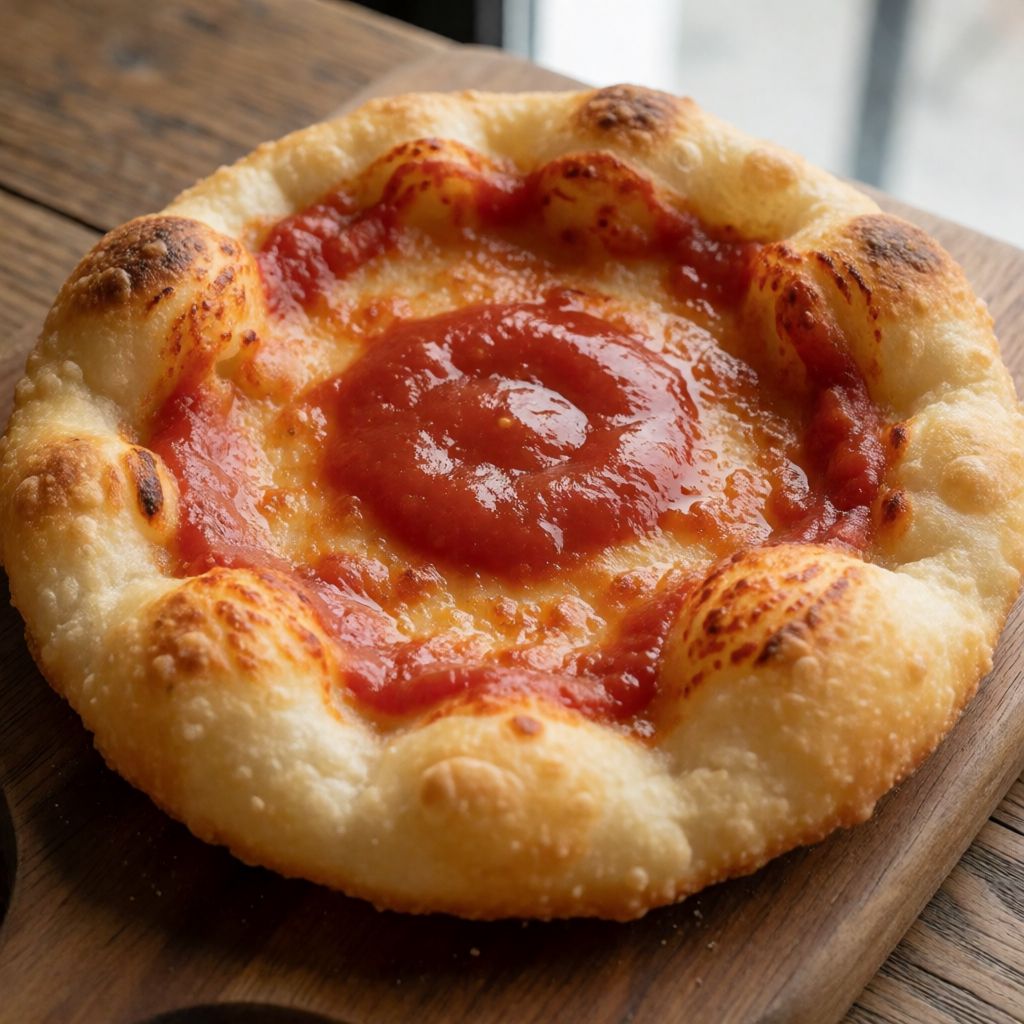
 AI photo
Fried Neapolitan Pizza (Montanara)
A Neapolitan classic: little discs of risen dough fried until golden, then topped with tomato sauce, stracciatella and oregano.
Labels are worked out automatically from the ingredients and can be wrong. Check the packaging if it matters to you.
Ingredients
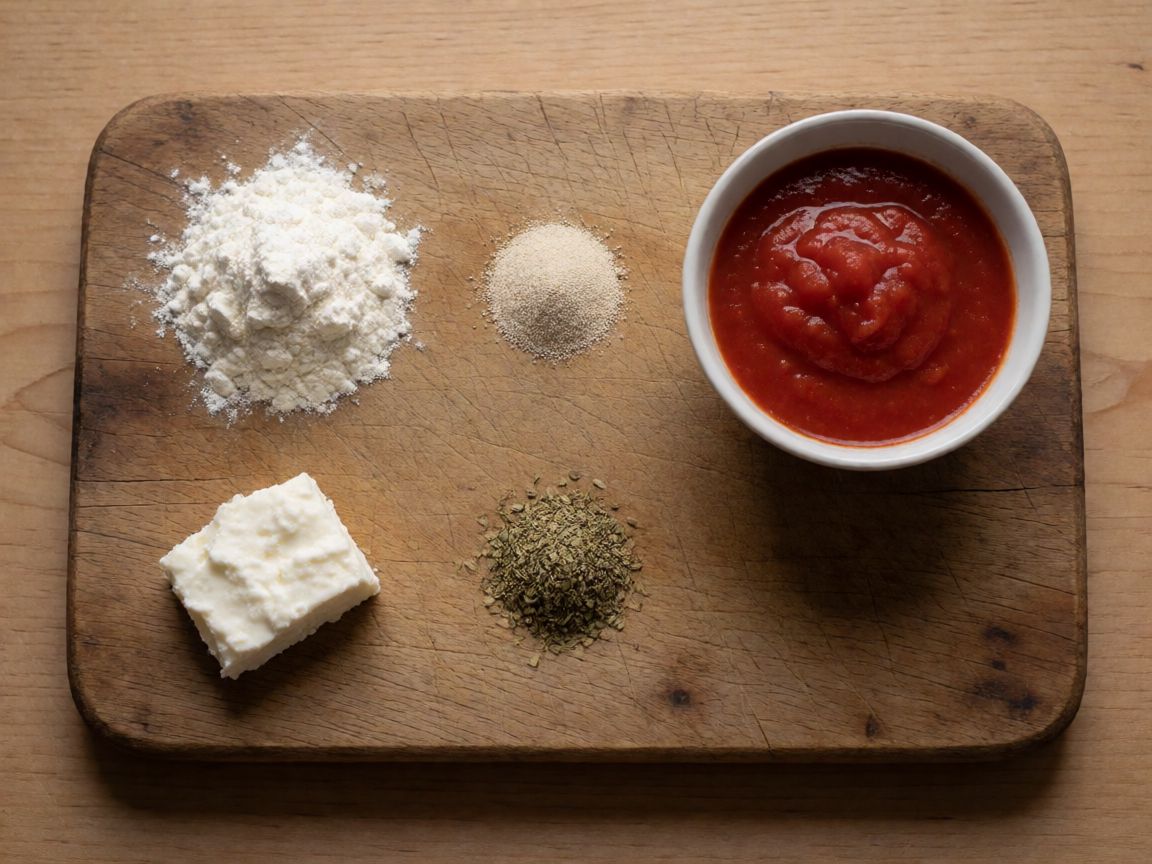
- 200 g Plain flour
- 150 ml Water
- 3 g Yeast
- 4 g Salt
- 10 g Olive oil
- Tomato sauce to taste
- Stracciatella cheese to taste
- Oregano to taste
- Olive oil for frying







Steps
In a large bowl, sift the flour and crumble in the yeast with your fingers.
Gradually pour in room-temperature water, mixing with a wooden spoon.
Add the salt and olive oil and knead the dough energetically.
Cover the bowl with film and leave the dough to rise in a draught-free spot.
30 minTurn the dough onto a work surface and fold it over itself on all sides.
Return the dough to the bowl, cover with film and leave to rise.
20 minRepeat the folding and rising twice for 20 minutes each, then leave to rise for at least 3 hours.
180 minTurn the dough onto a surface dusted with semolina, divide into pieces and flatten them.
Heat the oil and fry the pizzette until golden.
Lift the pizzette out with tongs onto a paper towel.
Top the pizzette with tomato sauce, oregano and stracciatella.
Serve the fried pizza at once, while still hot.
Montanara is what pizza was before ovens got involved — Naples fries its dough instead of baking it, because frying was cheaper and faster than firing a wood oven in a flat with no chimney to spare. The dough hits hot oil, puffs into a little golden pillow in under a minute, then gets dressed cold-ish on top: sauce, oregano, a spoon of stracciatella melting into the heat. What decides whether this works isn't the toppings — it's the dough's patience and the oil's temperature.
Three hours of rising isn't decoration, it's the whole mechanism. Yeast needs time to build the gas structure that makes the fried piece light instead of a dense, oily disc. Skip the long rise and you get a doughnut with ideas above its station — heavy, greasy, sullen. The three folds along the way aren't fussing: each one redistributes the yeast's food and tightens the gluten net a bit more, so the dough holds its shape and its gas instead of slumping.
Frying temperature is the other half. You want oil hot enough that the dough seizes and puffs the second it goes in — if you can drop a small offcut in and it rises to the surface with bubbles within a few seconds, you're there. Too cool, and the dough sits in the oil soaking it up instead of sealing against it, which is the actual cause of "greasy pizza" people complain about — not the frying itself, the wrong heat for it. Too hot and the outside colours before the inside cooks through, leaving a raw, gluey centre under a dark crust.
Flour: plain flour, nothing stronger needed, because you're not building a tall oven-sprung crust — you want enough gluten to trap gas and hold a fried shape, not the chew of a baguette. If all you have is bread flour, fine, just expect a slightly tougher bite.
Yeast: 3 g for 200 g flour is a small amount on purpose — a long slow rise with little yeast gives better flavour and structure than a short fast one with lots of it. If you're using instant/fast-action yeast rather than fresh, you can go even lighter; fresh yeast crumbles between the fingers, dried needs a minute in the water first to wake up.
Water: room temperature, not warm. Warm water flatters you with a quicker rise and punishes you with a dough that tires and collapses before the three hours are up. Room temperature is the slow, reliable road.
Salt: not just seasoning — it tightens the gluten and slows the yeast down, which is exactly what you want over a 3+ hour rise. Leave it out and the dough runs ahead of itself.
Olive oil in the dough: a small amount tenderises the crumb and helps the dough release cleanly when you shape it. Any neutral oil with no smell of its own does the same job if that's what's in the cupboard; you won't taste 10 g of difference either way.
Frying oil: this is where it matters more. You want enough depth in the pan that the pizzetta can float and puff rather than sit on the base of the pan and fry flat on one side — a proper wide pan from your kitchen stands in for the deep fryer just fine, you just need more oil in it than you think, and a splash guard or your plate propped as a lid, because hot dough in oil spits. Use an oil that can take real heat without smoking and arguing back — sunflower or a light olive oil, not your good extra virgin, which is wasted and burnt at these temperatures.
Tomato sauce: simple crushed tomato, no need for a long-cooked ragù here — it goes on raw-ish and warms through from the hot pizzetta, so it should already taste finished, not like it needs twenty minutes on the hob to come good.
Stracciatella: the soft, creamy inside of burrata, sold on its own in some shops. If you can't find it, torn burrata or even a soft, milky mozzarella loosened slightly will do the same job — cold, rich contrast dropped onto something straight out of hot oil. That contrast, hot crust against cool cream, is the actual point of serving it "at once" — wait, and the cheese goes from a cool contrast to just a puddle, and the crust that was crisp goes soft from its own trapped steam. This is not a dish that reheats or waits politely on the side.
This feeds five as a starter-sized plate each, maybe four if people are hungry after a Sunday roast and treating this as a second course rather than the main event — which, honestly, in Naples it often was: street food, eaten standing, not the centrepiece of a table.