
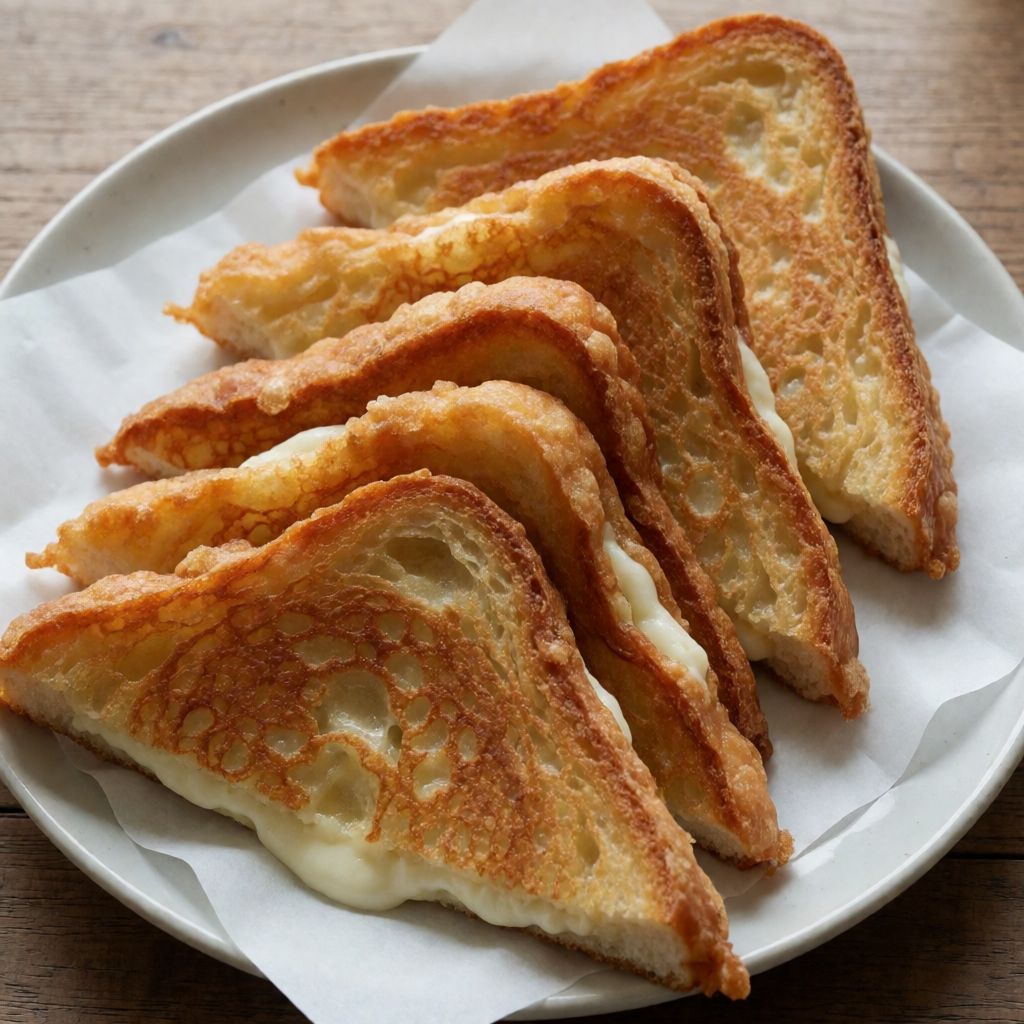
 AI photo
Mozzarella in Carrozza
Crispy fried mozzarella sandwiches, golden outside and melting inside.
Labels are worked out automatically from the ingredients and can be wrong. Check the packaging if it matters to you.
Ingredients
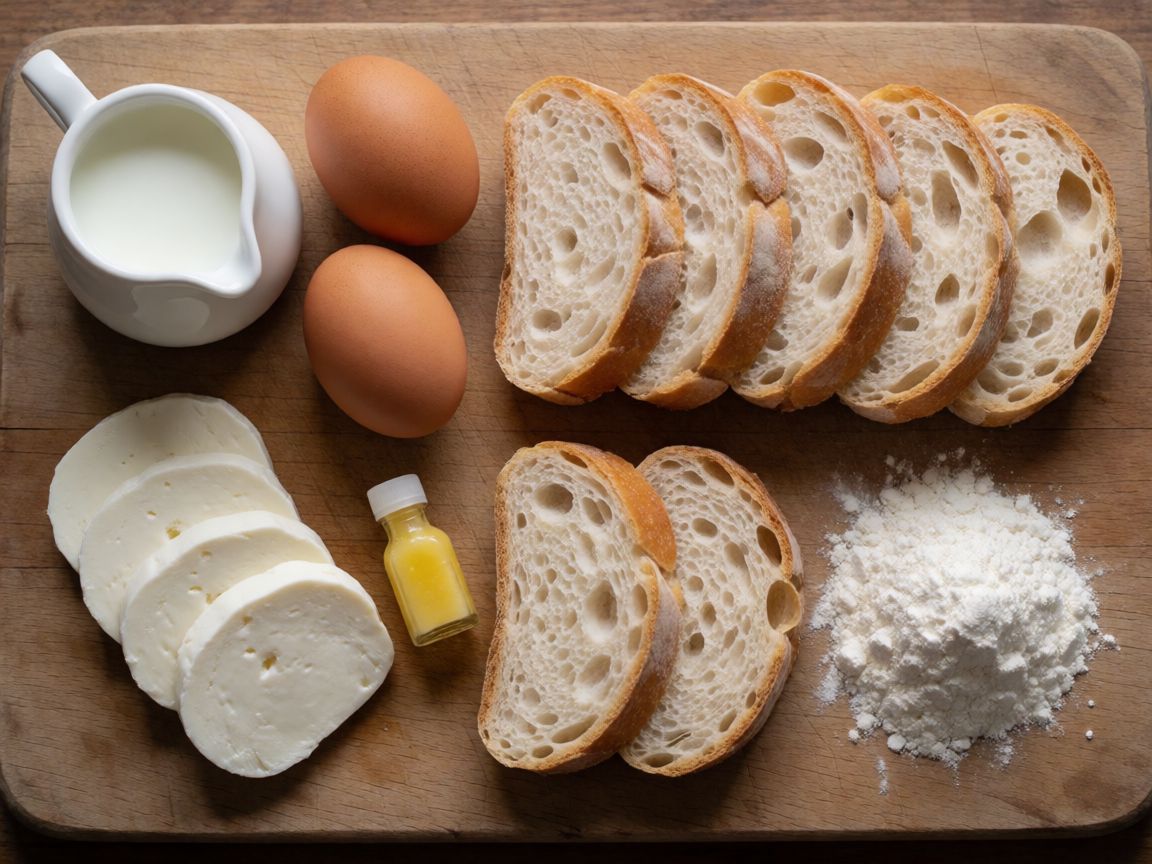
- 8 pcs Sliced Bread
- 2 pcs Eggs
- 75 ml Milk
- 250 g Mozzarella sliced about 5–6 mm thick
- 2 tbsp Plain Flour
- 1 pinch Salt
- 50 g Ghee





Steps
Crack the eggs into a bowl and whisk with a pinch of salt.
Pour in the milk in a thin stream and mix. Set the mixture aside.
Trim the dark crusts from the sliced bread to make neat rectangles that will fry evenly.
3 minCut the mozzarella into slices about 5–6 mm thick and place one or two slices on a piece of bread.
Cover with another slice of bread and cut in half to make two triangles. Repeat with all the remaining ingredients.
2 minCoat the little sandwiches first in flour, making sure it sticks on all sides, then dip them into the egg and milk mixture so they are well covered.
2 minMelt the ghee in a frying pan, and once it has fully melted and is hot, fry the sandwiches.
Fry the sandwiches a few at a time on both sides until evenly golden.
5 minTransfer to a plate lined with paper towel to drain excess fat, and serve the sandwiches hot.
Mozzarella in carrozza means "mozzarella in a carriage" — the bread is the carriage, the cheese is the passenger, and your job is to seal the door before the passenger melts out the window. This is Naples thinking economically, the way all good trattoria food thinks: day-old bread that's gone a bit too firm for the table, and mozzarella that's a day past its best and starting to weep whey. Fried together they become something neither could be alone. It's not a toastie with extra steps — the frying is what turns stale bread and tired cheese into lunch.
What decides whether it works is the seal, not the filling. Flour first, then egg — never egg alone, because wet egg slides off smooth bread and does nothing. Flour gives the egg something to grip, and together they form a skin that closes the cut edges of the sandwich like wax round a letter. If that skin fails, the cheese finds the gap, leaks into the fat, and you get a flat, cheese-less biscuit sitting in a puddle of burnt mozzarella — that's the actual cause when people say their carrozza "didn't work", not the frying.
Some say use fresh, soft bread, because it looks nicer. No — soft bread collapses the moment it meets egg and milk, turns to paste at the edges, and won't hold a seal at all. You want sliced bread that's a day or two on, firm enough to keep its shape when wet, which is exactly why this dish exists in the first place: it was invented to use up bread nobody wanted fresh. If your loaf is still soft, leave the slices out uncovered for an hour before you start — you're manufacturing the staleness the recipe assumes.
Trimming the crusts isn't tidiness, it's mechanics. Crust is drier and denser than crumb, it browns faster than the rest of the sandwich, and it won't take the egg coating evenly — so if you leave it on you get patches that burn black while the centre is still pale, and a stiff rim that won't press flush against its neighbour slice, which is exactly where the seal breaks and the cheese escapes.
Mozzarella at 5–6mm is a deliberate middle ground. Thinner and it's fully melted and thin as a film before the bread's even coloured — no pull when you bite it. Thicker and the crust is done, maybe heading toward burnt, before the centre's had the heat-soak to go liquid. If your mozzarella is one of the very wet, water-packed balls, pat the slices dry and let them sit on kitchen paper for ten minutes first — too much whey in there turns to steam in the pan and that steam is what sogs your carrozza from the inside, not any fault of the frying.
Eggs and milk aren't a tempura batter, they're a wash — thin on purpose. The milk loosens the egg so it coats rather than clumps, and gives you a wash fluid enough to get right into the corners of the triangle, which is where the gaps hide. The flour before it matters more than the egg after it: flour is the tooth the egg needs to hold on at all. No flour, and the egg just beads up and runs off, same as rain on a waxed coat.
Ghee is here for one reason — it has no water and almost no milk solids left in it, so it can sit hot without spitting or burning black specks into your sandwich the way plain butter does. If you don't have ghee, any clarified butter does the same job, or a neutral oil with no smell of its own and a high smoke point — sunflower, groundnut. Don't use olive oil for this; its flavour fights the mild cheese, and its smoke point is lower than you want for a crust that needs real heat fast.
And fry only a few at a time — this is the patience part, and it's not optional. Crowd the pan and the fat temperature drops the instant the bread hits it, so instead of a quick seal you get slow soaking, and slow soaking is how a crisp sandwich becomes an oily one. Better to fry in two or three batches, keeping the first lot on paper towel loosely covered, than to rush all eight triangles in together and serve something greasy to save five minutes.