
Dairy
Ghee
Ghee is butter with the water and milk solids removed. It withstands high heat, making it ideal for frying.
900 kcal per 100 g
Nutrition per 100 g
900 kcal
| Protein | 0 g |
|---|---|
| Fat | 100 g |
| Carbs | 0 g |
| Fiber | 0 g |
Source: USDA FoodData Central, 2026-09-21. Per 100 g of product.
Good to know: Ghee
Let me tell you about ghee, and why it sits in the pan so calmly compared to ordinary butter.
Put butter in a hot pan and watch it closely. First it hisses and throws up foam; that's the water working its way out. Keep the heat up and dark flecks gather at the bottom, and a bitter smell creeps in: that's butter burning. Ghee behaves differently. Pour it in and it stays quiet, no foam, no flecks, no bitter smell, even in a pan that's good and hot. But don't get careless: if the pan is really roaring, ghee will smoke too, and the smell turns sharp and acrid. When that happens, pull the heat back. Watch the fat itself: it should stay smooth and glossy, never cloudy or dark.
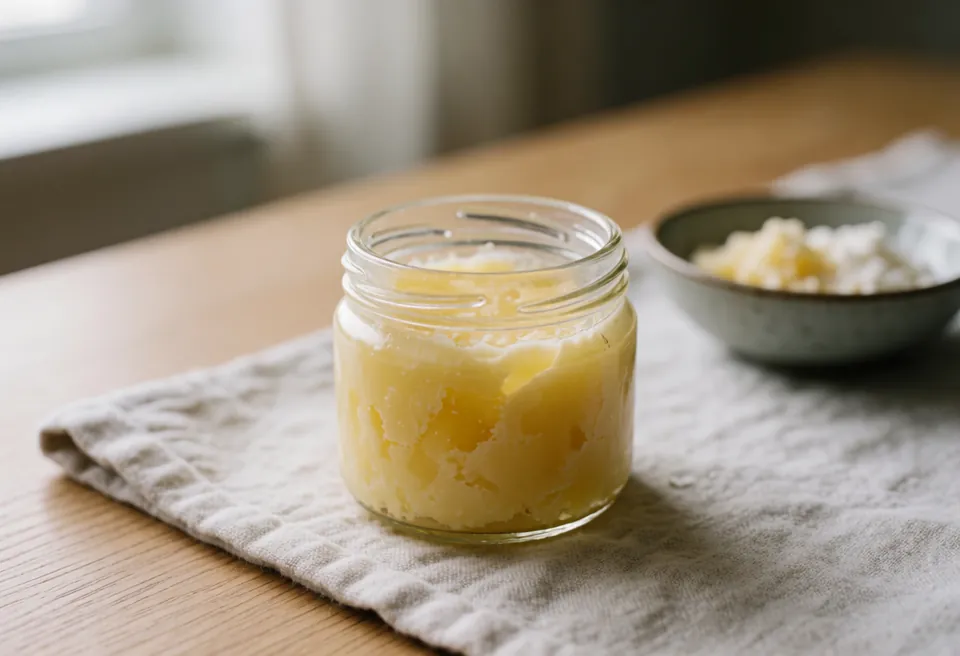
Choosing ghee is simple: trust your nose and your eyes. Good ghee is golden. At room temperature it's often soft and a little grainy; that's normal, not a flaw. Melt it and it turns clear and smooth. Smell it: it should remind you of toasted milk, maybe a little nutty, never sour, never flat.
Some people say ghee is "just clarified butter, interchangeable with regular butter in any recipe." No! Swap plain butter in for ghee when the pan is roaring hot and you'll get the same hiss, the same dark flecks, the same bitter smell you were trying to escape. Know the difference, and your pan stays honest.