
 AI photo
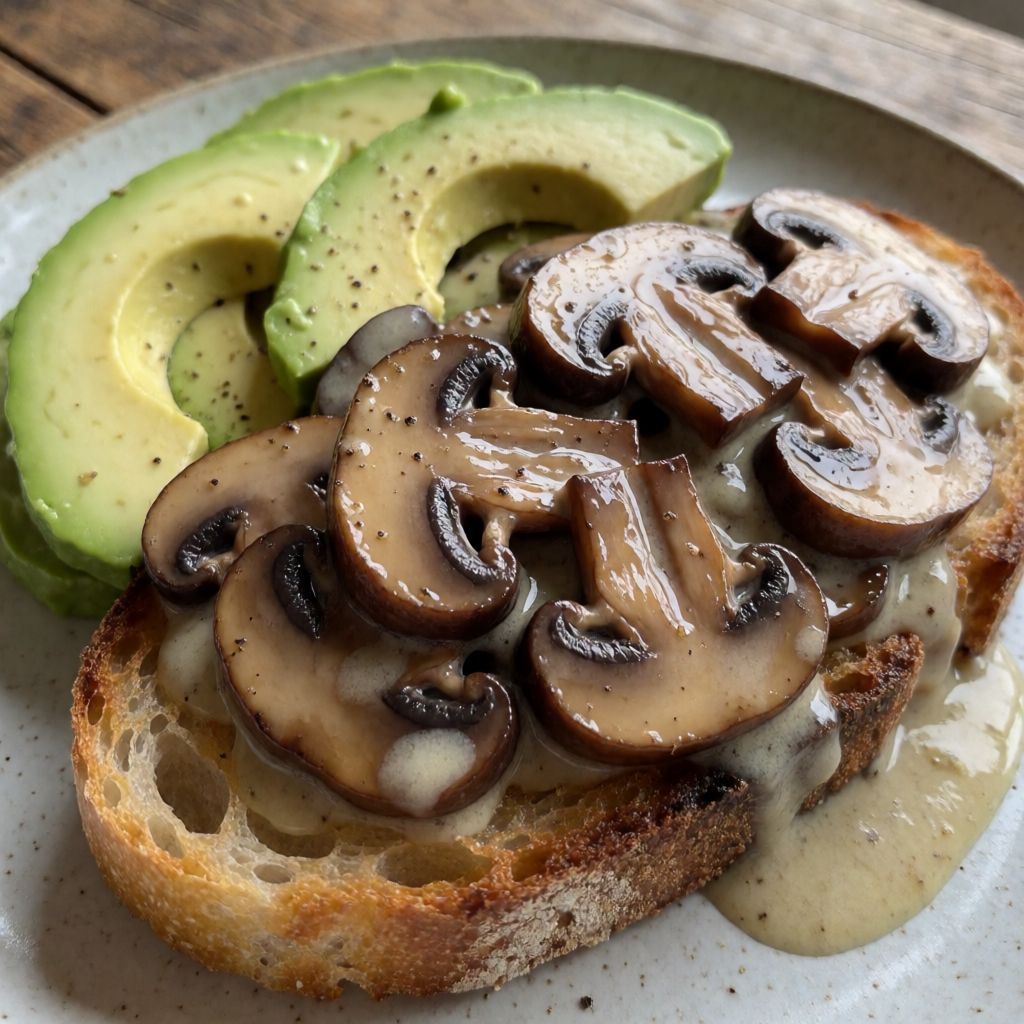
Mushrooms and Avocado on Sourdough Toast
A quick brunch of toasted sourdough topped with creamy sautéed mushrooms, smashed avocado and a poached egg.
Labels are worked out automatically from the ingredients and can be wrong. Check the packaging if it matters to you.
Ingredients
- 4 pcs Sourdough bread slices
- 500 g Mushrooms or mixed mushrooms, cleaned
- 50 ml Double cream
- 10 g Butter
- Salt
- Black pepper freshly ground
- 4 pcs Avocado
- 2 tbsp Lemon juice
- 1 pinch Smoked paprika or chilli flakes
- 4 pcs Eggs
- 1 tsp Apple cider vinegar
- 1 bunch Parsley finely chopped









Steps
Fry the mushrooms in a very hot pan with oil and butter, stirring constantly, until coloured and crisp.
Add the double cream to the pan and let it come to a simmer. Turn off the heat and season with salt and freshly ground pepper.
Mash the avocado with a fork and season with lemon juice, smoked paprika, salt and freshly ground pepper.
Bring a pot of water to the boil. Add the apple cider vinegar and reduce the heat slightly.
Swirl the water with a spoon to create a whirlpool in the centre. Drop an egg into the centre of the swirl and cook for about 2 minutes.
2 minCarefully lift out the poached egg with a slotted spoon and place on a plate. Repeat with the remaining eggs.
Top each piece of toasted bread with avocado, mushrooms and a poached egg, then sprinkle with parsley, salt and pepper.
This is three separate small cooking jobs stacked on toast, and the dish lives or dies on you keeping them separate. Mushrooms fried hard and dry, avocado mashed with acid, egg poached loose — if any one of those turns watery or grey, the whole plate reads as sad rather than good. It's not technically difficult. It's a timing-and-nerve dish: everything wants to be ready within about two minutes of everything else, so toast goes on last.
The mushroom step is the one people rush and ruin. "Very hot pan, stirring constantly" isn't decoration — mushrooms are mostly water, and a crowded or lukewarm pan steams them before it browns them. Steamed mushroom is grey, slick, and releases liquid onto your toast, turning it to paste. A hot pan drives off that water as steam fast enough that what's left behind fries and colours. You'll see it: they go from squeaking and pale to actually catching colour at the edges, shrinking, smelling different — nuttier, less wet. That's the cue, not a clock.
Cream goes in after, off a now-hot pan, so it doesn't need to cook so much as warm through and cling. This is the one place you can relax: it's forgiving, a sauce, not a technique.
The avocado and the egg are both about acid and heat doing a job most people blame on luck. Some say poaching an egg is a knack you either have or don't — no, it's water chemistry and an extra ten seconds of care, nothing more.
Mushrooms: any firm mushroom works — button, chestnut, a mix with something wilder if you can get it, like oyster or shiitake for more flavour per gram. Wash them fast or wipe them; don't soak, since they're sponges and you'll be fighting the water you just added back out in the pan. Oil plus butter together is the usual compromise: oil tolerates the high heat you need, butter brings flavour oil alone can't, and using both means the butter doesn't burn before the pan's hot enough to brown anything.
Double cream here isn't for richness alone — it's there to catch the browned bits (the fond) stuck to the pan and turn them into sauce instead of waste. If you don't have double cream, single cream or crème fraîche will do, though crème fraîche brings its own tang, which isn't wrong, just different. Milk alone will split or stay thin; it hasn't the fat to hold together over heat.
Avocado wants to be properly soft — give under gentle thumb pressure, not rock-hard, not browning inside. Lemon juice does two jobs at once: it stops the avocado oxidising to that grey-brown colour (that's enzymes meeting air, not spoilage, but nobody wants to eat round it), and it cuts the fattiness so the dish doesn't sit heavy. Any citrus with real acid works in its place — lime is the obvious swap. Smoked paprika or chilli flakes add warmth without heaping on chilli heat; paprika gives smoke, chilli gives punch — pick by mood.
The egg: apple cider vinegar in the poaching water firms the egg white faster by lowering the pH, so it sets around the yolk before it can trail off into wisps — that's the real fix for "my poached eggs always go stringy," not fancier eggs or a special pan. Any vinegar works; cider vinegar is just mild enough not to flavour the egg. The whirlpool does the same job mechanically — it wraps the white around itself as it sets, so you don't need the vinegar to do all the work alone. Fresher eggs also poach tighter, since the white hasn't thinned with age; if your eggs are a few weeks old, don't blame your technique.
Bread: proper sourdough, something sturdy enough to toast without going limp under cream and mashed avocado. A supermarket sliced white will go soggy in the time it takes you to walk it to the table — not a tragedy, just know what you're choosing. Toast it last, right before plating; it's the one component that has no patience built in and goes stale-tasting fast once damp.
And patience is the actual ingredient most recipes leave off the list. Rushing the mushrooms gets you grey ones. Rushing the egg gets you a cloud of white threads and a bald yolk. None of this needs skill so much as it needs you to wait for the pan, not the clock, to tell you it's ready.