
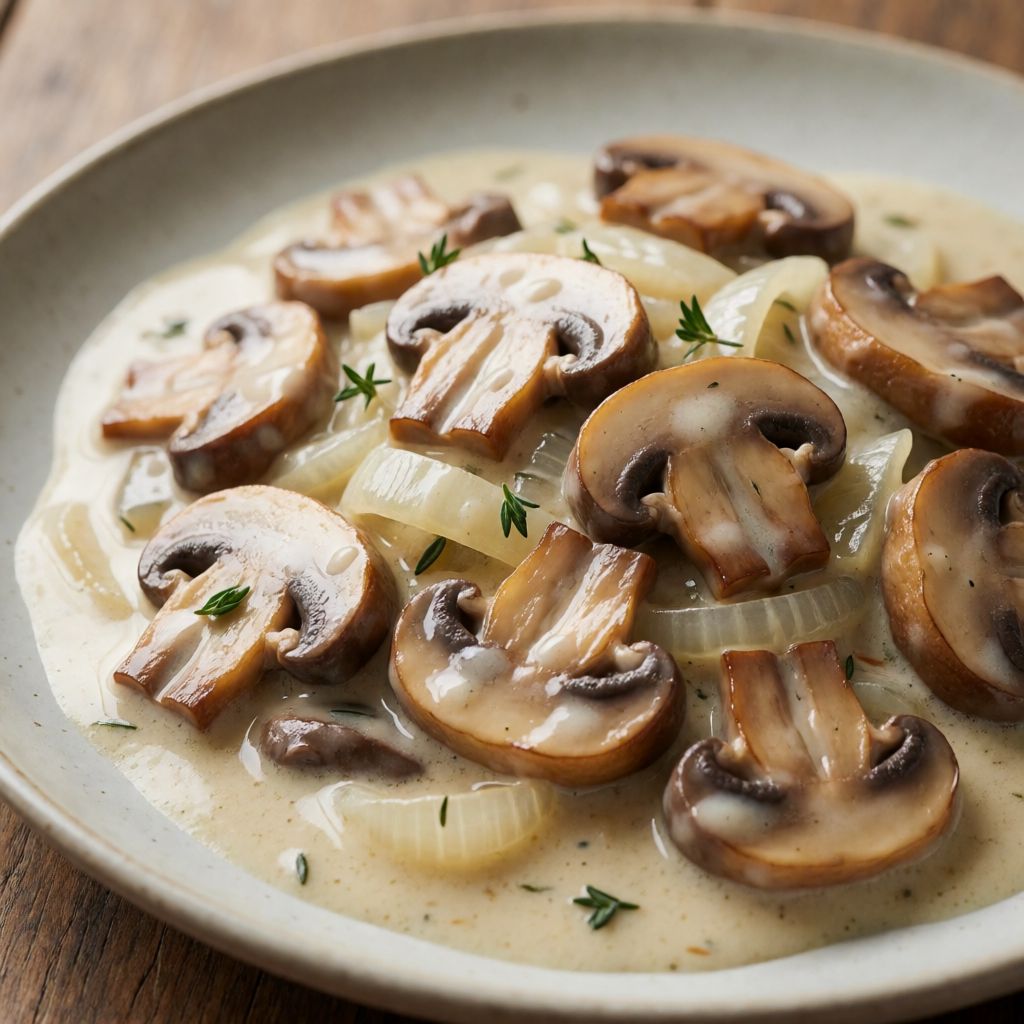
 AI photo
Fried Mushrooms in Cream Sauce
A quick pan dish of fried mushrooms and onion in a creamy thyme sauce, served on good bread.
Labels are worked out automatically from the ingredients and can be wrong. Check the packaging if it matters to you.
Ingredients
- 400 g Mushrooms cut into quarters
- 1 pcs Onion finely chopped
- 2 tsp Thyme finely chopped, fresh
- 200 ml Whipping cream
- 1 tbsp Butter for frying
- Salt
- Black pepper freshly ground
- 4 pcs Bread slices
- 1 bunch Parsley finely chopped, for sprinkling







Steps
Melt the butter in a frying pan and fry the mushrooms over high heat, stirring, until golden and appetising.
6 minReduce the heat, add the onion and sauté until soft.
3 minSprinkle with thyme, pour in the cream and let it simmer briefly.
Season with salt and freshly ground pepper to taste.
Serve on good bread, sprinkled with parsley, a little freshly ground pepper and salt.
This is mushrooms on toast dressed up properly — the British version of what Georgians do with walnuts and what the French do with a proper velouté. Four people, one slice of good bread each, and the whole thing stands or falls on one decision: does the pan get hot enough before the mushrooms go in, or not.
Mushrooms are mostly water held inside a loose sponge of protein. Thrown into a pan that isn't properly hot, or crowded so steam can't escape, they don't fry — they stew in their own juice, go grey, and taste of nothing but wet. The first six minutes on high heat aren't about colour for colour's sake; they're a race to brown the surface before the water inside has time to leak out and drown the pan. A wide domestic frying pan, not crowded — do two batches if your pan is small rather than one crowded one.
Then the heat drops, because onion is a different animal: thin-walled, full of sugar, and it goes from sweet to bitter in the time it takes to answer the phone. Soft and translucent is the target, not colour — you're not making onion jam here, you're making a base for cream.
The cream only gets a brief simmer, not a boil. Boiled hard and long, especially once salt and pepper are in, cream can separate into fat and water right in front of you — not dramatic, just sad and grainy. A short simmer thickens it just enough to cling to the mushrooms and soak, slowly, into the bread without turning it to mush before it reaches the table.
Mushrooms: go for ones with some flesh to lose and not too much water to start — chestnut mushrooms behave better here than the palest button ones, which are younger, wetter, and more prone to stewing instead of browning. Quartered, not sliced thin: you want chunks that hold their shape and some bite once they've sat in cream for a minute, not flat pieces that disappear into sauce. If wild mushrooms turn up — ceps, field mushrooms — use them and drop the thyme; they don't need the help.
Onion: just the one, finely chopped so it melts rather than fights the mushroom for texture. Any onion will do here — this isn't a dish where the variety matters, it's a dish where the restraint does.
Thyme: fresh, because dried thyme needs time in a liquid to give anything up and this sauce doesn't sit around long enough. It goes in before the cream so its oils can bloom briefly in the fat left in the pan rather than just floating on top of liquid.
Cream: whipping cream, around 35% fat, is chosen for a reason — enough fat to resist splitting when it meets a hot pan and a bit of salt. Thinner cream, the kind meant for tea, will curdle faster and give you a thin, watery sauce instead of one that coats. If you only have that, keep the heat lower still and don't let it properly simmer, just warm through.
Butter: for frying it gives flavour, but burns if the pan gets too hot before the mushrooms calm it down with their own moisture — if that worries you, a splash of any neutral oil alongside raises the point at which it catches without taking anything away from the taste.
Salt: notice it's added at the end, not at the start with the mushrooms. Salt draws water out by osmosis — salt the mushrooms early and you've engineered the very problem the high heat was fighting against. Season at the end, when there's nothing left to spoil.
Bread: this is the plate as well as the starch, so it needs a crumb sturdy enough to carry cream without collapsing in the two minutes it takes to eat — a proper sourdough or a dense white loaf, toasted, holds its nerve far better than soft sliced bread, which will give up and go soggy before the fork arrives. Parsley goes on raw and last, because its only job here is a clean, green bite against all that cream and butter — cooked, it would just be more softness in a dish that already has plenty.