
 AI photo
Spiced Christmas Buns with Chocolate
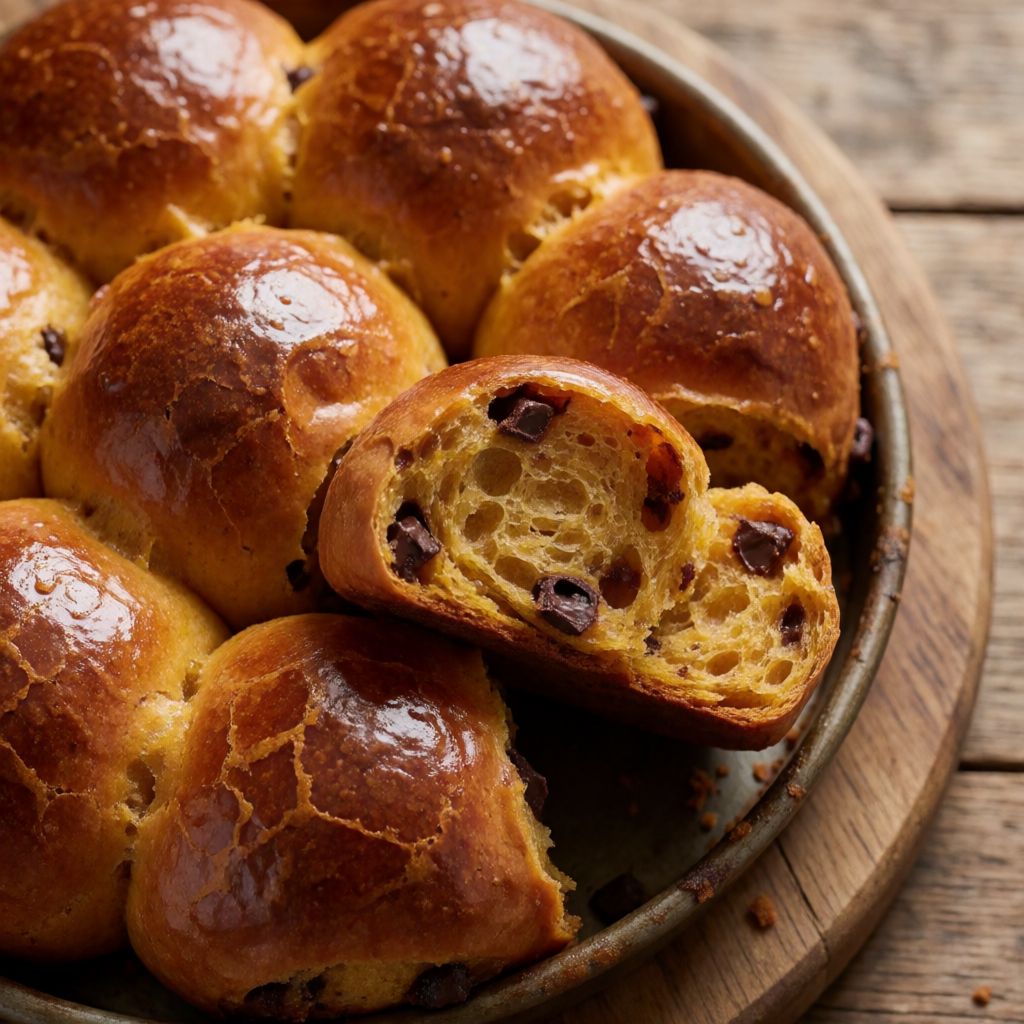
Soft spiced Christmas buns studded with dates, hazelnuts and dark chocolate, perfect for the festive table.
Labels are worked out automatically from the ingredients and can be wrong. Check the packaging if it matters to you.
Ingredients
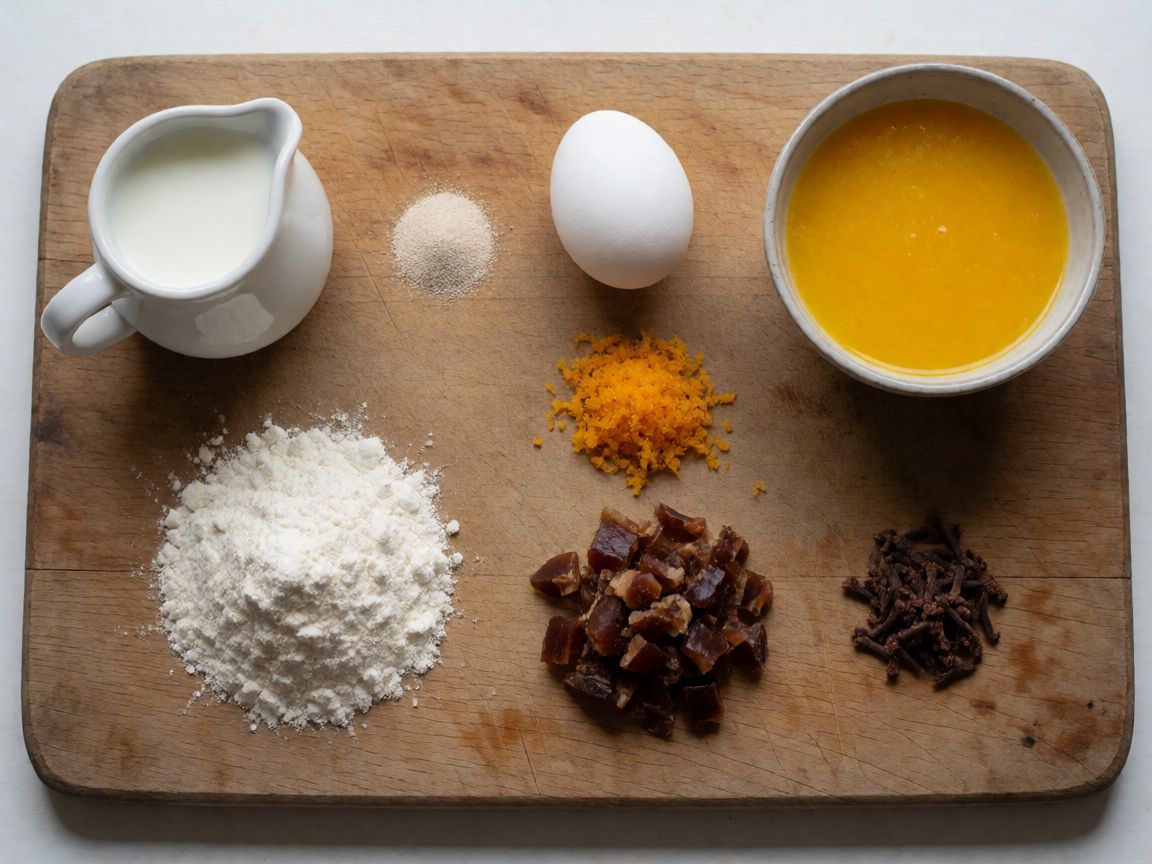
- 200 ml Milk
- 15 g Yeast
- 1 pcs Eggs
- 1 pcs Orange organic, finely grated zest
- 100 ml Orange juice freshly squeezed from the orange
- 500 g Plain flour
- 50 g Dates roughly chopped
- 0.5 tsp Cloves
- 2 tsp Cardamom
- 10 g Salt
- 75 g Butter
- 75 g Hazelnuts roughly chopped
- 75 g Dark chocolate roughly chopped
- 1 pcs Eggs for glazing
- 25 g Pearl sugar
- 25 g Hazelnuts for sprinkling














Steps
Mix the milk with the yeast, then add the egg and orange juice. In a bowl combine the flour, zest, dates, cloves, cardamom and salt, and stir.
Knead the dough, preferably with a mixer on low speed, for 5 minutes.
5 minAdd the butter and mix for another 5 minutes, until the dough becomes smooth and elastic.
5 minFold in the hazelnuts and chocolate. Transfer the dough to a clean bowl, cover and let it rise on the kitchen counter for 45 minutes.
45 minPlace the dough in the fridge until the next day.
540 minTake the dough out of the fridge, divide it into 12 buns, shape them round and place on parchment paper.
5 minCover with a clean towel and let the buns rise on the kitchen counter for an hour and a half.
90 minBrush the buns with beaten egg, then sprinkle with pearl sugar and hazelnuts.
2 minBake in a preheated fan oven at 175°C for about 20 minutes.
20 min
This is a yeasted bun, not a cookie dressed up for December. Milk, egg, orange juice and flour build a dough; butter goes in after, not before, because a dough that's already got some structure can carry fat without collapsing into a greasy paste. Chocolate and hazelnuts are folded in last, cold and coarse, so they stay as pieces you bite into rather than streaks of brown through the crumb.
What decides whether it works is the cold night in the fridge. Nine hours at fridge temperature is not "for convenience" — it's where the yeast slows right down and the gluten relaxes and ties itself into something elastic, while the orange zest and cloves and cardamom actually move into the dough instead of sitting on top of it. Skip that and you've got a bun that tastes of flour with spice dust on it. Some say you can rush spiced dough with more yeast and less time — no, because the flavour isn't made by the yeast, it's made by time; more yeast just gets you there sourer and flatter.
The second rise, an hour and a half on the counter, is the one people cut short because the first cold rise feels like it should have done the job. It hasn't — that was about flavour and structure, not volume. This one is about air. Press a bun gently: if it springs back fast, it's not ready; if the dent stays, it's gone too far and will be dense anyway. You want it to come back slowly, like a cushion with memory. That's the line.
The milk carries the yeast and warms things just enough for it to wake up — it should feel barely warm to the inside of your wrist, not hot, because yeast dies quietly above about 50°C and gives you no warning, just a flat bun later with no one to blame. The egg in the dough is there for structure and a bit of richness, not for rising; don't confuse it with the baking-powder logic of a cake.
The orange is doing two separate jobs and that's why you use both the zest and the juice. Zest gives you the oil-soluble perfume — the stuff that actually smells like orange, which the juice barely has. Juice gives you acidity and liquid, and a little acid in a sweet dough slows the yeast just enough to let flavour build instead of just gas. Use an organic or unwaxed orange for the zest specifically because you're eating the skin's oil glands directly; a waxed supermarket orange zest will taste faintly of the coating, not the fruit.
Cloves and cardamom are the two spices doing the most work for the least quantity — half a teaspoon of clove is already near the top of what's pleasant, since clove turns medicinal fast. Cardamom, by contrast, is forgiving and is the actual backbone of Scandinavian festive baking that this bun is descended from; the Nordic kitchens leaned on bulk spices like cardamom and cinnamon for winter baking because they kept well and stretched a small spice budget across a whole season of baking, long before anyone thought of it as "Christmassy". If you've only got ground versions instead of whole pods and buds, use them — ground cardamom loses punch faster than whole, so if yours has sat in the cupboard since last winter, use a bit more rather than less.
Butter goes in after the first five minutes of kneading, not stirred in with everything else, because fat coats flour particles and blocks gluten from forming if it's in from the start — you'd get a dough that never properly grabs together. Any butter with no strong flavour of its own works; margarine will get you through in a pinch but the bun will taste thinner, literally missing the milk-fat notes that carry the orange oil around your mouth.
Dates, hazelnuts and chocolate are the filling, and they're added roughly chopped and cold on purpose — fine-chopped or warm, they'd smear through the dough and vanish. Roughly chopped dark chocolate also survives the oven better than chips do, which are stabilised to hold their shape and end up waxy; real chopped chocolate melts a little at the edges and stays soft in the centre, which is the point.
The glaze of beaten egg plus pearl sugar and hazelnuts on top isn't decoration you could skip without consequence — the egg wash is what gives you shine and colour at 175°C in a reasonable twenty minutes, because a bare dough surface dries out and bakes pale and dusty-looking long before the crumb inside is cooked through. Pearl sugar doesn't melt flat like caster sugar would; it stays as crunchy beads, which is the entire reason it's used on buns like this rather than a dusting of icing sugar, which would just dissolve into the egg wash and vanish.
Twelve buns from this is a Sunday-morning batch for a houseful rather than two people — think of it sitting next to the roast conversation the night before, proved in the fridge overnight, baked while the kettle's going for that first cup of tea with milk. The fan oven at 175°C is the figure given for a reason: fan ovens run a touch hotter and more evenly than a conventional one at the same dial setting, so if yours isn't fan-assisted, nudge it up by about 10-15°C and keep an eye on colour rather than trusting the clock alone — a bun that's gone deep gold and sounds slightly hollow underneath when tapped is done; one that's still pale and silent needs more time regardless of what the timer says.