
 AI photo
Neapolitan Ragù
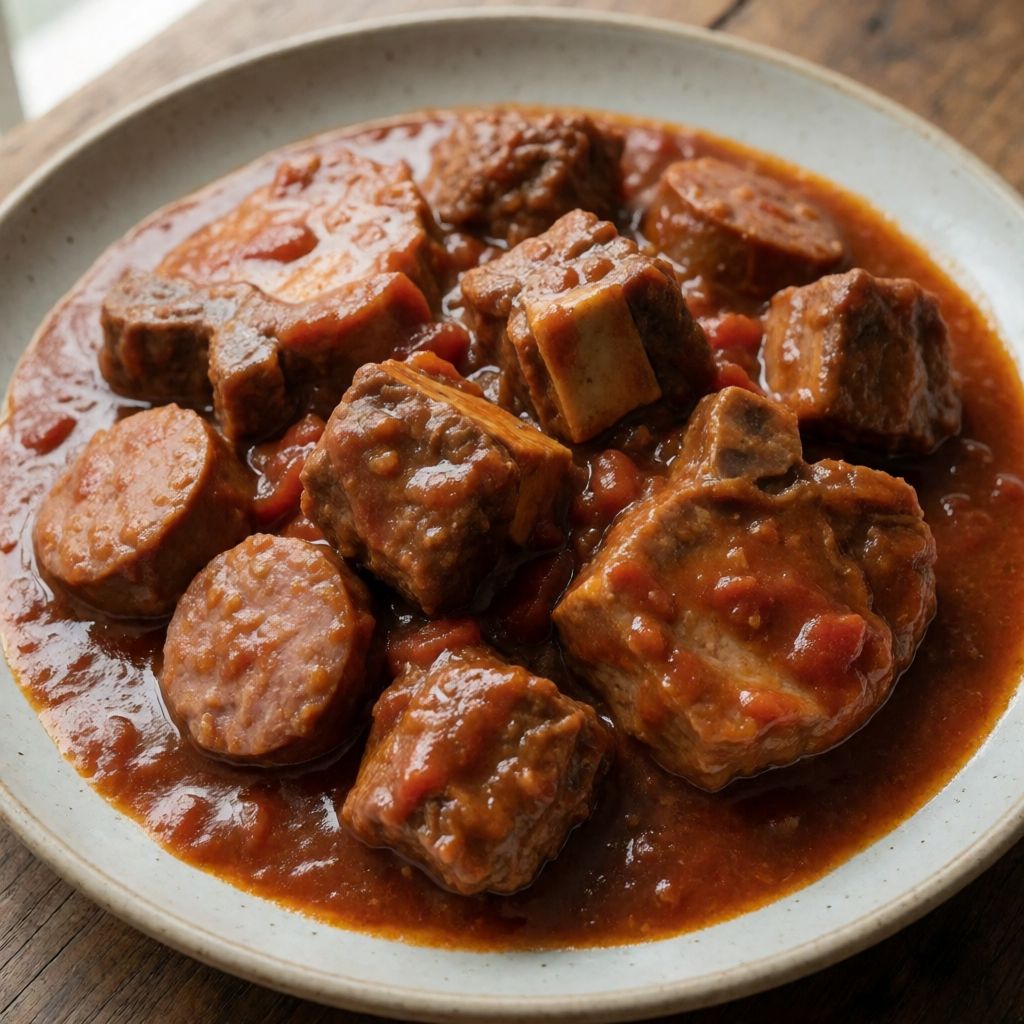
A slow-simmered Neapolitan meat ragù, cooked low and gentle until the sauce turns rich and creamy.
Ingredients
- 4 pcs pork ribs
- 1 pcs Italian sausage
- 2 pcs pork chops
- 1 pcs onion
- olive oil to taste
- 1.5 l tomato passata
- 1 tbsp tomato purée
- 80 ml red wine
- salt to taste
- black pepper to taste
- basil to taste (optional)











Steps
Slice the onion into thin half-moons and fry gently in a heavy-bottomed pot generously drizzled with olive oil until soft.
10 minAdd the prepared meat — pork ribs, sausage and pork chops — raise the heat and brown on all sides until evenly coloured.
10 minPour in the red wine and let it evaporate, then add the tomato passata.
5 minDilute the tomato purée in a little warm water and stir into the sauce.
2 minSeason with salt and black pepper, and bring to the boil.
5 minLower the heat, cover and simmer the ragù for at least 3 hours, stirring occasionally, so it barely bubbles. Done when the meat reaches 70°C inside.
180 minAfter a few hours of slow simmering, check that the sauce has thickened to a creamy consistency and the meat is tender and juicy.
If you like, garnish with basil before serving.
Forget bolognese for a minute. Neapolitan ragù isn't minced meat in tomato — it's whole pieces of pork cooking so slowly in tomato that the sauce becomes something else entirely. The meat gives up its collagen and fat over hours, the tomato thickens from thin liquid into something that clings to a spoon, and what you get at the end is less a sauce with meat in it than a meat broth that happened to be made of tomato. That's the whole point of the three ribs, the sausage, the chops: not to flavour a quick sauce, but to be slowly dissolved into one.
What decides whether this works is heat control, and it's the one place a British hob will fight you. You want the pot to "barely bubble" — not simmer the way most recipes mean simmer, but sit at a tremble, a lazy blip every few seconds. On a gas ring this means the lowest flame you have, sometimes with the pot pulled half off the burner. On electric or induction, it means the lowest setting and watching the first twenty minutes closely, because these hobs undershoot and overshoot rather than holding steady. If it's doing more than that, the sauce reduces too fast on the surface while the inside of the ribs hasn't had time to let go of their toughness — you end up with thick sauce and chewy meat, which is the usual failure here.
The three meats aren't there for variety of flavour so much as variety of fat and connective tissue. Ribs are mostly bone, cartilage and collagen-rich muscle — they're what thickens the sauce and gives it body, because collagen breaks down into gelatine over long, gentle heat. Sausage brings fat and seasoning already built in — garlic, fennel, whatever the butcher put in — so taste it raw before you salt anything else, or you'll oversalt once it's cooked down and concentrated. Chops are the leanest of the three and will dry out fastest if the heat ever runs hot; they're there to give you actual chewable meat alongside the ribs that mostly contribute to the sauce itself. If you can only get two of the three, keep the ribs — they do the real work.
Onion first, meat second, is not optional ordering. Onion in cold-ish oil over gentle heat releases its sugars without burning; meat added to a pan that's already hot enough to brown onion will seize and brown properly rather than stew in its own juice and go grey. Browning the meat (step 2) matters because it's building the maillard flavour you can't get any other way — not just colour, actual roasted-meat taste that boiling alone never produces. Skip it and the ragù tastes flatter, more like stewed meat in tomato than ragù.
Wine goes in and has to "evaporate" before the tomato arrives — that's not a timing quirk, it's because wine's raw alcohol taste needs heat and time to cook off, and if you add the tomato too soon, that sharp alcohol edge gets locked into a sauce you'll be simmering for hours; you can't cook it out later once it's diluted into two litres of liquid. Any dry red without a lot of oak or sweetness works; you're not after a prized bottle, you're after acid and a bit of fruit to lift the tomato. No wine in the house — a splash of red wine vinegar diluted with water gets you the acidity without the alcohol step.
Passata plus tomato purée (concentrate) is doing two different jobs: the passata is the bulk liquid, the purée is there for depth and a slightly darker, more savoury tomato note, the kind you get from reduction rather than fresh tomato. Diluting the purée in warm water before adding it stops it clumping into little bitter lumps that never fully dissolve into two litres of sauce — a real defect, not a cosmetic one, because a lump of raw concentrate tastes sharp and metallic against the rounded sweetness of the long-cooked sauce around it.
On salt: add it once, lightly, at step 5, and taste again near the end. The sauce reduces for three-plus hours, concentrating everything in it — salt included — so what's correctly seasoned at the start can turn oversalted by hour three. This is the one place patience saves you from a mistake rather than just producing a better result.
Basil at the end, not simmered in for hours, because its aroma is volatile — long heat cooks it into something flat and grassy rather than fresh. If you don't have basil, leave it out rather than reaching for dried oregano as a swap; dried herbs added raw at the end don't bloom the way fresh ones do, they just sit there tasting dusty.
Traditionally this is a Sunday dish in Naples for the same reason a roast is a Sunday dish here — it needs a stretch of unhurried time that a weekday doesn't give you, and historically it was the one day a family might have more than one cut of meat in the pot at once. There's no mysticism in the three-hour wait; it's just how long it takes collagen to turn to gelatine at a near-simmer. Rush it on higher heat and you get something edible in ninety minutes, but it won't be this — it'll be tomato sauce with meat in it, which is a perfectly fine Tuesday, just not a ragù.