
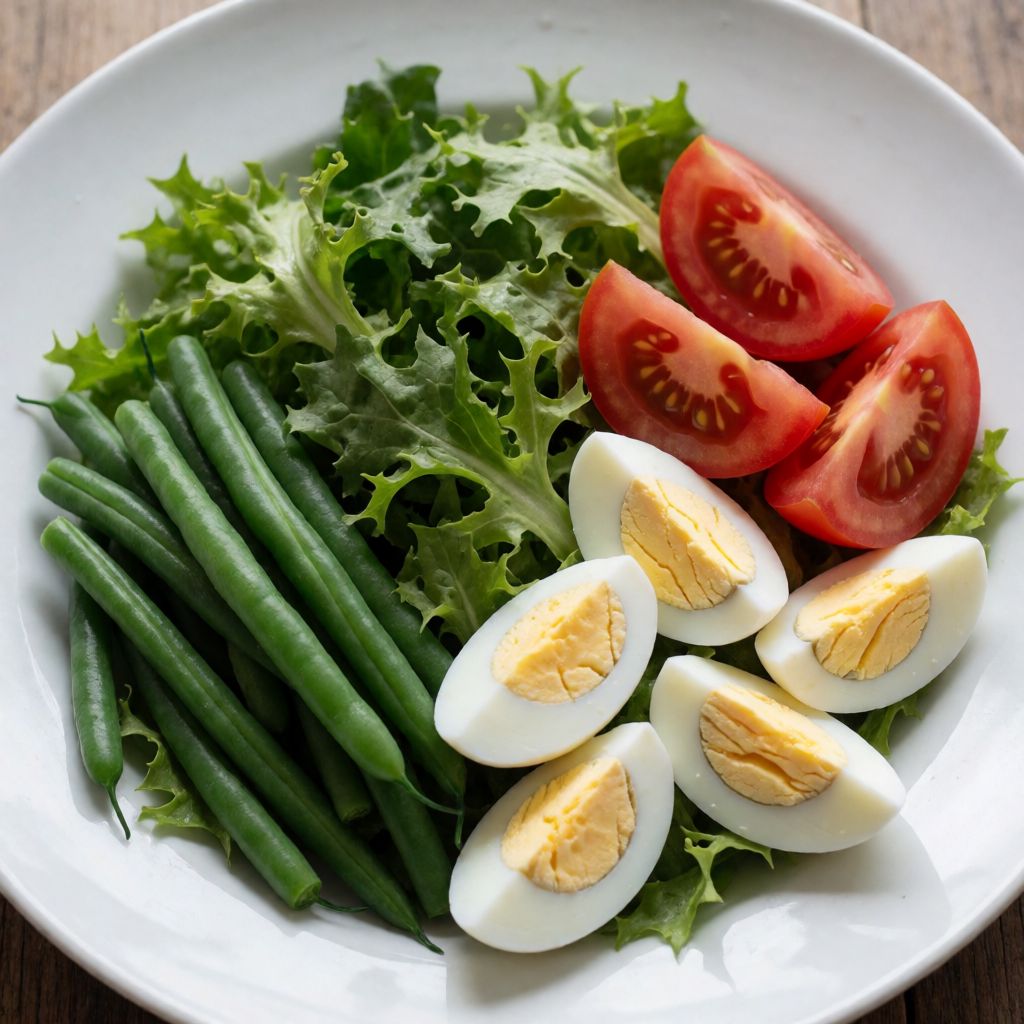
 AI photo
Niçoise Salad
A classic Niçoise-style salad with seared tuna, green beans, eggs, tomatoes and olives.
Labels are worked out automatically from the ingredients and can be wrong. Check the packaging if it matters to you.
Ingredients
- 200 g Green beans fresh or frozen
- 250 g Salad greens mix
- 1 pcs Red onion sliced into rings
- 4 pcs Eggs
- 400 g Tuna sushi-grade, frozen
- 200 g Tomato halved
- 170 g Black olives
- 1 tbsp Butter for frying
- Salt
- Black pepper freshly ground










Vinaigrette dressing
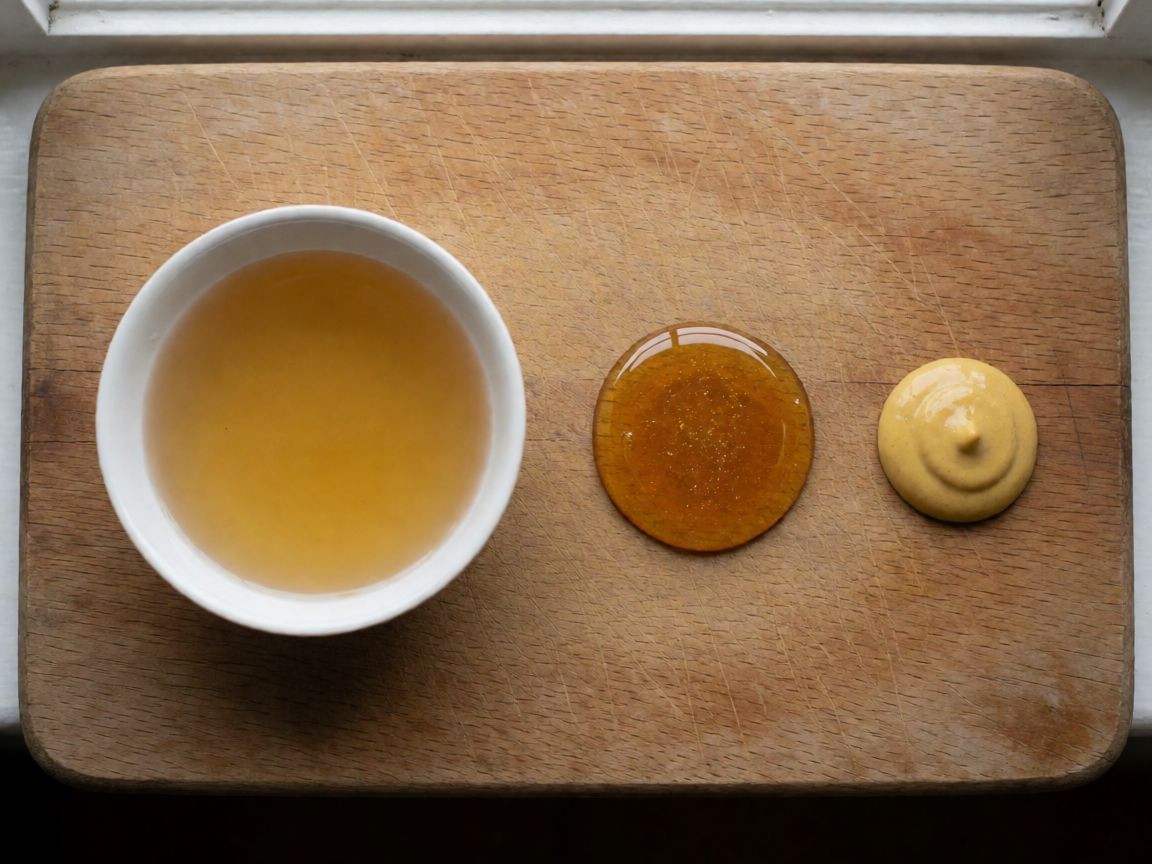
- 1 tbsp Apple cider vinegar
- 1 tsp Honey
- 1 tsp Dijon mustard
- 3 tbsp Olive oil




Steps
If using fresh beans, trim the ends, place in a pan of boiling water and cook for 1-2 minutes.
1 minDrain through a sieve and rinse the beans with ice-cold water. Let them drain in the sieve.
3 minArrange the salad greens, beans and red onion on plates or a large platter.
2 minPut the eggs in a pan of boiling water and cook for 8 minutes.
8 minRinse the eggs in cold water and peel off the shells.
2 minSeason the frozen tuna steak with salt and pepper. Heat a frying pan over high heat.
2 minAdd the butter and olive oil and let them sizzle. Sear the frozen tuna steak quickly, 1-2 minutes on each side.
2 minThe tuna should have a crisp crust on the outside and remain raw inside. Slice the tuna thinly and arrange it on the salad.
Halve the eggs and arrange them on the salad along with the olives and tomatoes.
1 minMix the vinaigrette (apple cider vinegar, honey, Dijon mustard and olive oil) and drizzle it in thin streams over the salad.
1 min
Niçoise has been fought over for a century by people who've never set foot in Nice. The purists say no potato, no rice, definitely no cooked green beans, and certainly no tuna that isn't salted anchovy's cousin from a tin. This version takes a side without apologising for it: seared fresh tuna, barely cooked eggs, beans blanched just enough to lose their squeak. It's not the dish a Niçois grandmother made to use up whatever the garden gave her that week — that's the real history here, a poor man's plate built from what didn't sell at market, not a fixed liturgy. So treat the "authentic" argument as noise and judge the plate on what's in front of you.
What decides whether this works is temperature contrast, not a list of ingredients sitting near each other. Warm seared tuna against cold crisp beans and cold greens is the whole trick. If everything ends up room temperature, you've made a sad composed salad, not a Niçoise. So the cold components need to actually be cold — straight from an ice bath, not just rinsed and left to sulk on the counter while you faff with the fish.
Green beans: fresh if you can get decent ones, frozen is a legitimate stand-in and nobody should feel bad about it — frozen beans are blanched and shocked at the point of freezing anyway, so you're basically buying step one already done. The 1-2 minutes in boiling water isn't about cooking them through, it's about taking the raw bite off while keeping the snap — overshoot it and they go grey and limp, and no amount of ice water afterwards brings that back. The ice bath after is what locks the colour and the crunch; skip it and residual heat keeps cooking the beans on the plate.
Tuna: sushi-grade is non-negotiable if you're eating it rare in the middle, because "sushi-grade" is really a proxy for "handled and frozen to kill parasites," not a marketing term for quality. If you can't get it, don't fake it with supermarket tuna steak — cook it through properly instead and call it a different salad. No tuna at all, canned good-quality tuna in oil works as an honest substitute, you just lose the hot-cold contrast that makes this version interesting.
Eggs: just eggs, but the honesty point is in the timing — "8 minutes" assumes they go in once the water's properly boiling, not room-temperature eggs dropped into water you then bring up to heat, which adds unpredictable minutes and gives you a different egg than the recipe intends.
Olives: black olives here are seasoning, not a vegetable — salt and bitterness to cut the richness of the egg yolk and seared fish. Any properly cured black olive works; the brineless vacuum-packed ones that taste of nothing are the one thing to avoid, because the dish is relying on them for a punch of flavour it doesn't get elsewhere.
The vinaigrette: mustard here isn't for mustard flavour, it's an emulsifier — it's what keeps the oil and vinegar from splitting back into two sulking layers on the salad. Honey balances the vinegar's sharpness so the dressing doesn't just taste sour. Apple cider vinegar is a reasonable choice over the traditional red wine vinegar — mellower, slightly fruity — swap it for any vinegar with a clean, non-overpowering acidity if that's what's in the cupboard; just keep the ratio roughly similar or the dressing tips too sharp or too flat.
Oil: olive oil for both the dressing and the pan is traditional, but for searing specifically you want something that can take real heat without burning and turning bitter — butter alone would burn at the temperature you need for the crust, which is exactly why it's mixed with oil here, the oil raises the smoke point of the pairing while the butter still gives you the flavour and the browning.
And the patience bit, because there's always one: don't drizzle the dressing on cold components and hot tuna at the same moment you plate everything in a rush. Give the beans and greens their proper chill first. A salad assembled in a hurry, with half-warm beans and a dressing thrown on before anything's settled, just tastes like wet vegetables. Five minutes of waiting is the difference between a salad and a pile.