
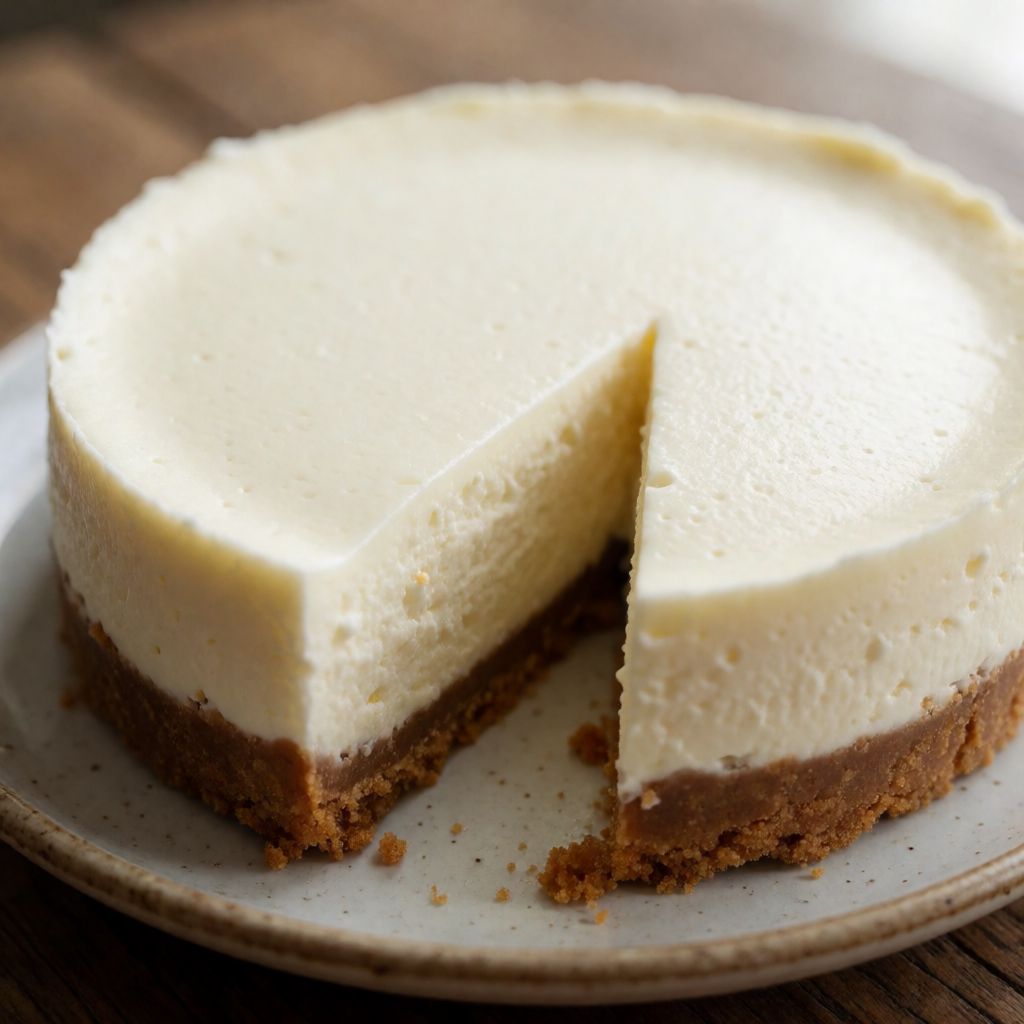
 AI photo
No-Bake Mascarpone Cheesecake
A creamy no-bake mascarpone cheesecake on a digestive biscuit base, topped with a blueberry sauce.
Labels are worked out automatically from the ingredients and can be wrong. Check the packaging if it matters to you.
Ingredients
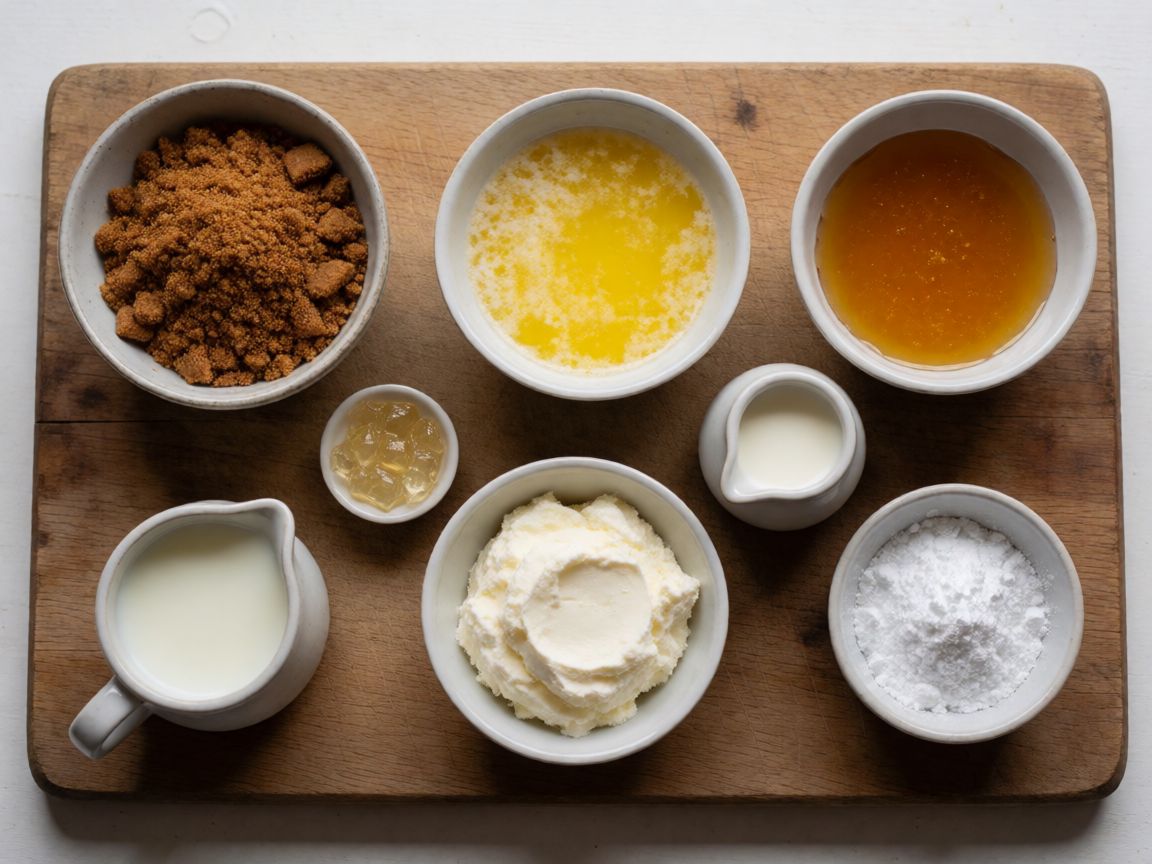
- 320 g Digestive biscuits
- 150 g Butter melted
- 1 tsp Honey
- 500 g Mascarpone
- 250 ml Double cream
- 8 g Gelatine
- 4 tbsp Milk warm
- 120 g Icing sugar
- 400 g Blueberries
- 80 g Icing sugar
- 200 ml Water
- 18 g Cornflour dissolved in water
- 1 bunch Mint leaves








Steps
Crush the biscuits into crumbs, mix with the melted butter and honey. Press the mixture into a tin and firm it down.
Chill the base in the fridge.
60 minMix the mascarpone with the icing sugar. Soak the gelatine in cold water.
10 minDissolve the gelatine in the warm milk and add it to the mascarpone, mixing well.
Fold the whipped cream into the mixture. Spread it over the base and smooth the top.
Chill in the fridge for at least 1 hour.
60 minSimmer the blueberries with the icing sugar over low heat for a few minutes. Strain through a sieve.
Pour the juice back in, add the cornflour dissolved in water. Cook for a few minutes.
Let the jelly cool to room temperature.
Pour the jelly over the cheesecake. Chill in the fridge for at least 3 hours.
180 minDecorate with blueberries and mint leaves.
This is a cheesecake that never sees an oven — it sets by chemistry, not by heat. The whole thing is a question of three separate textures stacked on top of each other, and each one needs the one below it to already be solid before it gets its turn. Rush any layer and you don't get a cheesecake, you get a trifle in a tin.
The base is just biscuit held together by melted fat. Butter goes solid again in the fridge, and that's the glue — not the honey, which is there for a faint back-note and a bit of colour, nothing structural. Some people skip chilling the base and go straight to filling it: don't. A warm, soft base under a wet mascarpone layer just slumps, and you'll be eating cheesecake soup with a crumbly bottom.
The filling sets because of gelatine, not because mascarpone is naturally firm — it isn't, it's a soft curd cheese, closer to clotted cream than to the blocks of cream cheese people reach for by habit. The gelatine has to bloom in cold water first and dissolve in warm milk second: cold swells the granules so they go in evenly, warm (not hot — boiling gelatine kills its own setting power) actually dissolves them. Skip the blooming and you get little rubbery flecks through the filling instead of a smooth set.
Start with the biscuits. Digestives are doing a job here that's really about British kitchens specifically — they're cheap, they're already slightly sweet and slightly salty, and they crumb without turning to dust. Any biscuit that's dry and not too sweet on its own will do the same job: ginger nuts if you want a warmer edge, a plain shortbread in a pinch. What you don't want is anything with chocolate chips or a soft centre — that fat behaves differently when it melts and the base won't set hard.
Butter: just melt it, don't brown it, unless you actually want that nutty note running through the base — some do, and it's a fair swap, just know what you're choosing. Any dairy fat that's solid cold and liquid warm will work the same trick; margarine will too, though you lose the flavour.
Mascarpone is the one ingredient you can't really substitute and still call this the same dish. It's an Italian curd cheese, very high fat, almost no tang, which is exactly why it needs the icing sugar and the blueberries to bring any brightness at all — on its own it's closer to flavourless cream than to cheesecake filling. Cream cheese (the Philadelphia kind) is the closest stand-in and plenty of home bakers use it, but it's sourer and lower in fat, so the set will be slightly looser and the taste sharper — not wrong, just a different cheesecake.
Double cream, whipped before folding in, is what gives the filling its lightness — it's trapped air, nothing more mysterious than that. Fold it in gently, because the point of whipping it first and folding second is to keep that air in; stir it hard into the mascarpone mix and you knock the air straight back out, and the filling sets dense and heavy instead of light.
Gelatine is a British kitchen's usual setting agent and it's listed here in leaf-or-powder grams rather than "one sachet," which matters because sachets vary by brand. If you want it without gelatine — for a vegetarian version — agar-agar will set a dairy mix, but it sets firmer and doesn't melt again in the mouth the same way, so expect a slightly stiffer bite.
The blueberries get cooked twice in effect: once to release their juice with sugar, which is the only extraction method that doesn't need any machinery — no juicer required, just heat and patience — and once again, briefly, once the cornflour goes in, to let the starch actually thicken rather than just sit there raw and cloud the jelly. Strain before the second cook, not after, or you're straining thickened jelly through a sieve and losing half of it to the mesh. Any berry that releases juice when heated — blackberries, redcurrants — can stand in; firmer fruit like apple won't give you a pourable jelly the same way.
The long chills aren't decoration on the recipe, they're the recipe. An hour for the base, an hour for the filling, three hours after the jelly goes on — that's not fridge space being greedy, that's the actual working time of gelatine doing its job at fridge temperature, which is slower than any heat ever is. Try to cut this short and you won't get a firmer result faster, you'll get a cheesecake that falls apart the moment you lift a slice out of the tin.