
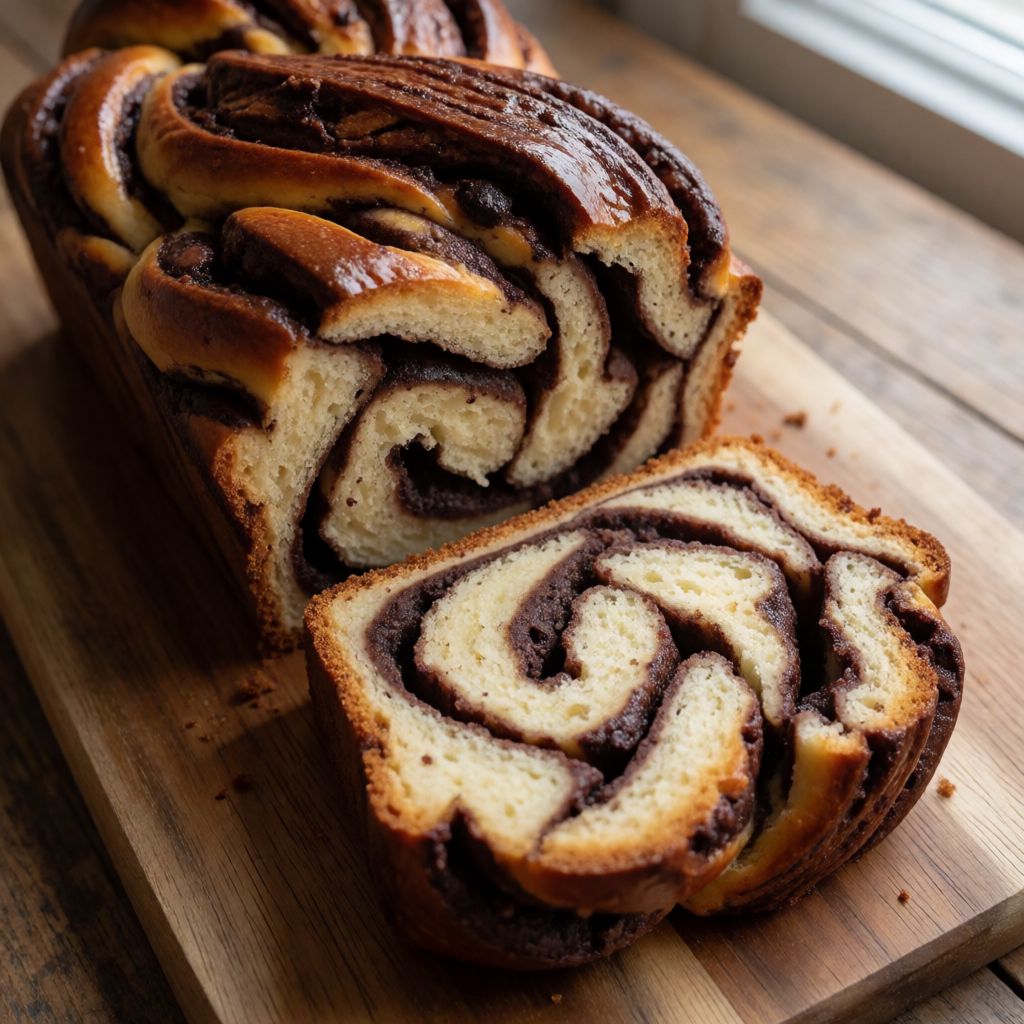
 AI photo
Nutella Babka Cake
A soft, chocolate-hazelnut sponge cake made with Nutella, perfect for an afternoon treat.
Labels are worked out automatically from the ingredients and can be wrong. Check the packaging if it matters to you.
Ingredients
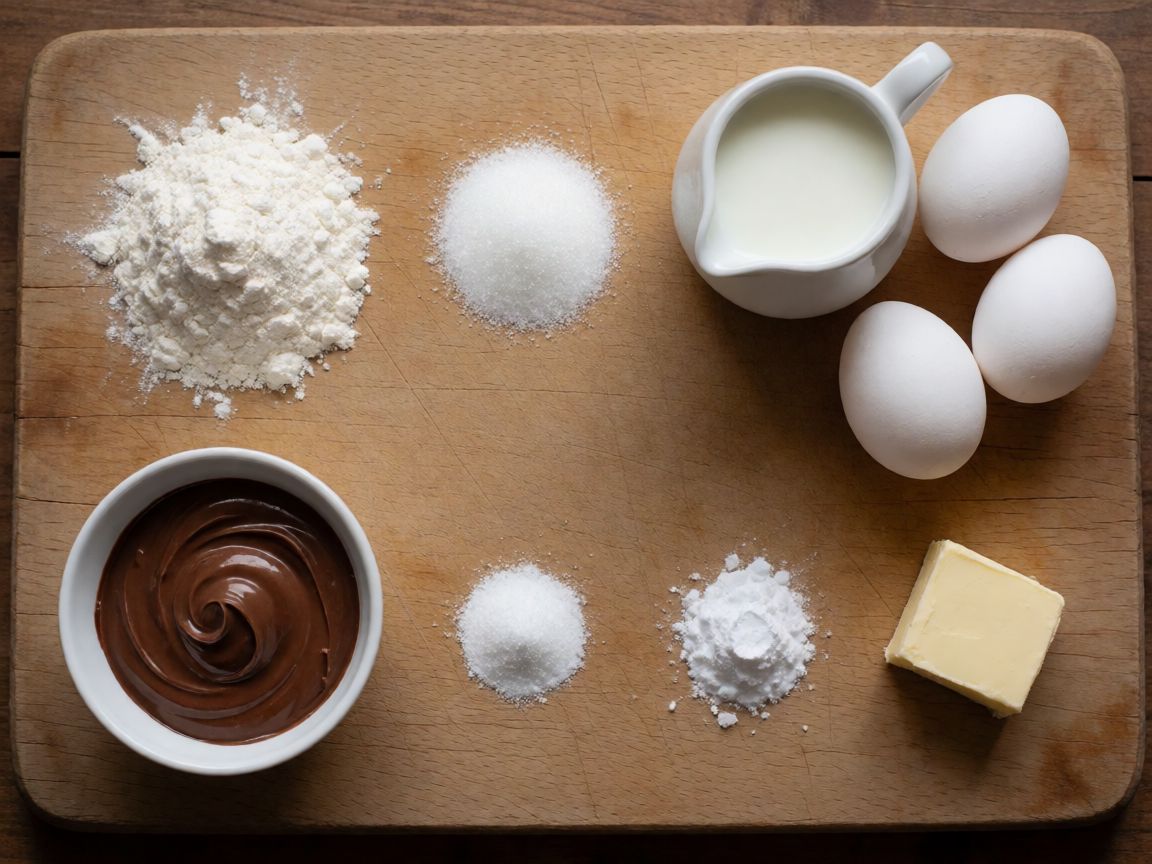
- 160 g Plain flour
- 120 g Caster sugar
- 200 ml Milk
- 3 pcs Eggs
- 200 g Nutella
- 16 g Baking powder
- Nutella to taste
- Butter for greasing the tin
- Plain flour for dusting the tin
- Icing sugar for decorating








Steps
Soften the Nutella in the microwave or over a bain-marie.
In a bowl, whisk the eggs with the sugar until light and fluffy.
Pour in the milk in a thin stream while continuing to whisk, then add the softened Nutella.
Add the sifted flour and baking powder, and mix thoroughly.
Preheat the oven to 180°C.
Grease the tin with butter and dust with flour, pour in the batter and bake for about 40 minutes.
40 minCheck if it's done with a wooden skewer — if it comes out dry, the cake is ready.
Let the cake cool completely before removing it from the tin, then decorate with icing sugar or Nutella.
This isn't babka in the Polish or Jewish sense — no yeast, no laminated dough, no twisting. It's a one-bowl sponge where Nutella does the job that butter and cocoa usually split between them: fat for tenderness, flavour for interest. Call it what it is — a Nutella loaf cake wearing a borrowed name, probably because "babka" sounds more interesting on a café menu than "chocolate-hazelnut sponge."
What decides whether it works is the batter's structure, not the oven. You whisk eggs and sugar until the mixture pales and thickens — that's not decoration, that's you beating air into the eggs, air that has nowhere else to come from since there's no raising agent doing real lifting work beyond the baking powder, which only expands bubbles already there. Skip this and you get a flat, dense disc that tastes fine but sits in the stomach like a brick.
The milk goes in slowly, while you keep whisking, for one reason: dumped in all at once, cold milk shocks the aerated egg-sugar foam and some of it collapses before the flour even arrives to stabilise things. A thin stream gives the mixture time to absorb liquid without losing the air you just worked for.
Softening the Nutella first isn't fussiness — cold Nutella is too stiff to fold into a liquid batter evenly, and you'll get streaks and pockets instead of a uniform crumb. Warm it just enough that it pours; it doesn't need to be hot.
On doneness: "about 40 minutes" is the lower bound, not the answer. Ovens lie, especially small domestic ones with an uneven hot side — so the skewer test rules. A skewer that comes out with wet batter clinging to it means the centre hasn't set; it comes out with a few moist crumbs and you're fine, because the cake carries on firming up slightly as it cools. Wait for genuinely dry, not spotless — spotless usually means you've overshot and dried the crumb out.
The cooling-before-unmoulding step is not patience for its own sake, though patience belongs in every bake — it's physics. A warm sponge is still partly held together by steam and soft-set egg protein; turn it out hot and it will tear or sink in the middle because the structure hasn't finished setting. Let it sit in the tin until it's properly cool to the touch, and it comes out clean.
Flour: plain, not self-raising, because the recipe already brings its own 16 g of baking powder and controls the lift itself. If you only have self-raising in the cupboard, drop the added baking powder to about a teaspoon, since you don't want double the rise fighting against a crumb that isn't built to hold it.
Sugar: caster, because it dissolves fast into the eggs during that first whisking stage. Granulated will work but takes longer to disappear and you'll feel a slight grit if you rush the whisking; icing sugar is wrong here, it deflates the egg foam instead of supporting it.
Nutella: the recipe wants a soft, pourable hazelnut-chocolate paste — any similar spread works as a substitute, including the cheaper supermarket own-brand versions, as long as it's smooth and not full of chunky nuts that won't disperse in the batter. If you genuinely have none, melted dark chocolate loosened with a spoon of oil and a tablespoon of ground hazelnuts gets you close, though you lose some of the glossy sweetness.
Eggs and milk: standard UK medium eggs and whole milk are what this was built for. Skimmed milk thins the batter without adding the fat that keeps the crumb soft, so if that's what's in the fridge, expect a slightly drier result.
Tin prep — butter plus a dusting of flour — exists to stop the cake welding itself to the metal as it bakes; the sugar in the batter caramelises slightly at the edges and will glue itself to bare metal given the chance. A proper loaf tin lining of greaseproof paper does the same job if you don't trust your buttering.
Six servings, one loaf tin, one bowl, one whisk — no kazan, no stand mixer required, just enough arm work at the start to get real air into those eggs before anything else goes in.