
 AI photo
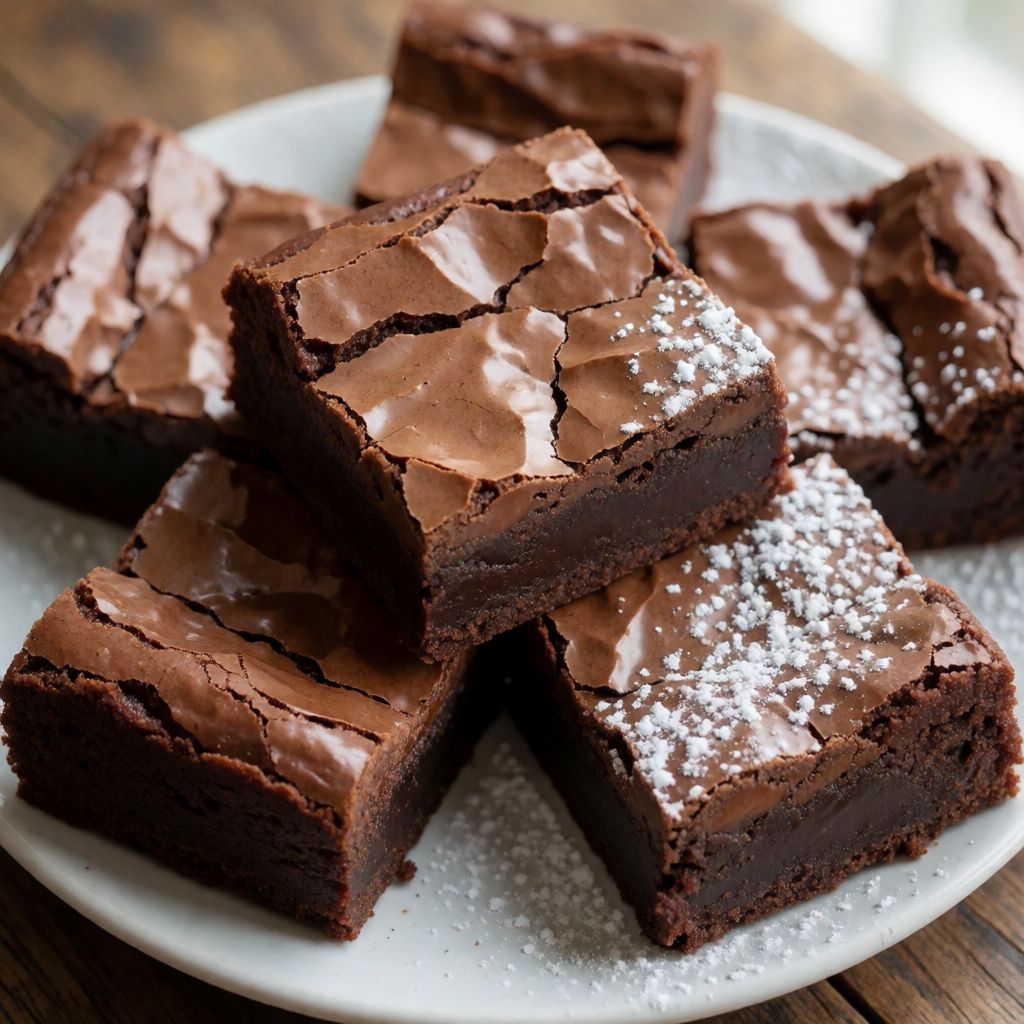
Nutella Squares
Rich, fudgy squares made with Nutella, butter and eggs, baked until just set.
Labels are worked out automatically from the ingredients and can be wrong. Check the packaging if it matters to you.
Ingredients
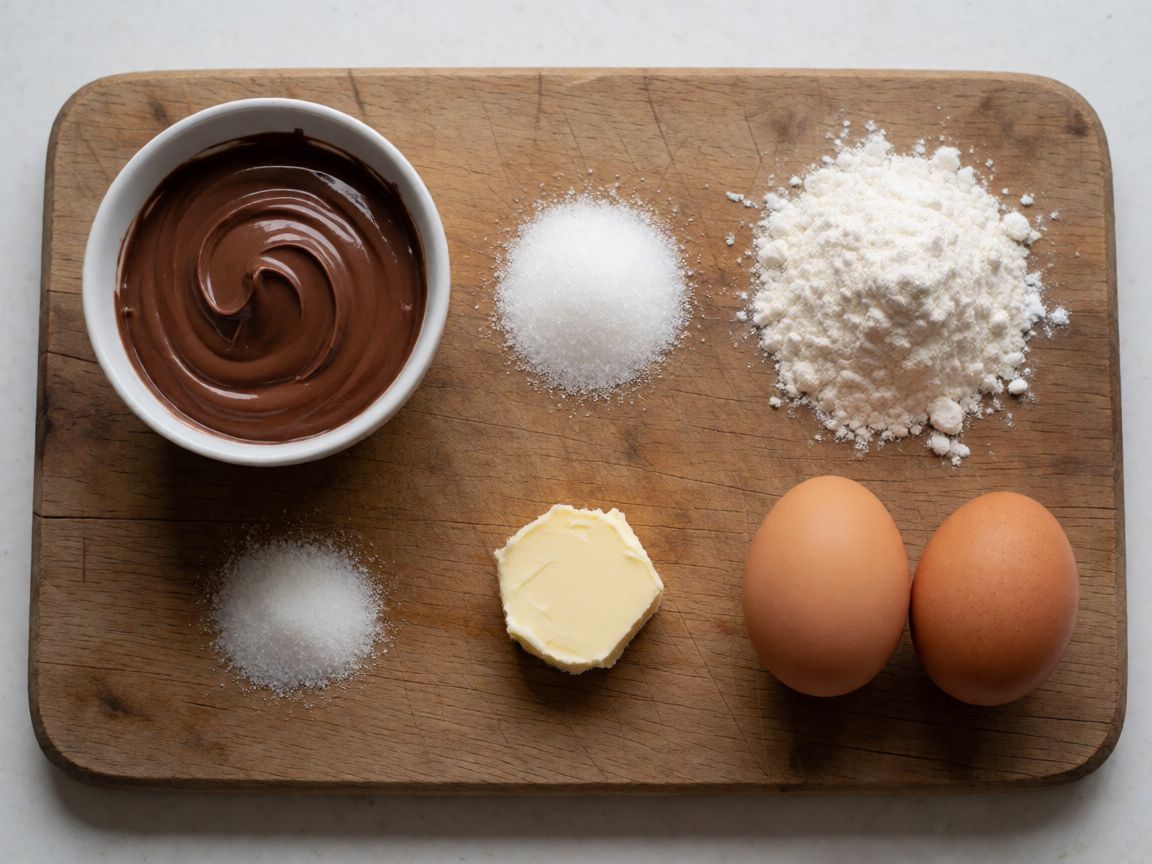
- 300 g Nutella
- 80 g Sugar
- 80 g Butter softened
- 100 g Plain flour sifted
- 2 pcs Eggs





Steps
In a large bowl, combine the sugar and softened butter and beat with a mixer until smooth and creamy.
Add the eggs one at a time, mixing well after each addition.
Add the Nutella (you can warm it slightly to make mixing easier) and stir until smooth.
Add the sifted flour and gently fold until the batter is smooth.
Spread the batter into a 20x30 cm rectangular tin lined with baking parchment and level with a spatula.
Bake in an oven preheated to 180°C for 27 minutes.
27 min
This is a tray bake that leans on a jar instead of a saucepan: Nutella does the job that melted chocolate and ground nuts would normally do separately — it's already fat, sugar, cocoa and hazelnut emulsified together by someone else's factory, so your job shrinks to binding it with egg and a little flour and getting it to set without drying out. The result sits between a cake and a fudge square, closer to the fudge end, because there's so little flour in it — 100 g against 300 g of Nutella plus 80 g of butter. Flour here isn't the base, it's the glue holding a mostly-fat mixture together through the heat.
What decides whether it works is not the 27 minutes — that's the oven's starting bid, not the finish line. What decides it is the top: when it goes from wet-shiny to matte and starts to crack at the edges like dry earth after rain, the inside has just set enough to hold its shape but is still soft under that crust. Pull it any later and the square turns into cake, dense and a bit dry, losing the whole point of using Nutella instead of flour and cocoa in the first place.
Some say you should melt the butter for anything this rich, 'less washing up, same result.' No — creaming softened butter with sugar beats air into the base, and that air is what keeps a 300 g wall of Nutella from baking into a solid brick. Melt the butter and you lose that aeration; the square still bakes, but it comes out denser and slightly greasy on the tongue.
Nutella itself is the ingredient worth a word, because it's not 'chocolate spread' in the generic sense — it's a specific ratio of sugar, palm or vegetable fat, cocoa and hazelnut paste, built after the war when cocoa was scarce and expensive in Italy and hazelnuts, grown locally in Piedmont, were cheap. Ferrero stretched the chocolate with ground hazelnut and called the economy a flavour. That history matters here practically: because it's an emulsion already, it behaves predictably — warm it slightly over a bowl of hot water (not a flame, you'll just melt the sugar unevenly) and it loosens enough to fold in without fighting your spatula. A no-name jar works the same way as long as it's glossy and spoonable at room temperature, not stiff — stiffness usually means more sugar relative to fat, and it'll fight you both in mixing and in how the square sets.
Butter: 80 g, softened, meaning you can press a thumbprint into it without it collapsing or sliding off the knife. This is the part that creams with the sugar and carries air into the batter — skip this and go straight to melted, and you've swapped a cake mechanism for a brownie mechanism; not wrong, just a different square, denser and shinier on top. Unsalted is the honest choice because Nutella already carries its own salt and sugar balance — salted butter on top of that tips things, not ruinously, just unnecessarily.
Sugar: 80 g, doing two jobs. In the creaming stage it helps trap air against the butter's fat (sugar crystals cut tiny pockets as you beat). In the oven it's part of why the top forms that thin, cracked, slightly caramelised crust — a bit of Maillard browning sitting on top of a mixture that otherwise barely gets hot enough inside to brown on its own.
Eggs: two, room temperature if you can manage it, because cold eggs dropped into a creamed butter-sugar base cool the fat unevenly and that's often the real cause of the 'curdled' look people blame on the eggs themselves. Eggs here are water and protein — the water loosens the mixture so the flour can distribute, the protein sets on baking and gives the square its hold. Without enough egg, the thing stays a soft paste no matter how long you bake it.
Flour: 100 g, sifted — sift it because the cocoa and sugar in Nutella make any flour lump cling rather than dissolve, and chasing lumps means stirring far longer than you should, which builds gluten you don't want here. You want this folded in gently, stopped the moment you stop seeing streaks, because any dessert this fat-heavy turns from fudgy to rubbery the instant gluten gets a foothold. If you're out of plain flour, any low-protein flour works the same job — the criterion is low gluten-forming potential, not a brand name.
The tin — 20 x 30 cm, the standard UK traybake size — and the parchment aren't decoration. Line it properly because this batter has almost nothing in it to help it release on its own; butter alone, spread this thin against metal, will leave half the square behind. Let it cool properly before you cut it, because warm, the centre is still closer to ganache than to cake — patience here isn't manners, it's the difference between six neat squares and a tray of rubble you eat with a spoon instead.