
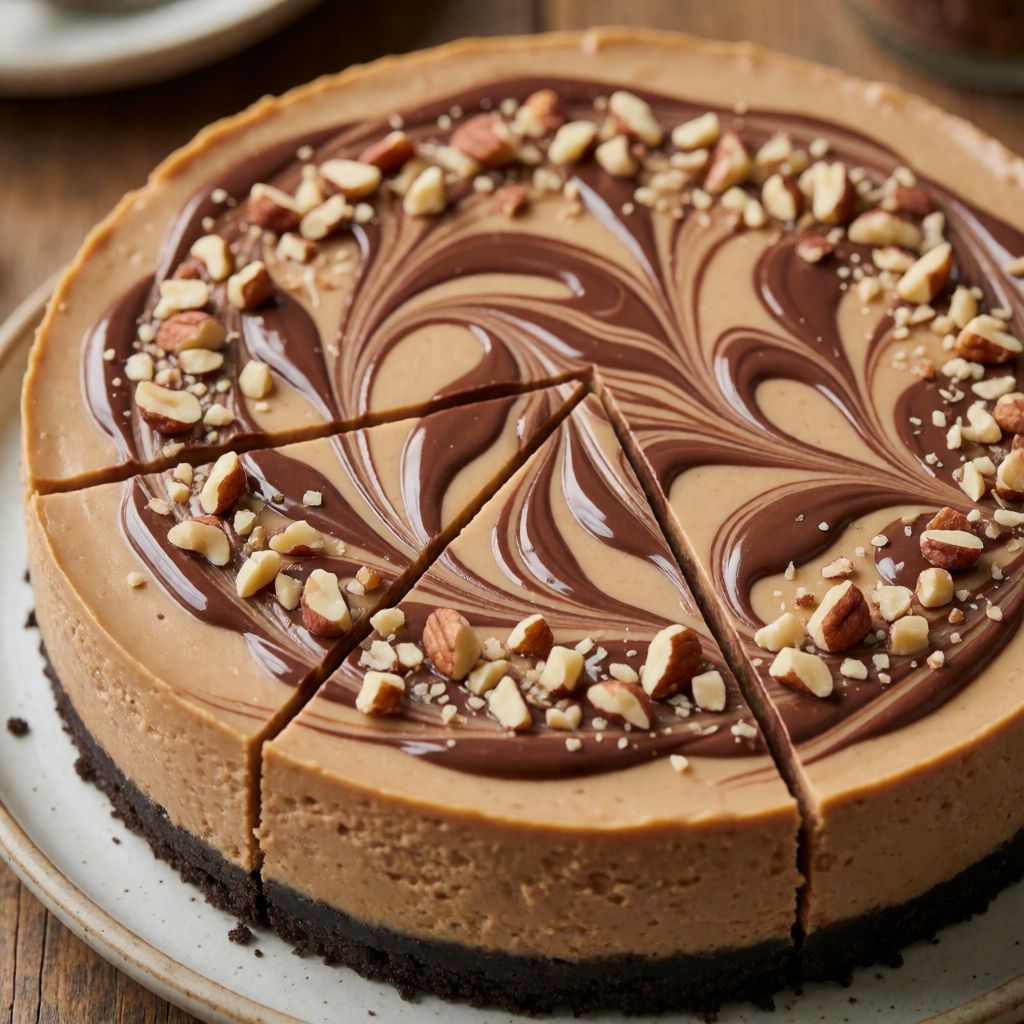
 AI photo
No-Bake Nutella Cheesecake (No Gelatine)
A creamy no-bake Nutella cheesecake with a buttery biscuit base, chilled until set and topped with chopped nuts.
Labels are worked out automatically from the ingredients and can be wrong. Check the packaging if it matters to you.
Ingredients
- 180 g Digestive Biscuits
- 90 g Butter
- 450 g Nutella
- 500 g Cream Cheese
- 200 ml Double Cream
- 30-40 g Mixed Nuts chopped




Steps
Blend the digestive biscuits in a food processor into fine crumbs, then tip into a bowl.
Add the melted butter and mix until the crumbs are evenly coated.
Press the mixture into a 22 cm tin lined with baking paper, pressing down firmly and evenly.
Put the tin in the fridge.
30 minUsing an electric whisk, soften the cream cheese, add the Nutella and mix together.
Whip the double cream to stiff peaks, then gently fold it into the mixture.
Take the base out of the fridge, spread the cream mixture on top and smooth it out.
Put the cheesecake in the fridge.
240 minRemove the cheesecake from the tin and decorate with chopped hazelnuts.
What was changed
We swapped the base biscuits for Digestive Biscuits, the type most commonly used in the UK for cheesecake bases.
This is not a cheesecake in the oven sense at all — no egg, no heat, no custard setting in a bain-marie. It's an icebox cake wearing a cheesecake's name. The whole thing holds together because cold fat goes hard, not because anything gels or cooks. That's the mechanism you're actually managing: get enough fat into the mixture, chill it properly, and it stands up when you cut it. Skip either part and you get a trifle in a tin.
Some say a cheesecake without gelatine or eggs "can't really set, it'll always be soft." No — because setting here comes from two different fats re-solidifying in the cold: the butter in the biscuit base, and the fat in the cream cheese, Nutella and whipped cream above it. Gelatine makes a liquid-trapping net; this makes a solid fat lattice. Different physics, same result — a slice that keeps its shape on the plate.
What decides whether it works isn't skill, it's patience and proportion. Full-fat ingredients, properly cold fridge, and enough hours. The given four hours is a floor, not a target — the middle should resist a gentle push, not sink under your finger. Rush it and the top layer will slump sideways the moment you lift a slice; that slump is unset fat, not a timing mistake you can fix with a knife.
In a normal flat kitchen this is actually a kind one: no oven to preheat, no water bath, no cracking top to worry about. Line a loose-based or springform tin with paper so the whole thing lifts out clean — without that paper you're prying a cold, soft cake off metal with a butter knife, and it shows.
Digestive biscuits are the base because they're cheap, dry, and pulverise to true sand rather than clumping into damp crumbs — that dryness is what lets the melted butter coat each particle instead of turning the whole thing into wet paste. They were originally sold in Britain as a plain, mildly alkaline "digestive aid" biscuit, which is exactly why they ended up in every no-bake British dessert going: no pastry skill required, just a food processor and a rolling pin if you're out of one. If you've none, use any biscuit that shatters to powder without added moisture — rich tea, graham crackers, oat biscuits. Avoid anything with a soft or chewy crumb; that won't carry butter, it'll just go gummy.
The butter must be fully melted but not hot — hot butter separates and goes oily on contact with crumbs, and that oil pools at the base of the tin instead of binding it, giving you a slice that weeps grease and a base that won't hold its wall. Press it down hard and even in the tin for the same reason you'd press a sand-mould at the beach: compacted crumb has no air pockets to collapse later, loose crumb has plenty, and that's the crumbly base everyone blames on "bad digestives" when really it's a pressing problem.
Use block-style, full-fat cream cheese — the kind sold as a brick, not a whipped tub spread for toast. The fat in it is structural here, not decorative; low-fat versions carry too much water and the filling stays loose no matter how long it sits. Soften it with the whisk before the Nutella goes in, because cold cream cheese is a stiff, lumpy fat network — mixing it alone first breaks that stiffness down so the Nutella folds in smooth instead of leaving streaks and pockets.
Nutella is doing two jobs at once: flavour, obviously, but also a good share of the sugar and fat that firms the filling as it cools. That's why 450g isn't excess — it's load-bearing. If you make your own chocolate-hazelnut paste, keep the sugar and fat ratio close to a commercial spread; plain nut butter with no sugar is too oily and won't firm the same way, you'll get a softer, almost mousse-like slump instead of a clean cut.
Double cream needs real fat content to whip to stiff peaks — that's what double cream means, roughly half fat by weight; a lighter cream simply won't hold the peak and will fold in flat. Whip it on its own first, then fold it through gently with a spatula rather than the whisk. The whisk would knock the air straight back out of it, and that air is what keeps the filling light rather than dense and fudgy — fold, don't beat, once the two meet.
The nuts on top are there for contrast, nothing more — a bit of crunch against a very soft filling. Any unsalted nut that snaps rather than chews will do; toast them lightly beforehand if you want more than crunch, since raw nuts mostly taste of nothing until heat wakes the oil in them up.