
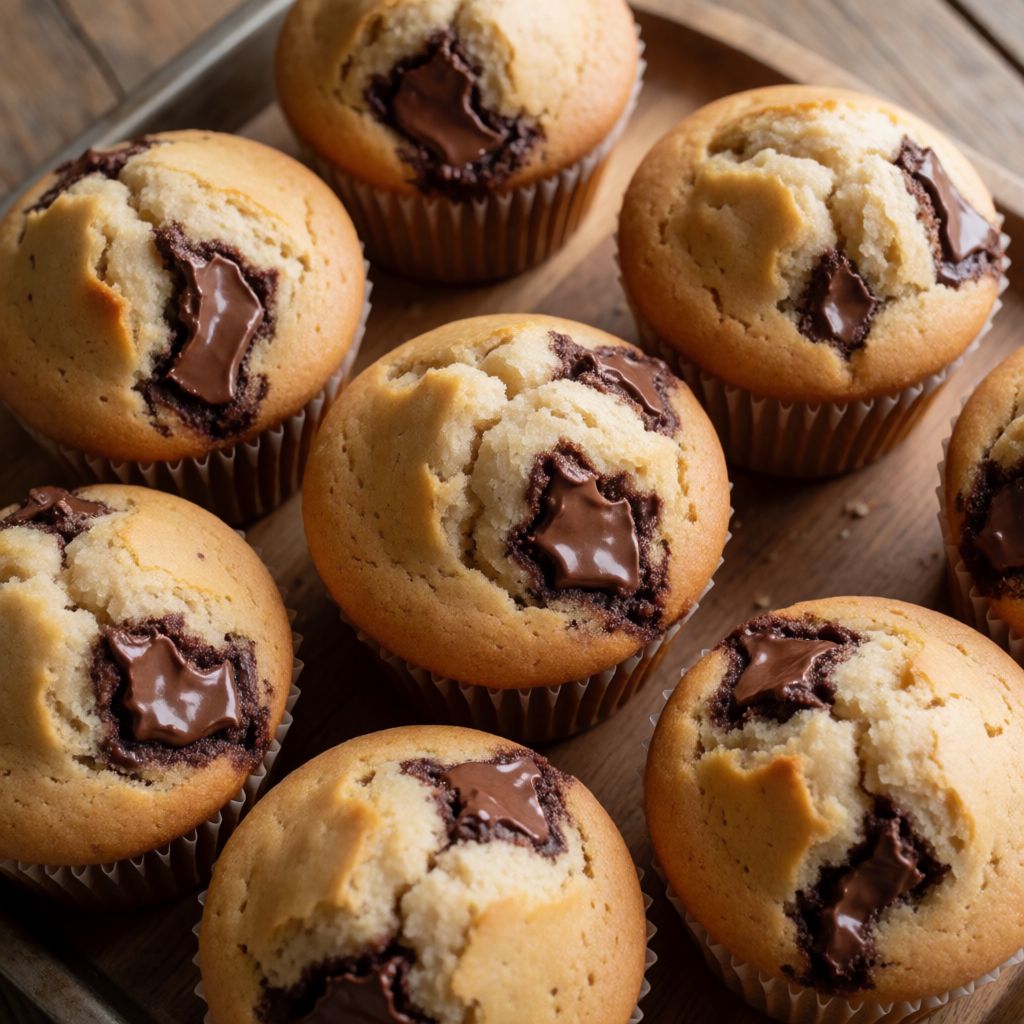
 AI photo
Nutella Muffins
Soft muffins hiding a melting cube of Nutella at the centre of each one.
Labels are worked out automatically from the ingredients and can be wrong. Check the packaging if it matters to you.
Ingredients
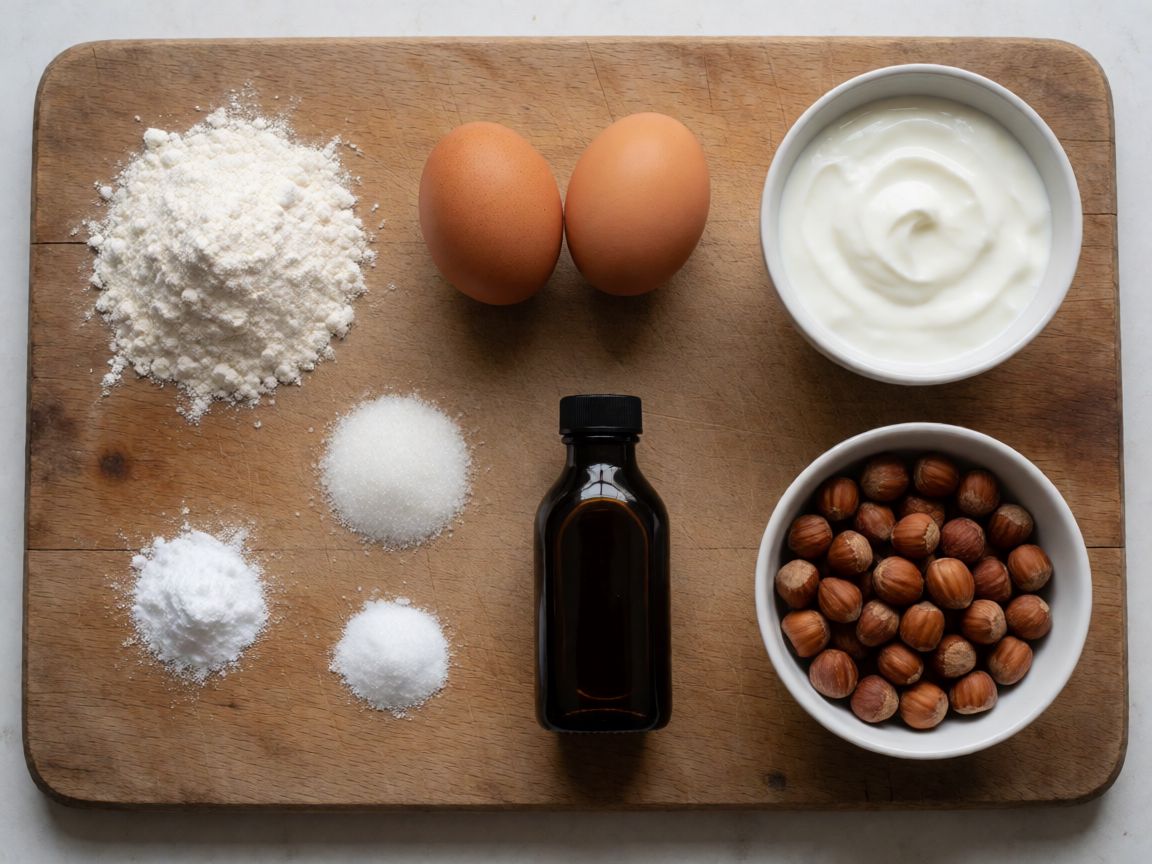
- 250 g Plain flour
- 2 pcs Eggs
- 250 g Yoghurt
- 125 g Caster sugar
- 90 ml Sunflower oil
- 2 tsp Baking powder
- 0.5 tsp Bicarbonate of soda
- 1 tsp Vanilla extract
- 12 tbsp Nutella









Steps
Spoon 12 tbsp of Nutella into ice-cube trays and freeze until set.
In one bowl, combine the eggs, yoghurt, oil and vanilla extract, and mix until smooth.
In another bowl, mix the sifted flour with the baking powder, bicarbonate of soda and sugar.
Add the dry mixture to the wet one and stir together.
Line a muffin tin with paper cases.
Spoon a first layer of batter into the cases.
Place a frozen Nutella cube in the centre of each, then cover with a second layer of batter.
Bake in an oven preheated to 180°C for 20 minutes.
20 minLet the muffins cool on a wire rack for at least 15 minutes.
15 min
This is a muffin built around a trick, not a flavour. Take any decent muffin batter, bury a frozen lump of Nutella in the middle, and the oven does something batter alone never does: it seals a pocket of molten filling inside a risen crumb. Cut one open twenty minutes out of the oven and you get a core that's still liquid, not just softer chocolate — because you froze it first.
What decides whether it works isn't the recipe, it's the freezer. Nutella at room temperature is already soft; put a spoonful into raw batter and it sinks, smears, bleeds into the mix before the structure has set. Freeze it solid and it behaves like a stone dropped into wet sand — it sits where you put it long enough for the batter around it to firm up and trap it. Some say you can skip freezing if you're quick — no, because "quick" against a hot oven and twenty minutes of rising batter is not quick enough; the filling needs a head start measured in hours, not seconds.
The second thing that decides it is the two-layer method. You don't drop the frozen cube onto raw batter in an empty case and hope — you lay a floor of batter first, so the cube sits mid-height and gets a lid of batter over it too. Skip the floor and the cube melts onto the paper case and leaks out the bottom seam; skip the lid and it just sits exposed on top, baking dry. The sandwich is what keeps the pocket a pocket.
The batter itself is plain workhorse stuff, and it should be — it's a frame for the filling, not the point of the dish. Flour, sugar, baking powder and bicarbonate of soda make the dry side; eggs, yoghurt, oil and vanilla make the wet side. Mix each separately, then combine — the usual muffin logic, because the moment flour meets a wet, acidic liquid the raising agents start working, and you want that happening in the tin, not in the bowl while you're still looking for a spoon.
Yoghurt here isn't flavour, it's tenderiser and leavening partner. Its acidity reacts with the bicarbonate of soda to give lift without the sourdough-style sourness you'd get from buttermilk, and it keeps the crumb moist in a cake that has no butter at all to carry moisture. If you've none in, a thick natural kefir or even sour cream loosened with a splash of milk does the same acidic job — don't reach for sweetened yoghurt, you'll throw the sugar balance off.
Sunflower oil instead of butter is a practical choice, not a stylistic one: oil is liquid at room temperature, so it blends into the wet mixture in seconds with no creaming, no melting, no waiting for anything to soften. Any oil with no smell of its own does the job — rapeseed, a light vegetable oil — but skip olive oil, its flavour will sit on top of the chocolate and fight it.
Baking powder and bicarbonate of soda are doing two different jobs, not one doubled up. The powder is the main lift, slow and reliable in the oven's heat; the soda reacts fast with the yoghurt's acidity and also neutralises some of that acidity so the crumb doesn't taste tangy. Leave the soda out and the muffin will taste faintly sour under the chocolate — a small thing, but it's there.
The ice-cube tray step is worth taking seriously rather than skipping on a busy morning: twelve measured tablespoons frozen into neat cubes give you a filling that's portioned, solid, and cold enough to survive the first ten minutes of oven heat before it starts to soften from the inside out. That's the whole mechanism of the "molten centre" — not magic, just a chocolate spread with a low melting point, insulated by cake on all sides, warming from a dead stop rather than starting half-liquid.
On an ordinary domestic oven, 180°C and twenty minutes is your starting point, not a guarantee — ovens vary enough that the real test is the muffin top: risen, cracked, springing back rather than dimpling under a light touch. The fifteen minutes on the rack afterwards isn't dead time either — that's the filling settling from "molten" to "soft but not scalding," and the crumb finishing its set outside the heat. Cut one straight from the oven and you'll burn your tongue on Nutella lava and wonder why the crumb round it is still gluey. Patience here isn't a virtue, it's the last ten percent of the method.