
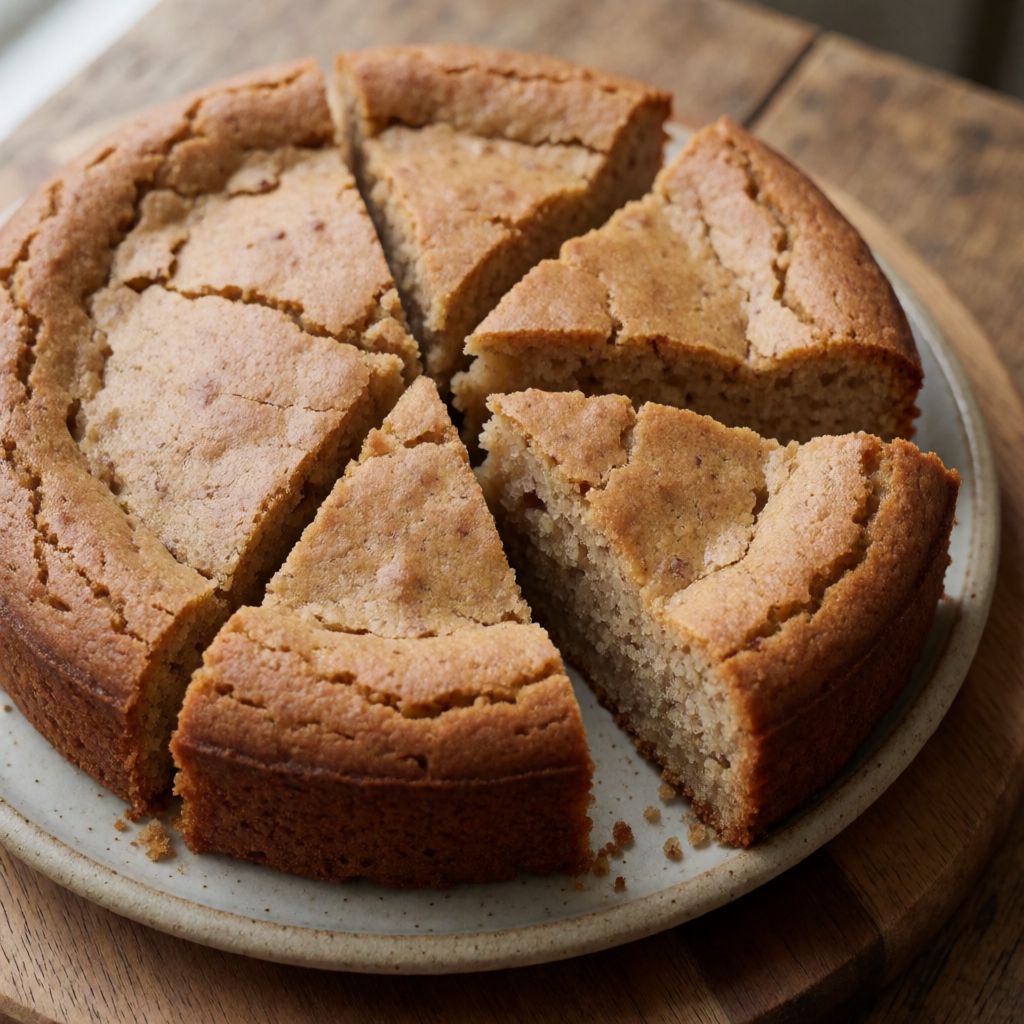
 AI photo
Gluten-Free Oat Cake — a Simple Rustic Breakfast Dessert
A simple gluten-free oat cake, lightly sweet and rustic, perfect for a cosy breakfast.
Labels are worked out automatically from the ingredients and can be wrong. Check the packaging if it matters to you.
Ingredients
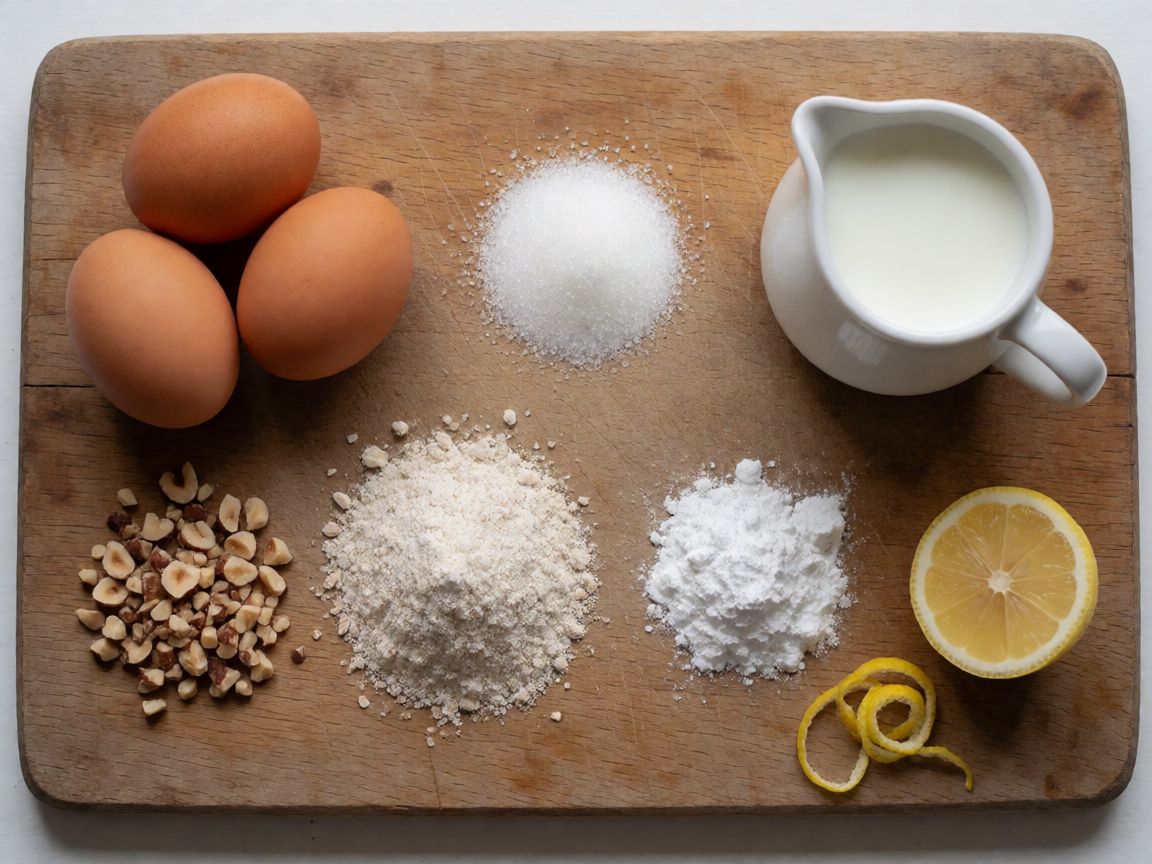
- 3 pcs Eggs
- 120 g Sugar or cane sugar
- 80 g Vegetable oil
- 70 g Milk
- 30 g Hazelnuts roughly chopped
- 150 g Oat flour or ground rolled oats
- 50 g Potato starch
- 16 g Baking powder
- 1/2 pcs Lemon zest
- 2 tbsp Icing sugar for dusting








Steps
Crack the eggs into a bowl, add the sugar and beat with a mixer for a few minutes until the mixture turns light, fluffy and creamy.
Add the vegetable oil and pour in the milk.
Stir in the roughly chopped hazelnuts.
Sift in the potato starch, then the oat flour and baking powder.
Mix the batter well and pour it into a 22 cm tin, greased with butter and dusted with starch.
Bake in a preheated fan oven at 170°C for about 30 minutes, or 35-40 minutes at 180°C without fan.
30 minCheck doneness with a wooden skewer, let the cake cool, then dust with icing sugar.
This is a crumb cake, not a flapjack. People see oats and oil and jump to "oat bar," but a flapjack is oats held together by melted butter and sugar syrup — dense, chewy, no egg. Here the oats are ground to flour and the eggs do the heavy lifting. The texture you're after is fine and springy, closer to a Victoria sponge that happens to have no wheat in it, with a faint nuttiness from the oats and a crunch of hazelnut here and there. It feeds six modest slices with tea, which is about right — it's not a show-off cake, it's a Sunday-morning one.
What decides whether this works is a single early step that's easy to rush: beating the eggs and sugar until the mixture is genuinely pale, thick, and holds a ribbon when you lift the whisk. This isn't decoration. In a wheat cake, gluten forms a stretchy net that traps the gas from baking powder and holds the crumb open. Oat flour has no such net — it has no gluten at all. So the air whipped into the eggs becomes your scaffolding, and the baking powder's only job is to expand bubbles that already exist. Skip the beating, rely on the baking powder alone, and you get a cake that's flat, tight, slightly rubbery — not because the recipe failed you, but because there was no structure for the gas to push against.
Walk through the ingredients and the logic holds together.
Eggs are doing two jobs, not one. First, whipped with sugar, they trap air — that's your rise, as explained above. Second, once in the oven, their proteins set and give the crumb its structure as the batter firms from the outside in. Three eggs for 150 g of flour is a lot of egg relative to flour, which tells you this cake leans on egg protein for backbone precisely because it has no gluten to borrow structure from.
Sugar isn't only sweetness — it stabilises the egg foam while you beat it, slowing the bubbles from collapsing, and it's part of why the top browns the way it does. Cane sugar works the same way; what you can't really swap in is something like honey or syrup, because the extra liquid will thin the foam you just built.
Vegetable oil replaces butter here, and that's a genuine substitution with a reason behind it, not a shortcut. Butter in a wheat cake is often creamed with sugar to trap air mechanically through solid fat — but that trick needs gluten to hold the result, which we don't have. Oil instead just carries moisture and tenderness without asking anything of the structure. The criterion for which oil: anything with no smell of its own, so it doesn't fight the lemon and hazelnut. Sunflower or rapeseed, both easy to find in a British kitchen, do the job; olive oil doesn't, because you'll taste it in every bite.
Oat flour is the body of the cake. If you only have rolled oats, grind them fine in a blender or coffee grinder until they feel like flour between your fingers, not like oatmeal — coarse grains sitting in the batter is what gives a dry, sandy mouthfeel rather than a cake crumb. Potato starch works alongside it as a counterweight: oat flour alone is thirsty and heavy, and the starch lightens what would otherwise bake up dense and slightly gummy. Cornflour does the same job if that's what's in the cupboard — the criterion is a bland, fine starch, not a specific brand.
Baking powder at 16 g for roughly 200 g of dry ingredients looks generous next to a wheat-flour recipe, and it should — without gluten to hold gas pockets in place, you need a stronger chemical push working with the egg foam, not instead of it. This is also why you sift it in with the starch: an undissolved clump of baking powder tastes bitter and metallic in the finished slice, a defect you only notice after it's too late to fix.
Lemon zest, not juice, and that distinction matters. The zest gives you the aromatic oil without adding liquid or acidity to a batter that's already balanced. A splash of lemon juice here would thin things out for no real gain. If you're out of lemon, orange zest does the same aromatic lift. Hazelnuts are there for fat and bite — any dry, fatty nut will do, almonds or walnuts included, roughly chopped so you still find pieces rather than dust.
Last, the icing sugar at the end: dust it only once the cake has properly cooled. On a warm cake the sugar meets rising moisture, dissolves, and turns into a wet film instead of sitting as a clean white layer. That wait isn't wasted time — it's the one ingredient with no weight on the scale: patience, and the cake tells you plainly if you skip it.