
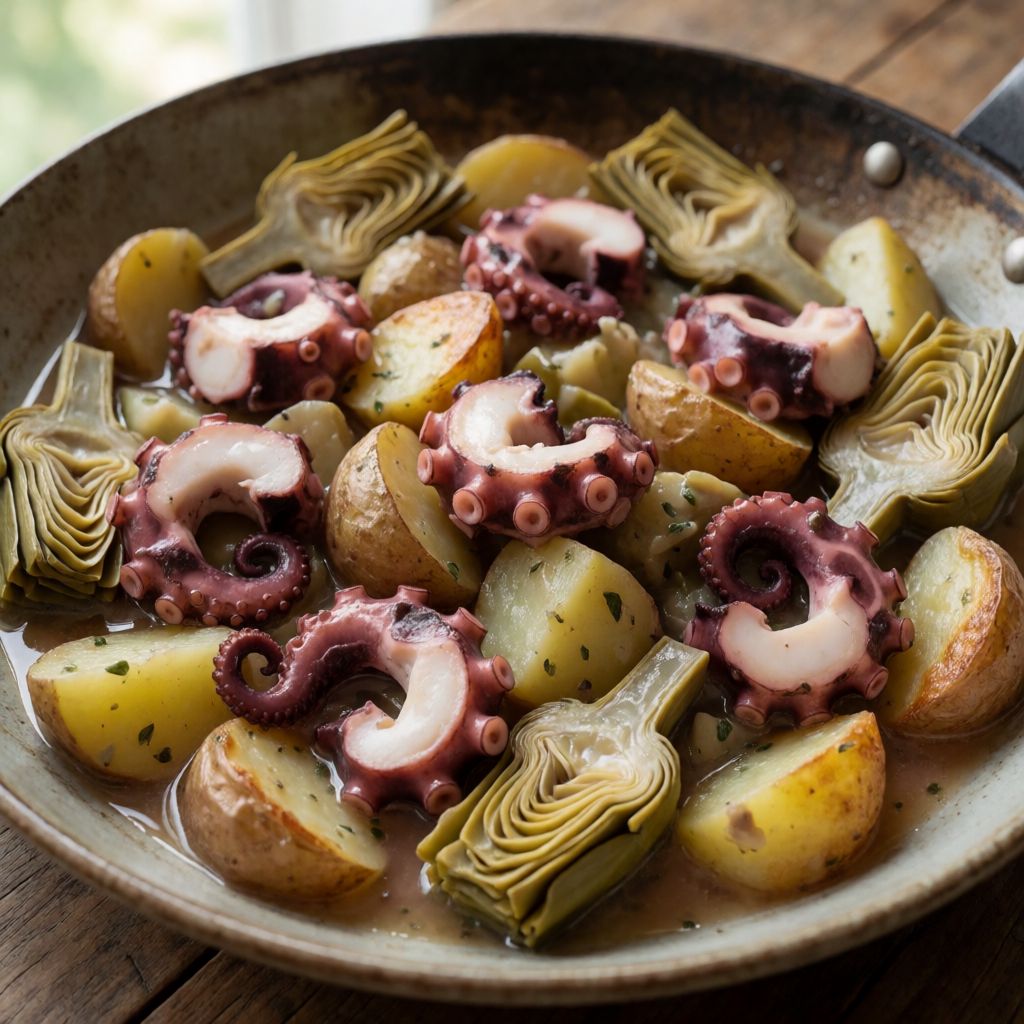
 AI photo
Octopus, Artichoke and Potato Pan
A warming pan of tender octopus simmered with artichokes and potato.
Labels are worked out automatically from the ingredients and can be wrong. Check the packaging if it matters to you.
Ingredients
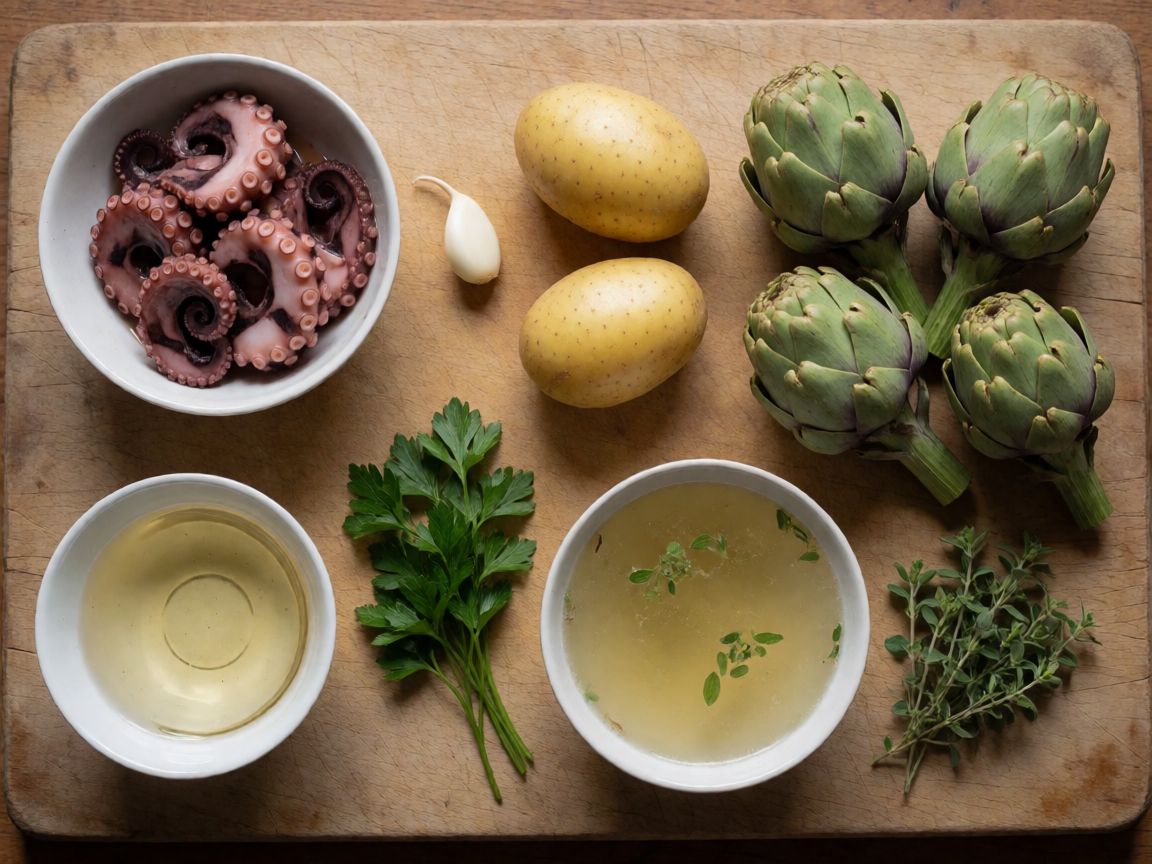
- 700-800 g Octopus
- 1 clove Garlic
- 2 pcs Potato
- 4 pcs Artichoke
- 250 ml White Wine
- 250 ml Vegetable Stock
- 2 tbsp Olive Oil
- Salt to taste
- Black Pepper to taste
- Parsley to taste
- Marjoram to taste











Steps
Bring lightly salted water to the boil in a pot.
Dip the octopus into the water three times so the legs curl, then reduce the heat and add the white wine.
45 minCook the octopus covered over a low heat. It is ready when the thickest part reaches 63°C.
Thinly slice the artichokes, removing the toughest parts, and leave them in a bowl of water with lemon juice.
Let the octopus cool, remove the skin and cut it into pieces.
In a large pan, fry thinly sliced garlic in olive oil.
Add the well-drained artichokes and cook them, gradually adding vegetable stock.
Add the potato, cut into pieces.
When the vegetables are soft, add the pieces of octopus, season with salt and sprinkle with ground black pepper.
Sprinkle generously with parsley and marjoram.
Serve warm.
Octopus, artichoke and potato cooked in one pan — but the octopus and the vegetables live in two different worlds. One needs long, gentle heat to turn rubber into something you can bite through cleanly. The other needs a quicker braise so the potato doesn't collapse into mush before the artichoke softens. The dish works when you respect that the octopus comes first and alone, and the vegetable pan is really a second, shorter act.
The dunk-it-three-times business isn't superstition, even though it looks like a kitchen charm. Octopus muscle is mostly collagen-wrapped fibre bundles with almost no fat to lubricate them. A sudden shock of boiling water makes the surface protein contract hard and fast — that's what curls the legs, and it also seizes the outer layer before the whole thing turns to chewing-gum in slow heat. Then you back right off: a low simmer with wine in it, lid on. Collagen needs time at gentle heat to melt into gelatin — rush it and you get the tough, bouncy result everyone blames on "octopus is just tough meat." It isn't. It's octopus cooked at the wrong speed.
63°C in the thickest part is your real finish line, not the clock. 45 minutes is a floor, not a verdict — a smaller octopus, a weaker domestic hob, even your pot's shape will shift that number. Feel for it: a skewer or knife should slide into the thick base of a leg with almost no resistance, like testing a boiled potato. If it fights you, it's not done, whatever the timer says.
The artichoke is the fussy one. Raw, cut artichoke oxidises in minutes — the flesh goes grey-brown the moment air touches it, which is why it goes straight into water with lemon juice. That's not decoration, it's an antioxidant doing its job: acid slows the enzyme browning reaction. If you've only got bottled lemon juice or even a splash of white wine vinegar, that works fine — the acid is the active ingredient, not the lemon as such. In the UK, fresh whole artichokes aren't always sitting in the veg aisle; if you can't find them, jarred or frozen artichoke hearts (drained, patted dry) will get you most of the way there — you lose a bit of the leaf texture but keep the flavour and save real time on the trimming.
Potato here is a filler and a thickener as much as a vegetable in its own right — any waxy or all-rounder potato (Maris Piper, King Edward, even a supermarket "baking potato" cut smaller) works, because you're not after fluffy mash, you're after pieces that hold their shape in a wet pan but still go soft enough to eat without a knife fight. Cut them close in size to the artichoke slices so they finish together — uneven cutting is the usual reason one vegetable turns to mush while the other's still raw in the middle.
The olive oil and garlic base is just flavour-carrying fat, not a flavour in itself that needs reverence. "Olive oil or nothing" is one of those rules people repeat without asking why — the real criterion is an oil that won't fight the dish's taste and can take gentle frying heat without smoking. Olive oil fits because it's mild and traditional to the coast this dish comes from, but a flavourless vegetable oil, or a light sunflower oil, will carry the garlic just as honestly if that's what's in your cupboard.
Vegetable stock added "gradually" rather than dumped in at once is doing a specific job: it keeps the pan wet enough that the artichoke steams and softens rather than frying dry and catching, but it stops you flooding the pan into a soup. In a wide domestic frying pan — not a kazan, not a deep stockpot — liquid evaporates fast because of the surface area, so little-and-often beats one big pour; add more only when the pan looks dry, not on a schedule.
Wine in the octopus water is there for acid and aromatics, not alcohol strength — it helps break down a little surface protein and adds a backbone of flavour to meat that otherwise tastes of very little on its own. Any dry white you'd actually drink will do; don't buy a "cooking wine," it's usually worse value and no better in the pot.
The final sprinkle of parsley and marjoram isn't garnish for the photograph — fresh herbs added at the very end keep their volatile oils, the ones that cook off fast under heat. Add them earlier and you'll taste the dish was once herby; add them at the end and you taste the herb. If you only have dried marjoram, use less than you think — it's more concentrated and goes bitter if you're generous with it the way you can be with fresh.
Ninety minutes of cook time with no real prep up front tells you where the patience goes: almost all of it sits with the octopus simmering quietly while you do something else — lay the table, put the kettle on. This isn't a dish you stand over. It's a dish you start, then leave alone, which from a Sunday-roast kitchen's point of view should feel entirely familiar.