
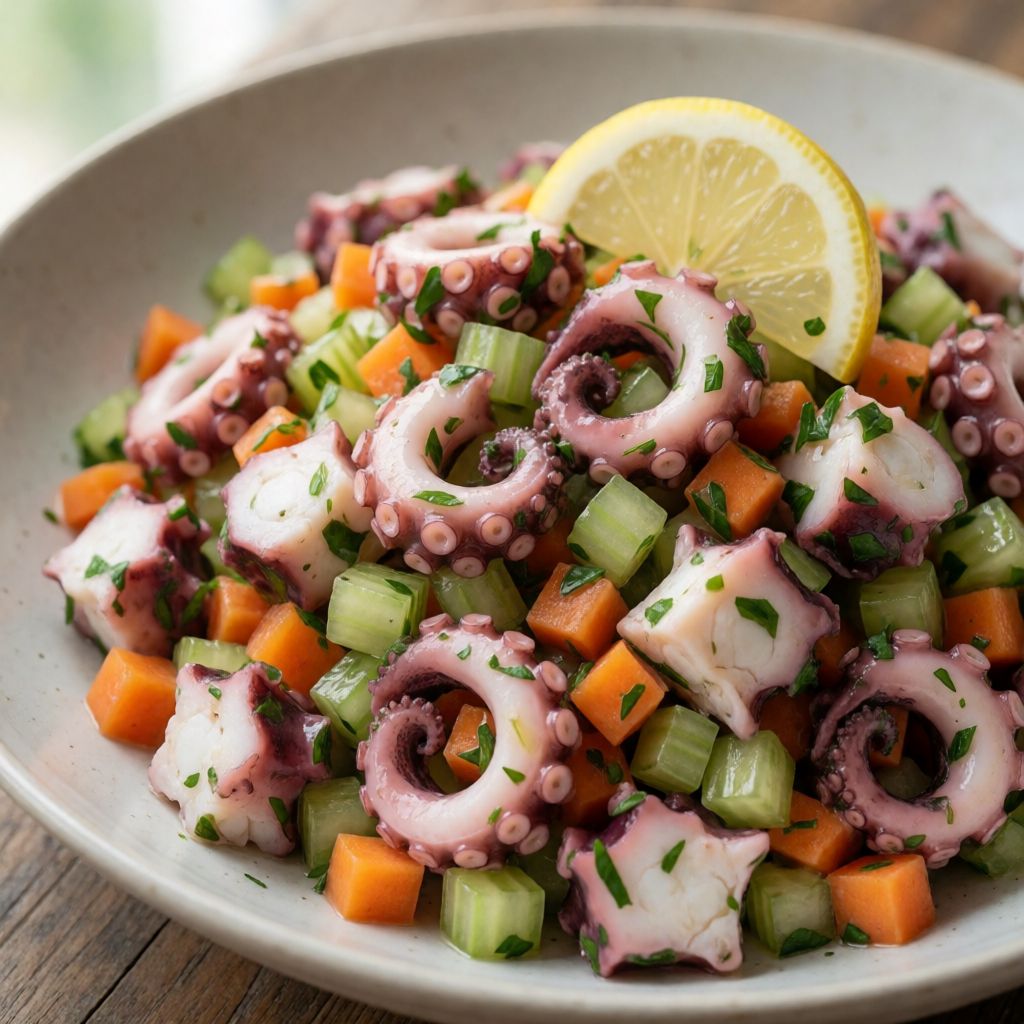
 AI photo
Octopus Salad
A fresh, lemony octopus salad, simmered tender and tossed with olive oil, garlic and parsley.
Labels are worked out automatically from the ingredients and can be wrong. Check the packaging if it matters to you.
Ingredients
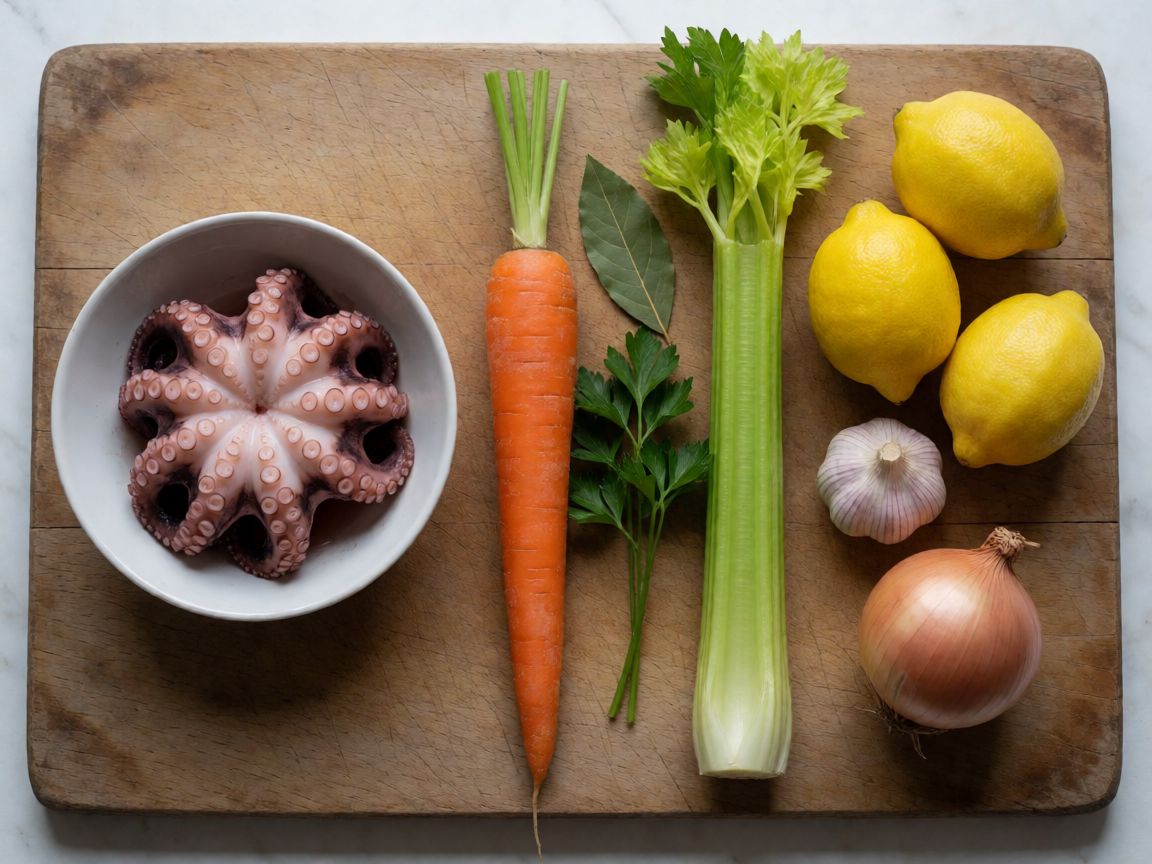











Steps
Clean the octopus.
Pour water into a pot, add salt, bay leaf, carrot and half the onion.
When the water boils, lower in the octopus and cook. It is ready when the thickest part reaches 63°C.
Let the octopus cool right in the pot of water, then drain.
Mix the olive oil, lemon juice, salt and black pepper.
Chop the parsley together with the garlic and add to the dressing.
Cut the cooled octopus into cubes.
Put the octopus cubes into a salad bowl and pour over the dressing.
Stir and let it rest.
10 min
Octopus salad is really a lesson in protein chemistry disguised as a Sunday starter. Octopus is almost pure muscle wrapped in collagen, and that collagen is the whole story: too little heat and you're chewing a rubber band, too much and you've boiled away the very thing that was going to make it tender. The entire dish — the vegetables in the water, the slow cool-down, the sharp lemony dressing at the end — exists to manage that one piece of chemistry.
Some say you tenderise octopus by beating it against a rock, or by freezing it, or by dropping it into boiling water three times "to make it curl nicely." No — the curling happens because the muscle fibres contract on contact with heat, nothing mystical in it, and tenderness comes from time and temperature, not ritual. What actually works is holding the flesh in the 60s°C long enough for collagen to turn into gelatine. That's not a myth, that's just what collagen does when you give it the chance — it melts rather than toughens, the way the connective tissue in a slow Sunday roast joint does, except octopus does it in under an hour instead of three.
On the octopus itself: buy it already cleaned if you can — most UK fishmongers and supermarket fish counters will do this for you, and it saves you fighting with a beak and ink sac in your own kitchen. Fresh or previously frozen both work; in fact a spell in the freezer does some of the tenderising work for you by breaking down muscle fibre with ice crystals, which is the one bit of octopus folklore that actually has a mechanism behind it, rather than being superstition.
The carrot, celery, onion and bay leaf in the cooking water aren't there to flavour the octopus in any deep way — the skin is thick enough that very little passes through. Think of them as insurance against a flat pot of salt water, giving the cooking liquid enough character that if you ever use a splash of it later, it isn't dead. Any firm aromatic vegetable works here: a leek end, a stick of fennel, whatever you'd otherwise throw in a stockpot. Don't skip the salt in the water — it's seasoning the octopus from outside in while it swims, not seasoning the room.
The dressing is where the whole dish actually gets its personality, and it's deliberately simple: good olive oil, lemon juice, salt, pepper. Use an oil that tastes of something — olive oil with genuine fruitiness, not a neutral bottle — because here the oil isn't a cooking medium, it's a flavour on its own, carrying the lemon and garlic. If you can't get decent olive oil, any oil with no smell of its own and a clean finish will carry the acid and garlic fine, but you lose the point of calling for olive oil in the first place, so it's worth the extra pound at the shop.
Three lemons for one octopus sounds like a lot until you taste cold, firm octopus flesh — it needs real acidity to cut through the density of the meat, the way a Sunday roast wants a sharp gravy or horseradish against the richness of the beef. Squeeze them properly, don't just wave a slice over the bowl.
Garlic is marked optional, and that's honest: it adds a background heat that some people want with seafood and some don't, Mediterranean habit more than necessity. Chop it fine with the parsley so it disperses through the dressing rather than sitting in clumps where one bite gets all of it and the rest gets none.
The final ten minutes of resting matters more than it looks. Cold octopus straight into dressing tastes like two separate things sharing a bowl. Given ten minutes, the oil coats the cut faces, the lemon starts to firm the surface slightly and the salt actually reaches the inside of each cube. It's not a long wait, but don't serve it the moment you've stirred it — that patience is doing real work, not just killing time while you lay the table.