
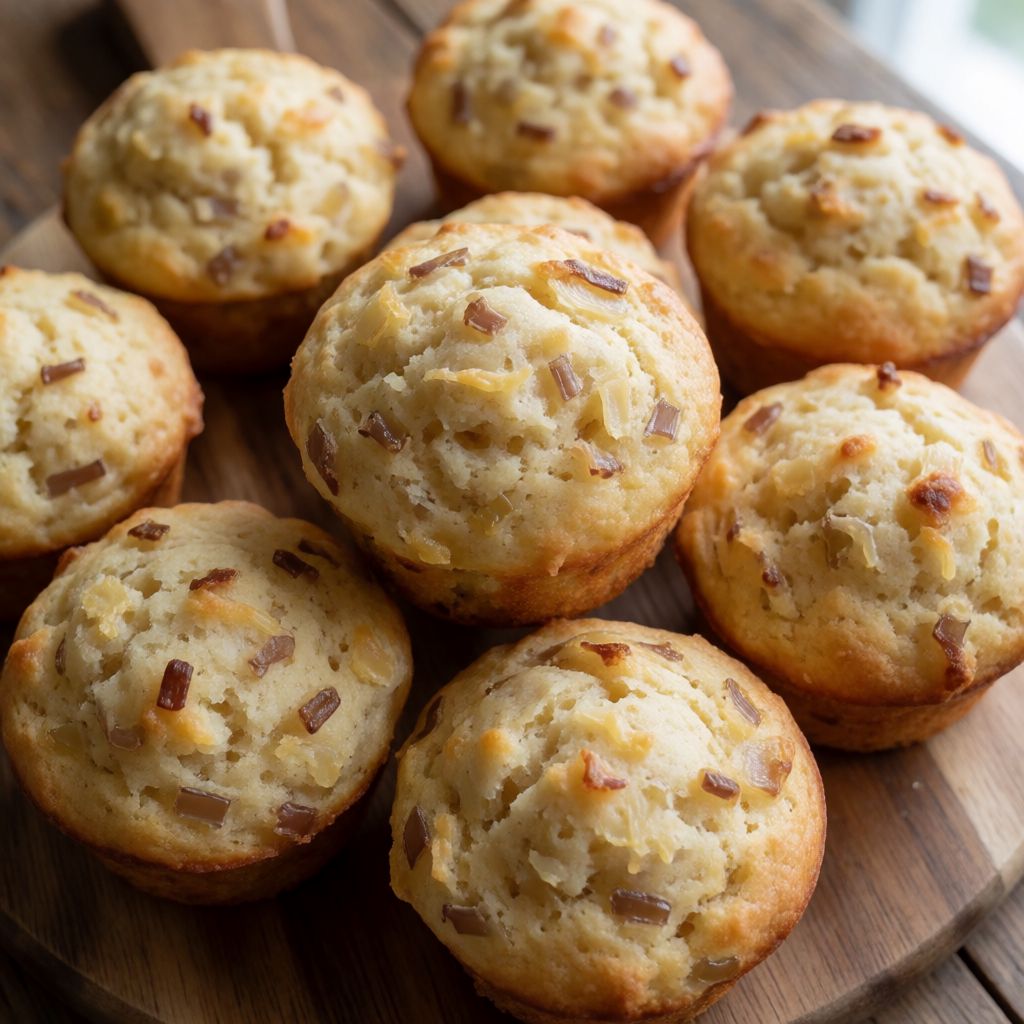
 AI photo
Onion Muffins
Savoury muffins with sweet stewed onion, Greek yogurt and Parmesan.
Labels are worked out automatically from the ingredients and can be wrong. Check the packaging if it matters to you.
Ingredients
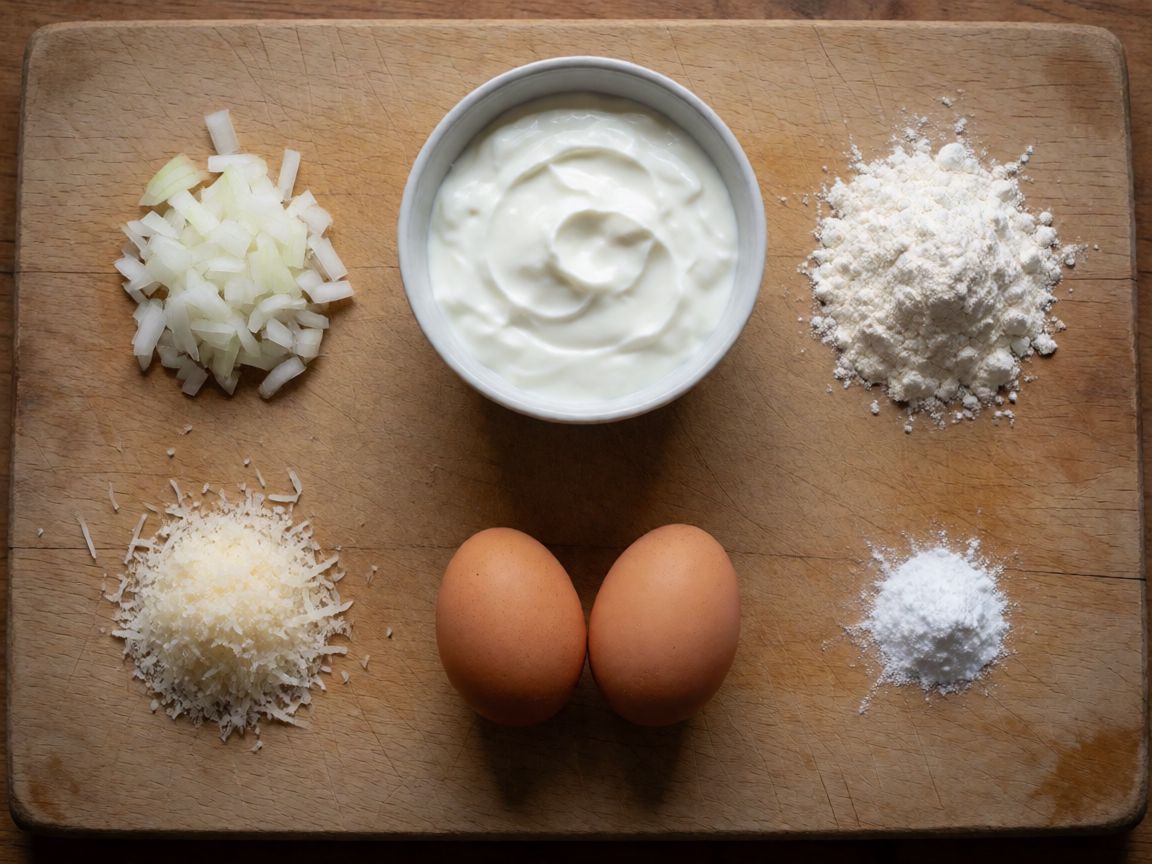
- 350 g Onion
- 170 g Greek yogurt
- 120 g Plain flour
- 30 g Parmesan
- 60 ml Olive oil
- 2 pcs Eggs
- 16 g Baking powder
- Salt to taste
- Black pepper to taste









Steps
Peel the onion thoroughly and cut it into thin half-moons.
Heat 2 tbsp olive oil in a frying pan, add the onion, season with a pinch of salt and pepper, and fry over medium heat.
If needed, add a little water, cover and simmer the onion over low heat.
20 minCrack the eggs into a bowl and whisk briskly with a whisk until lightly foamy.
Add the Greek yogurt, another 2 tbsp olive oil and the Parmesan to the eggs, and mix.
In a separate bowl, mix the flour with the baking powder and salt, then sift the mixture into the egg mixture.
Add the stewed onion to the batter and mix.
Line a muffin tin with paper cases and preheat the oven to 180°C.
Using two teaspoons, fill the cases with batter to about three-quarters of their height.
Bake the muffins in the oven.
20 minLet the finished muffins cool slightly and serve.
10 min
These are not sweet muffins wearing a savoury costume for a joke — they're closer to a frittata that decided to live in a paper case. Onion, egg, yogurt, flour, cheese: the structure comes from egg and flour, the tang from yogurt, and the entire soul of the thing comes from what you do to 350g of onion before it ever meets the batter. If you rush that onion, you get a muffin that tastes of raw sulphur and regret. If you give it time, you get something closer to onion jam suspended in a savoury cake.
What decides whether this works is one thing: the onion must go from sharp to sweet before it goes into the bowl. Onion straight off the board is aggressive — full of the sulphur compounds that make you cry and make a dish taste thin and biting. Heat breaks that down and lets the natural sugars come forward. That's not folklore, that's chemistry doing exactly what you paid gas or electricity for. Half-moons, not dice, because thin slices give you more surface area touching the hot pan, so they soften evenly instead of going squishy on the outside and raw-crisp in the middle.
The lid-and-water trick at step 3 is doing a specific job: once the onion has taken some colour and started softening, a splash of water plus a cover switches the pan from frying to steaming. This stops the onion racing ahead into bitter brown while the inside is still stubborn. On a domestic hob, where "medium" can mean two different things depending on which ring you're using, this is your safety net — better a damp, patient onion than a scorched, crunchy one.
Onion — go for a standard yellow or white onion, not red. Red onion has a different sugar-to-acid balance and can turn an odd purplish-grey when stewed down slowly, which does nothing for the finished muffin visually and adds a sharper edge than you want here. Half-moons rather than dice, as above, for even cooking; slice too thick and the centre stays raw while the edges catch. Some say you should rinse sliced onion to "take out the bitterness" — no, because what you're tasting raw isn't bitterness, it's sulphur compounds, and heat deals with those far better than water ever will. Cooking it slow is the one non-negotiable step; everything else in this recipe is just logistics.
Greek yogurt — full-fat, thick, strained. It brings acidity (which balances the sweet stewed onion) and moisture without the wateriness of regular yogurt, which would thin your batter and risk a soggy muffin base. If you only have ordinary yogurt, strain it through a sieve lined with a paper towel for twenty minutes first — you're removing whey, which is the whole point of "Greek" in the first place.
Flour and baking powder — plain flour here, not self-raising, because the 16g of baking powder is doing deliberate, measured work; self-raising would double up and you'd get a muffin that rises fast then collapses, since there's nothing in self-raising flour that knows about your yogurt and egg content. Sift the dry mix into the wet — not because sifting is some ritual, but because it breaks up any baking powder clumps so you don't bite into a bitter, metallic pocket in an otherwise pleasant muffin.
Parmesan — a hard, aged cheese is there for salt, umami and a bit of dry structure. Grana Padano does the same job for less money; pecorino works too but brings more sharpness, so taste as you season. What you don't want is a soft, wet cheese — it'll add moisture you haven't accounted for and none of the savoury punch.
Olive oil — "any oil with no smell of its own" is the wrong brief here, deliberately: you want the olive oil's flavour present, it's not neutral filler, it's a flavour ingredient alongside the onion and Parmesan. A light olive oil keeps it from tasting of the bottle; a very grassy extra virgin will fight the onion for attention. If you genuinely have none, a flavourless vegetable or sunflower oil will give you structure and moisture but you'll lose a layer of flavour — know that's the trade before you make it.
Eggs — large, standard. Whisking them to a light foam at the start isn't decoration, it's folding in air that helps the rise alongside the baking powder, since this batter has no gluten development to speak of to trap gas otherwise.
On an ordinary UK hob and oven: 180°C is enough to set egg and flour and let the baking powder do its job without racing ahead and burning the paper cases before the inside's cooked. You don't need a stand mixer or a kazan for this — a frying pan, two bowls and a fork do the entire job. The real ingredient, the one not on the list, is the twenty minutes you give the onion. Rush that and no amount of Parmesan saves you.