
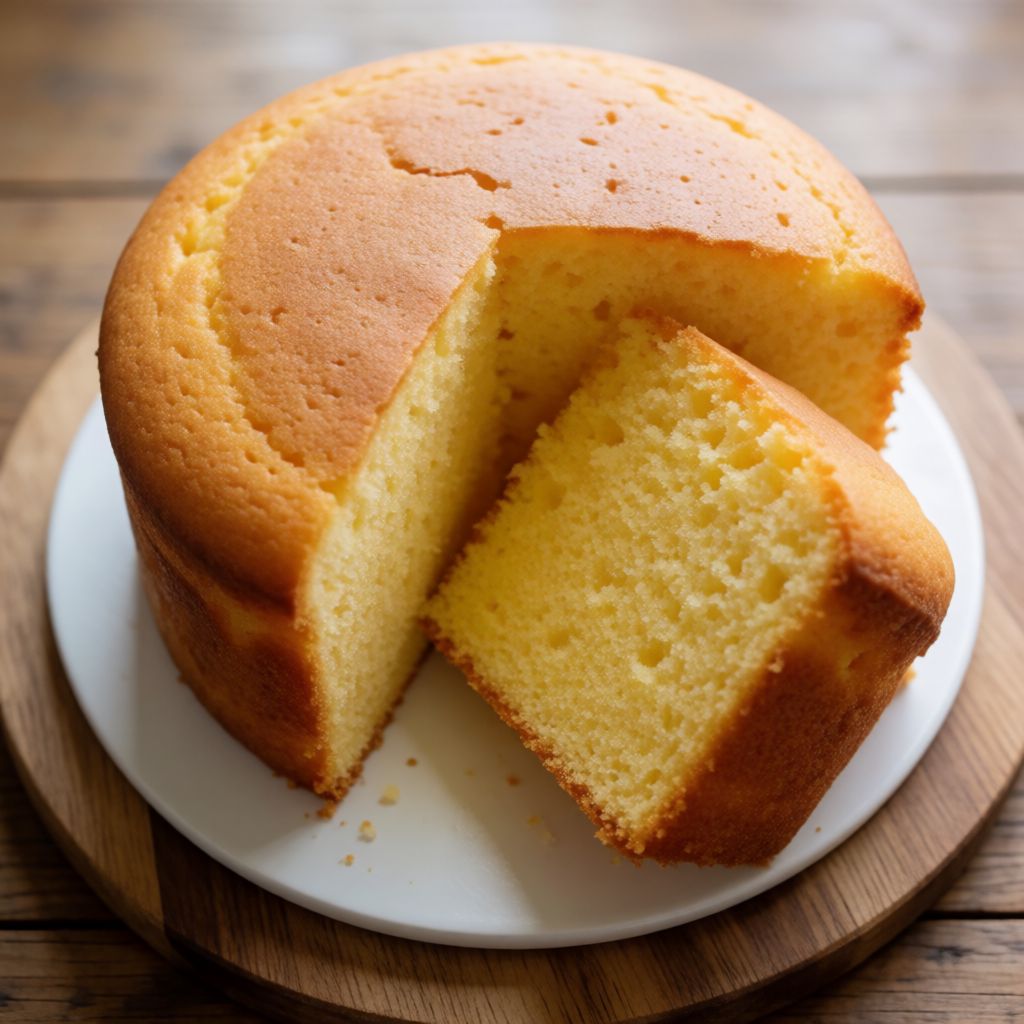
 AI photo
Orange Cake
A moist, fragrant cake made with a whole blended orange for a bright citrus flavour throughout.
Labels are worked out automatically from the ingredients and can be wrong. Check the packaging if it matters to you.
Ingredients
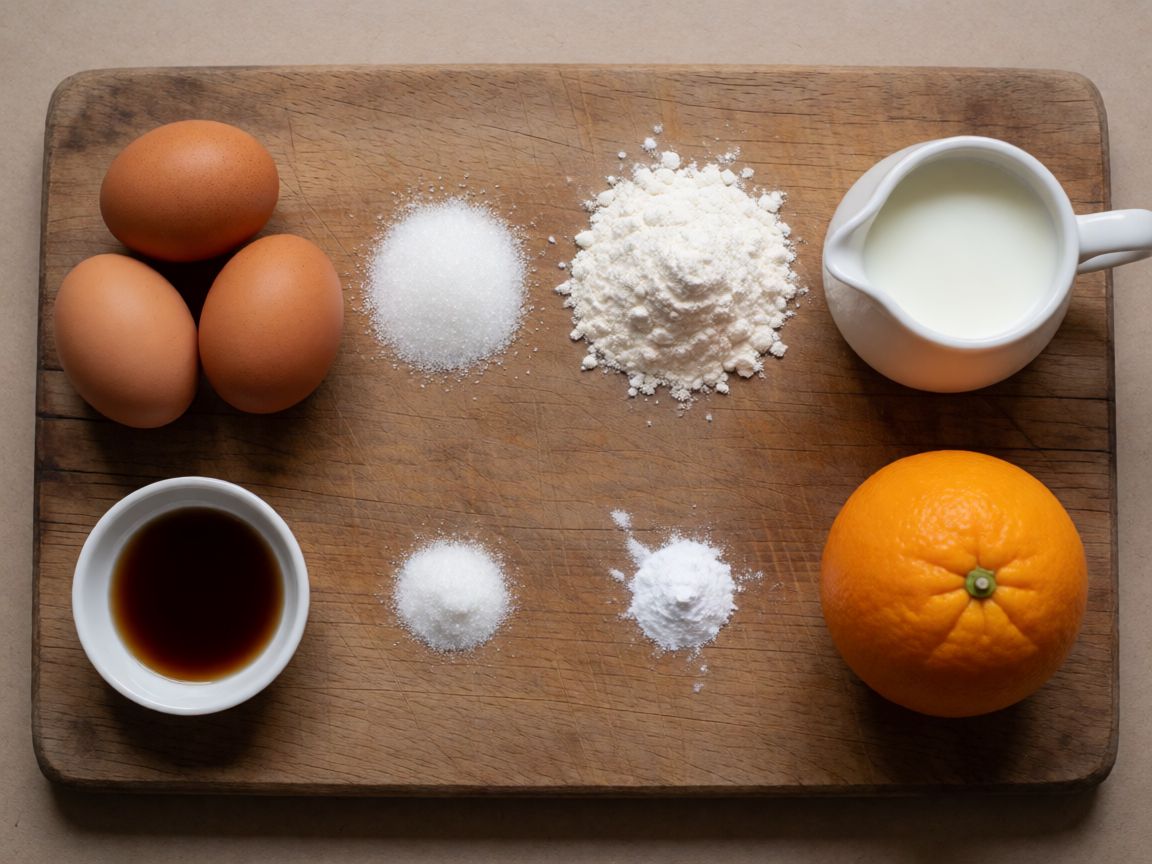
- 3 pcs Eggs
- 100 g Vegetable oil
- 250 g Sugar
- 300 g Plain flour
- 100 ml Milk
- 1 package Baking powder
- 1 pcs Orange
- 1 tsp Vanilla extract








Steps
Wash the orange thoroughly and cut it into pieces with the skin on, carefully removing any pips.
Transfer to a blender, add the milk and oil, and blend until smooth and creamy.
Sift the flour into a large bowl, then add the sugar, eggs and vanilla extract.
Mix with an electric mixer for a few seconds until the ingredients come together.
Pour in the blended orange mixture and beat again with the mixer.
Add the baking powder and mix well.
Grease a 24 cm tin with butter and line it with baking paper, then pour in the batter.
Bake at 180°C in a conventional oven, or at 160°C in a fan oven, for 60 minutes.
60 minRemove the finished cake from the tin and let it cool completely.
Brush the surface with orange jam.
This is a whole-orange cake — skin, pith, flesh, the lot — blended raw into the batter rather than used as zest and juice. That's the mechanism that decides everything else: you're not flavouring a sponge, you're building one out of fruit. The pith carries pectin and bitterness, the skin carries the oils where the real orange smell lives, and blending them with the milk and oil turns the whole thing into a thick, fragrant purée that replaces half your usual liquid. Skip the skin and you get a nice damp sponge; keep it and you get an orange cake that tastes of orange three days later, not just on the day you baked it.
Some say — no, because — the pith makes cake bitter. Pith is bitter raw and bitten into. Blended fine and cooked through at 180°C for an hour, that bitterness dissolves into the sugar and fat the way a bitter herb does into a long-simmered stew: present as depth, not as a slap. What actually ruins it is a bad orange — thick-skinned, sprayed, waxed. Wash it properly, as the method insists, because you're about to eat its skin.
What decides whether this works is the mixer, not the oven. Beat egg, sugar, flour and vanilla for "a few seconds" only — just enough to come together, no more. This is a stirred cake, not a whisked one: no air is being folded in to make it rise on its own, so overbeating here does nothing but build gluten and toughen the crumb. The baking powder does the actual lifting, late, once everything's wet. That order — dry and eggy things first, barely mixed, liquid in second, powder last — is the whole architecture of the recipe.
On the eggs: three, used whole, no separating. This isn't a cake relying on whipped whites for lift — the baking powder does that job — so the eggs here are mainly structure and richness, binding the flour and fat into something that holds a slice rather than crumbling off the fork.
The vegetable oil, 100g, wants to be something with "no smell of its own" — sunflower, rapeseed, anything neutral. Its job is moisture that stays moist, because oil doesn't set hard the way butter does when it cools. That's why this cake is still soft on day three, when a butter sponge has already started drying at the edges. Olive oil will work if it's a mild one; a strong, grassy extra virgin will fight the orange and win, which is not the fight you want.
Sugar, 250g, isn't just sweetness — it's also what tempers the pith's bitterness and helps the crumb brown and stay tender, by competing with the flour for the water in the batter. Don't read "250g" as negotiable if you're worried about bitterness; cutting sugar to dial down sweetness will dial up bitterness instead, because you've removed the thing counteracting it.
Flour: a plain 300g, sifted mainly to break lumps and get an even mix with the baking powder, not for any mystical aeration — sifting doesn't add meaningful air to a batter that's about to be beaten by a mixer anyway. Self-raising flour plus a full sachet of baking powder on top is too much lift and will give you a cake that rises fast, then collapses as it cools — so if that's what's in your cupboard, drop the baking powder to about a teaspoon.
The orange itself is the one ingredient with no real substitute, because the whole method is built around using it skin and all — but choose carefully: a thin-skinned, unwaxed one, washed hard under warm water (a scrub, not a rinse) if you can't find unwaxed, since you're blending the wax in otherwise. If you genuinely can't get a good orange, this stops being this cake; you'd be making a different, lesser thing with bottled zest and juice, and it won't taste the same three days on.
A UK kitchen note: a conventional domestic oven runs hotter and less evenly at the edges than the recipe's 180°C assumes, so don't trust the dial — trust the cake. It's done when a skewer comes out clean and the top springs back rather than dimples under a fingertip; the hour given is a floor, not a verdict. And the "jam" glaze at the end is economics as much as flavour — a thin coat of what's basically marmalade without the chunks, the sort of finishing touch that costs nothing and saves you making a syrup from scratch. Any orange or citrus marmalade, warmed slightly and brushed on thin, does the same job; just sieve out the peel first if yours is chunky, or it'll sit on top rather than glaze.