
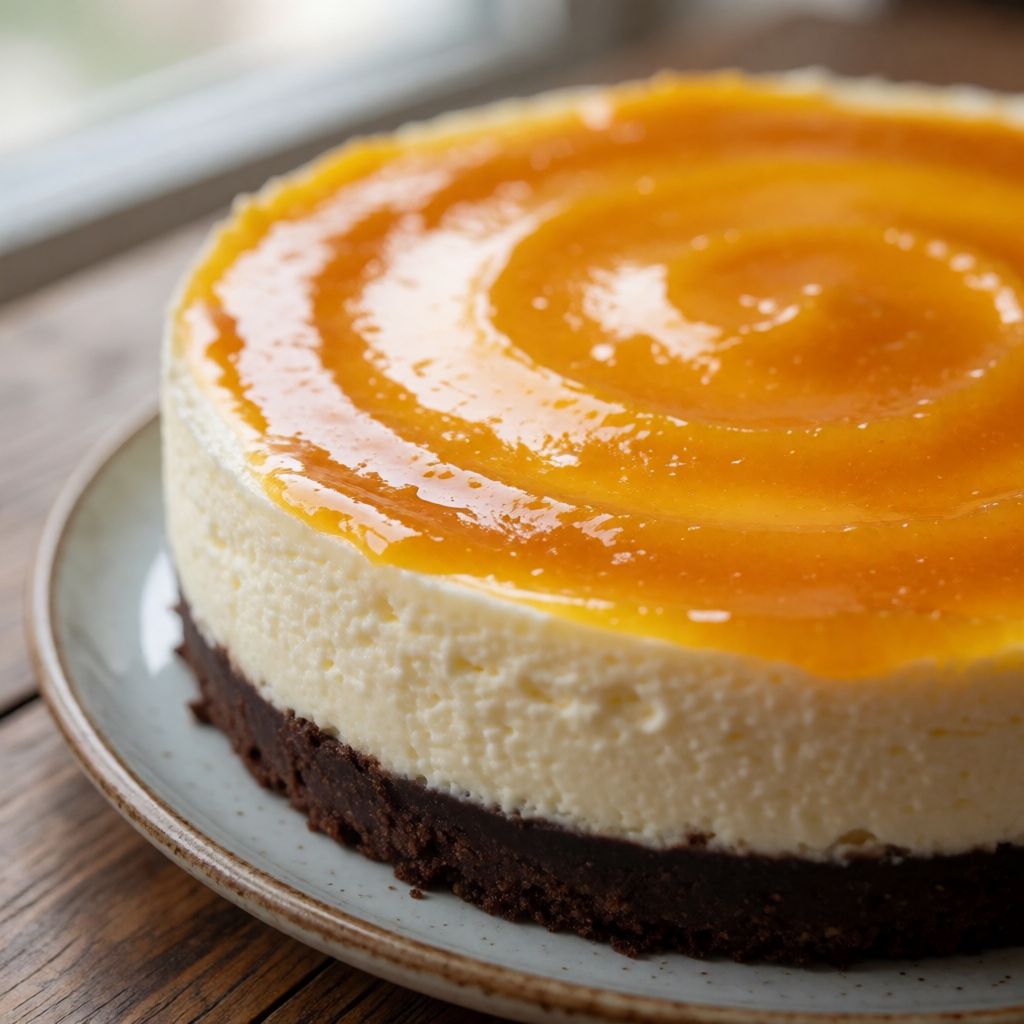
 AI photo
Orange and Chocolate Cheesecake
A no-bake chocolate biscuit base topped with a creamy orange cheesecake filling.
Labels are worked out automatically from the ingredients and can be wrong. Check the packaging if it matters to you.
Ingredients
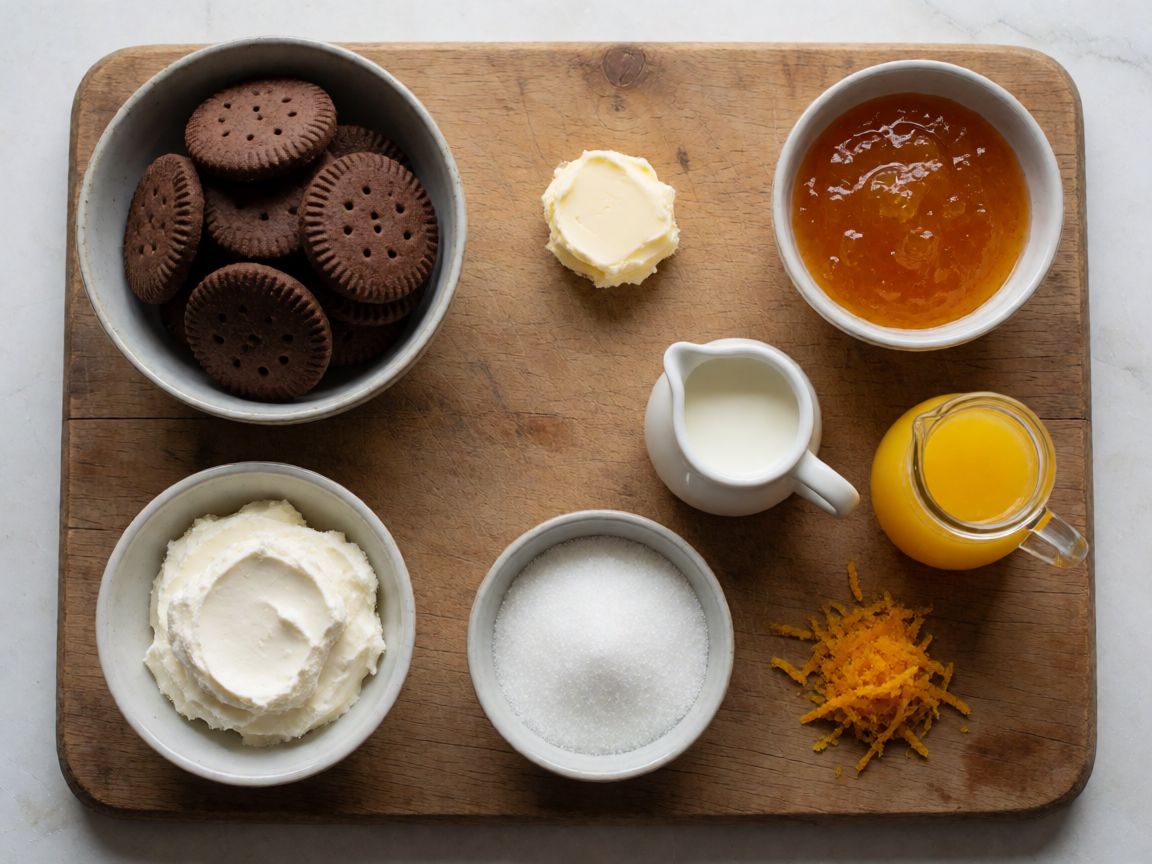
- 250 g chocolate digestive biscuits
- 90 g butter melted
- 90 ml orange marmalade
- 500 g cream cheese
- 250 ml double cream
- 150 ml orange juice
- 125 g caster sugar
- 15 g orange zest grated
- 10 g gelatine
- 1 pcs milk chocolate to taste, for decoration
- 1 pcs orange to taste, sliced for decoration











Steps
In a bowl, crush the chocolate digestive biscuits and mix in the melted butter.
Press the mixture into a tin to form a base and chill in the fridge.
30 minSpread a layer of orange marmalade over the base and chill again.
Soak the gelatine in cold water, then dissolve it in warm cream.
10 minBeat the cream cheese until soft, then add the caster sugar.
Add the grated orange zest and orange juice, and mix well.
Whip the remaining cream to stiff peaks.
Add the dissolved gelatine to the cream cheese mixture, stir, then gently fold in the whipped cream.
Spread the orange cream over the chocolate base and chill in the fridge.
240 minRemove from the tin and decorate with milk chocolate shavings and orange slices.
This is a no-bake cheesecake, which really means a set mousse on a biscuit base — nothing here ever sees an oven. What decides whether it works isn't flavour, it's structure: whether the gelatine sets the orange-and-cream-cheese mixture firmly enough to hold a slice upright, and whether the base stays crisp instead of turning to paste.
The biscuit base is just crushed digestives bound with melted butter, pressed down and chilled hard. Some say you need to bake a biscuit base — no, because there's no flour here to set, no raw egg to cook off. You're not cooking it, you're gluing crumbs together and letting the butter go solid again in the cold. That's why the chill before you add anything wet matters: a soft base under a liquid filling just dissolves into mush, and marmalade spread straight onto warm crumb will sink in rather than sit on top.
The marmalade layer is a barrier, not a flavour flourish — it's there precisely to stop that sinking, sealing the crumb so the orange cream sits on it rather than soaking into it. Skip it and in a day the base goes soft from underneath, and you won't know why.
Start with the biscuits. Chocolate digestives aren't an aesthetic choice, they're doing a job a plain biscuit can't: enough cocoa and fat in them already that they crush into a sandy crumb rather than shards, and hold together with surprisingly little butter. If you can't get them — and outside the UK you often can't — the stand-in is any crisp, dry, not-too-sweet biscuit with some fat content of its own, crushed fine, with a spoon or two of cocoa powder added to chase the flavour. What you're choosing for is dryness and crush, not sweetness; a soft or oily biscuit won't bind properly and won't crisp up again once chilled.
The butter is pure glue. Its job finishes the moment it resolidifies in the fridge — that's the whole mechanism of a biscuit base, melt it so it coats every crumb, then let the cold set it hard again, like mortar. Too little butter and the base crumbles when you lift a slice; too much and it turns greasy and slips. There's no fixing that at serving time, only at mixing time.
The marmalade is doing double duty — barrier and bridge. It stops moisture creeping into the crumb from below, as already said, but it's also where the orange flavour anchors itself against the chocolate, so the first bite reads as "orange and chocolate," not "cheese, then orange, then biscuit" as separate events. Any sharp, set citrus preserve works here — marmalade specifically because its bitterness cuts the sweetness of the filling; a plain jam will just read as sugar on sugar.
Cream cheese is the body of the filling, and it has to be full-fat and block-style, not the spreadable tub meant for toast — that version carries extra water and stabilisers that fight the gelatine and leave you with a looser set. Beat it before anything else goes in, because cream cheese straight from the fridge is stiff and lumpy, and it's far easier to smooth it out alone than to try and beat lumps out of a mixture that already has cream and juice loosening it.
Double cream, whipped separately and folded in rather than mixed, is what keeps this from tasting like a brick of sweetened cheese. Whipping it to stiff peaks traps air; folding instead of beating it in keeps that air trapped. Beat it in with the paddle attachment or a vigorous whisk and you knock the air straight back out, and the texture turns dense instead of light — that's the usual reason a home cheesecake tastes "heavy" even when the flavour's right.
Gelatine is the one ingredient here with zero room for improvisation in method, if not in brand. Powder or leaf, it needs to bloom in cold water first — cold, because hot water can start dissolving it unevenly and leave stringy bits — and then it needs to go into warm (not hot) cream to actually dissolve, not boiling, because gelatine loses its setting power above a rolling simmer. If you're using agar-agar instead (useful if you want this properly vegetarian), know it sets firmer and at room temperature, not fridge-cold — the texture comes out more "sliced jelly" than "soft mousse," so it's not a one-for-one swap, more a different dessert wearing the same name.
Orange juice and zest together, not one standing in for the other — juice gives the acidity that cuts the richness of cream cheese, zest gives the actual orange oil and aroma that juice alone, diluted as it is, mostly lacks. Squeeze your own if you can; bottled juice is thinner on aroma because the volatile oils that carry most of the smell are exactly what processing and time lose first.
And patience is the real last ingredient. Four hours in the fridge isn't dead time, it's the only time the gelatine has to do its actual work. Rushing this with the freezer will chill the outside and leave the centre unset — the fridge is slower because it's working evenly, not because it's lazy.