
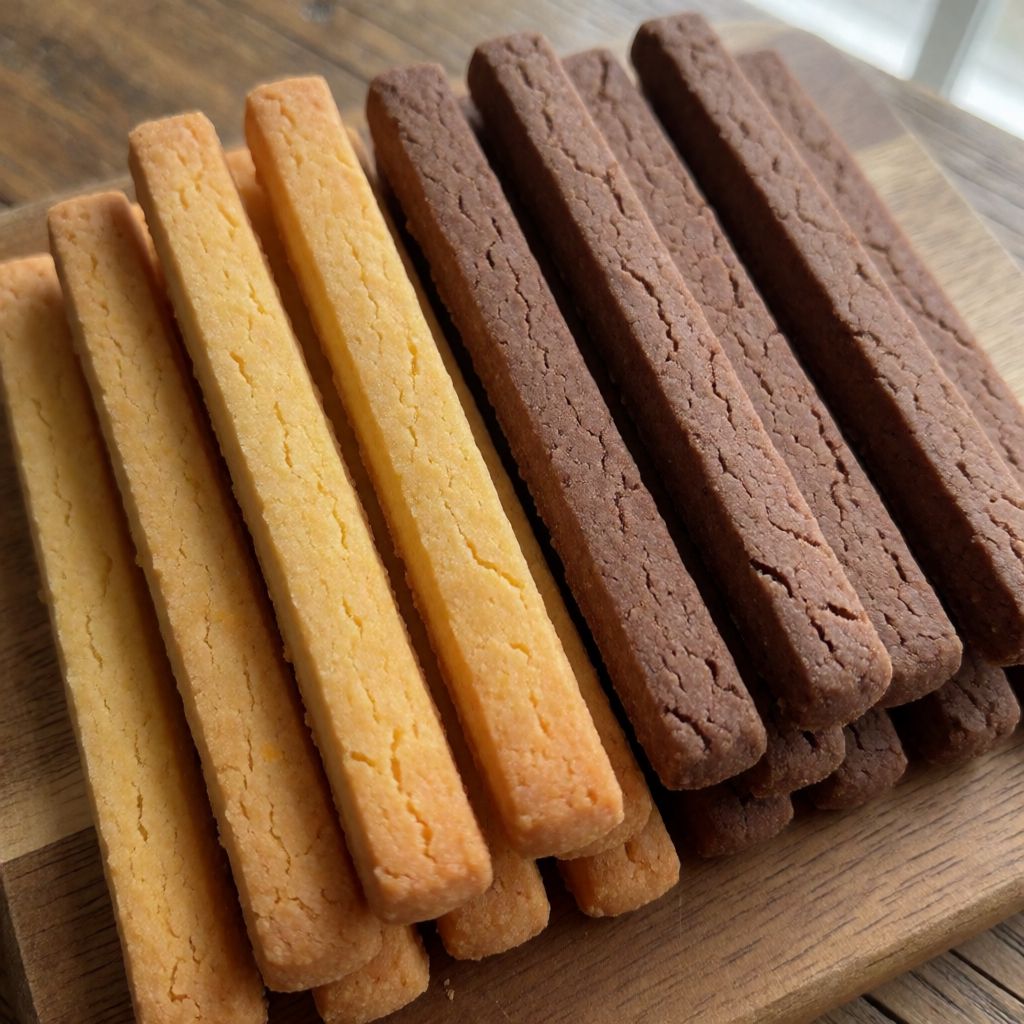
 AI photo
Orange and Chocolate Biscuit Sticks
Crisp orange and cocoa biscuit sticks studded with hazelnuts, sliced into fingers straight from the oven.
Labels are worked out automatically from the ingredients and can be wrong. Check the packaging if it matters to you.
Ingredients
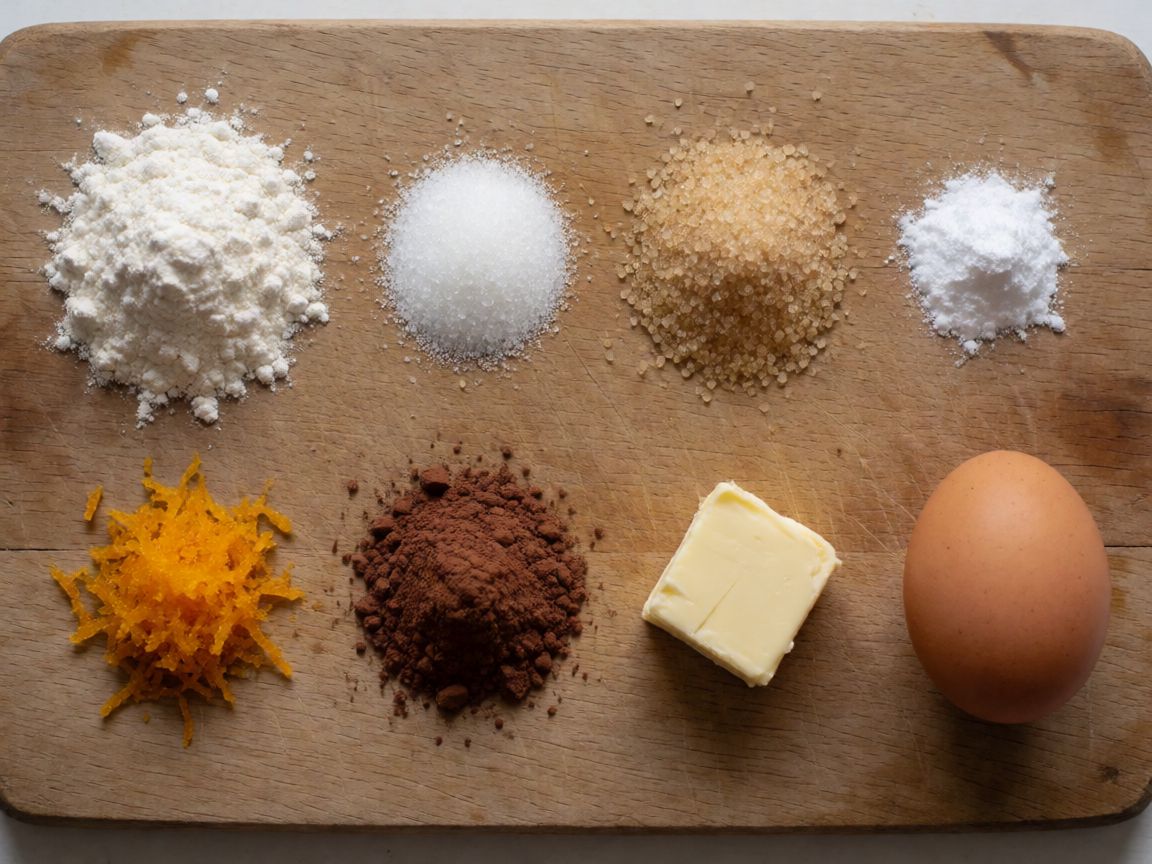
- 325 g Plain flour
- 200 g Caster sugar
- 1 tsp Vanilla sugar
- 1 tsp Baking powder
- 1 pcs Orange finely grated zest
- 30 g Cocoa powder
- 200 g Butter
- 1 pcs Egg
- 1 pcs Egg white
- 50 g Hazelnuts finely chopped







Steps
In a bowl, mix the flour, caster sugar, vanilla sugar, baking powder, orange zest and cocoa powder well. Crumble in the butter and rub together until the mixture resembles coarse flour.
5 minQuickly bring the dough together with the egg and chill in the fridge for 30 minutes.
30 minDivide the dough into 4 pieces and roll each into a long rope about 1.5 cm in diameter.
Trim the ropes to the length of your baking tray (about 25-30 cm) and place on a tray lined with baking paper.
2 minFlatten slightly so they are about 4 cm wide.
Brush with egg white and sprinkle with the finely chopped hazelnuts.
1 minBake in a preheated fan oven at 180°C for about 14-16 minutes.
15 minAs soon as it comes out of the oven, while still hot, cut diagonally into strips 1-1.5 cm wide and leave to cool on a wire rack.
This is a biscotti cousin that never bothers with the second, drying bake — a flat log of cocoa-and-orange dough, baked once as a slab, then cut while hot into finger-length sticks. The whole trick sits in that moment of cutting: do it too late and the slab snaps into shards instead of slicing clean, because sugar and butter set hard as they cool and the dough stops behaving like dough and starts behaving like toffee glass.
What decides whether it works is the rubbing-in stage and the chill. You're not making a cake batter, you're making a shortbread-style dough where the butter stays in little flattened pieces coating the flour — that's what gives the "coarse flour" texture the recipe asks for, and it's what keeps the final stick short and sandy rather than tough. Rub too warm, with soft butter, and the fat greases the flour instead of coating it; the dough turns slack, spreads sideways in the oven instead of holding its rope shape, and you lose the neat flattened strip you need for cutting into even sticks.
The 30-minute chill isn't a pause for your convenience, it's there to re-firm that butter after your hands warmed it during mixing, so the log holds its shape under the egg wash and through the oven's first ten minutes before the structure sets. Skip it, in a British kitchen where the butter's probably come straight off a counter near a radiator, and you'll watch your tidy 4cm rope relax into a 6cm puddle on the tray.
Flour and sugar here aren't just bulk and sweetness — the 325g of plain flour gives structure without the stretch you'd get from a stronger bread flour, so the stick stays short-textured rather than chewy, and the sugar (both the caster and the small hit of vanilla sugar) does double duty: sweetness, yes, but also the thing that caramelises slightly at the cut edges in the oven, giving you that faint crackle when you snap one in half days later. Baking powder is doing almost nothing dramatic — just enough lift to stop the log being dense as a flapjack, not enough to make it rise like a cake, because a rope of dough with that little liquid in it has nowhere much to rise to anyway.
The orange zest is the flavour decision that actually matters, and it's worth grating it fine and rubbing it into the sugar with your fingers for a minute before you even start — the sugar crystals bruise the zest's oil-sacs open and carry the citrus oil through the whole mix, rather than leaving you with bitter little flecks of peel that taste of nothing but zest-shaped cardboard. No orange to hand? A clementine or two will do the same job, lemon zest will do a different, sharper job, and dried orange peel rubbed into the sugar is the thin but honest substitute.
Cocoa powder: use the plain, unsweetened kind, not drinking chocolate — drinking chocolate carries its own sugar and milk powder and will throw your ratios and your texture off, turning the dough gummy rather than sandy. If all you've got is drinking chocolate, cut the added sugar by a third and accept a softer bite.
Butter should be cold, straight from the fridge, cubed small — this recipe doesn't want you to cream it, it wants you to rub it, and "rubbing in" only works cold; any attempt to soften it first just brings you back to the greasing problem above. Any butter with a decent fat content works; margarine will bake flatter and taste of nothing in particular, which is fine if that's what's in your fridge, just don't expect the same snap.
The egg binds the dough into a rollable rope; the egg white on top isn't decoration, it's glue for the hazelnuts and it's also what gives the surface its thin lacquered shine once baked — brush it thin, because a thick coat just sits wet and takes longer to set, delaying the moment you can safely cut. Hazelnuts chopped fine toast lightly in the oven's heat and give the only crunch in an otherwise soft bite; almonds or pistachios chopped the same fine will stand in without changing the character of the thing.
On doneness: forget counting to fourteen and watching the clock through the oven door. You're looking for the surface to go from the raw dough's dull cocoa-brown to a slightly matte, set brown — press a corner gently and it should spring back rather than dent and stay dented. The 14-16 minutes is your lower bound, not your answer; ovens and tray thickness vary too much for a number alone to be trusted. And the cutting really is urgent — have your board and knife out and ready before the tray comes out of the oven, because this is the one place in the whole recipe where patience in every other step buys you a window of maybe sixty seconds of impatience here.