
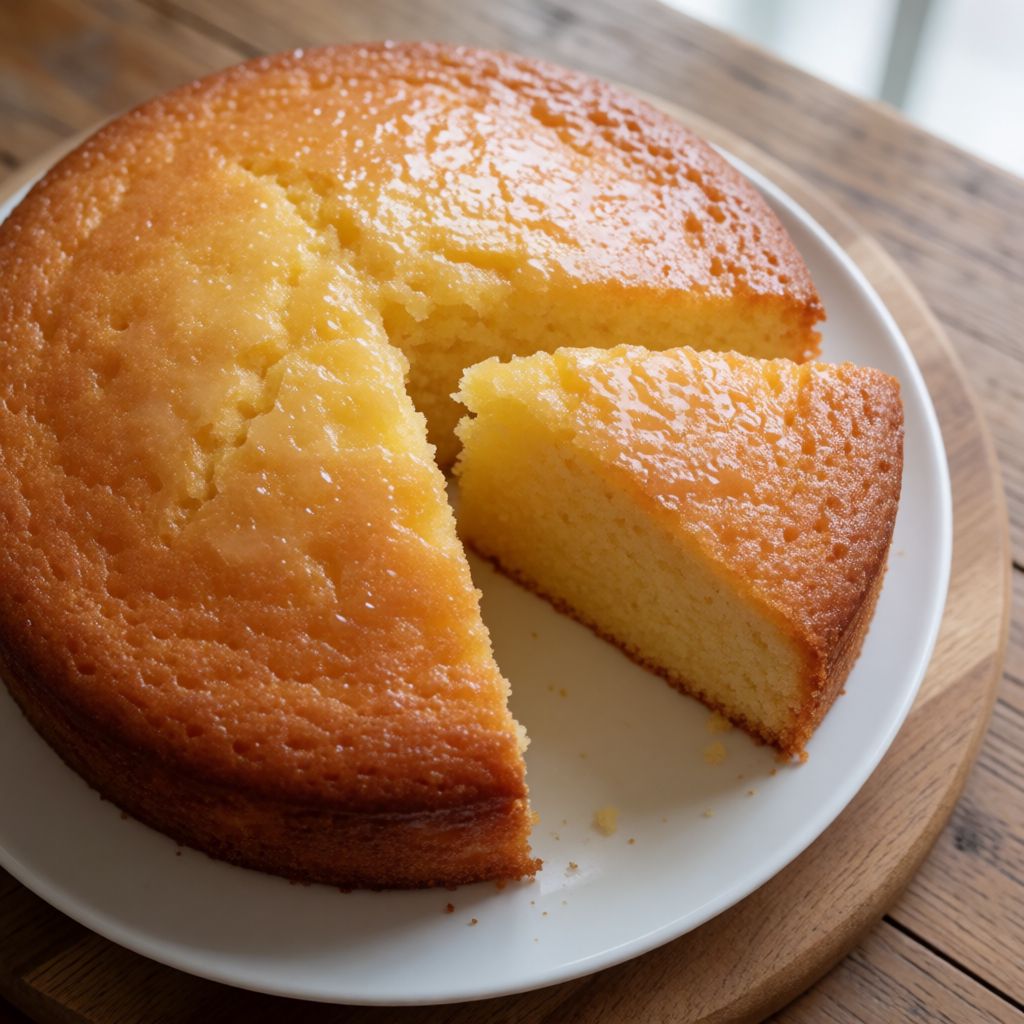
 AI photo
Orange and Yoghurt Cake
A soft orange and yoghurt cake, light and easy to make.
Labels are worked out automatically from the ingredients and can be wrong. Check the packaging if it matters to you.
Ingredients
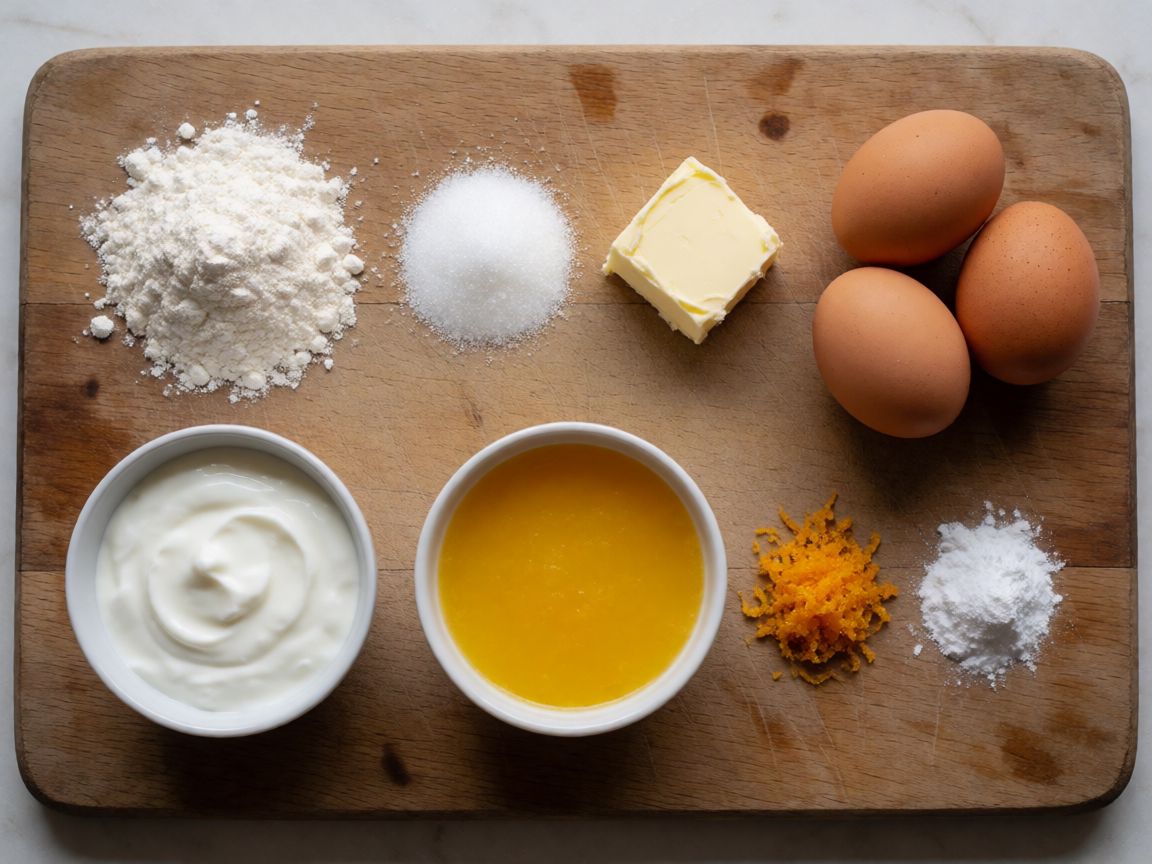
- 230 g Plain flour
- 180 g Caster sugar
- 100 g Butter softened
- 3 pcs Eggs
- 125 ml Yoghurt
- 70 ml Orange juice
- 1 pcs Orange zest
- 16 g Baking powder
- 1 pinch Salt
- 1 tbsp Icing sugar for dusting










Steps
In a large bowl, whisk the eggs together with the sugar using a mixer until light and creamy.
Add the yoghurt and softened butter, and continue whisking while pouring in the orange juice.
Sift in the flour a little at a time, then add the baking powder and orange zest.
Mix everything until smooth and free of lumps.
Pour the batter into a 24 cm tin, greased with butter and dusted with flour.
Bake in a preheated fan oven at 180°C for 40–45 minutes.
42 minCheck if it is done with a wooden skewer: if it comes out dry, the cake is ready.
Let it cool slightly and, if you like, dust with icing sugar.
This is a loose, everyday cake built on a trick rather than a decoration: yoghurt instead of milk, and butter creamed with eggs and sugar rather than with sugar alone. The yoghurt's acid is what makes the crumb soft and slightly dense in a good way — it reacts with the baking powder a second time once it hits the oven's heat, giving you a bit of extra lift right when the structure is setting. That's not folklore, that's just chemistry doing what you paid for with 16 grams of baking powder.
What decides whether this works is the skewer, not the clock. "40–45 minutes" is a guess your oven hasn't agreed to yet — ovens vary, tins vary, and a fan oven at 180°C will shave minutes off a conventional one running the same dial. So treat the time as the point where you start checking, not the point where you stop baking. Push a wooden skewer into the thickest part, near the centre; if it drags out wet batter, give it more time regardless of what the clock says.
Some say you must sift flour to make the cake "lighter" — no, not really, lightness here comes from the eggs and baking powder. Sifting is about avoiding lumps and aerating slightly so the flour folds in smoothly instead of leaving dense pockets. It is a small insurance policy against an uneven crumb, nothing mystical.
Eggs and sugar whisked together until "light and creamy" are doing real structural work — you're beating air into the mixture, and that air is what gives you lift before the baking powder even starts. Don't rush this bit by eye; you're looking for pale, thick, ribbon-like batter, not just "mixed". If you whisk too little here, the cake leans on baking powder alone and comes out denser and flatter than it should.
Butter should be genuinely softened — finger-pressable, not melted, not fridge-hard. Cold butter won't blend into the egg mixture; it'll sit in lumps and leave little greasy pockets in the baked crumb. If you forgot to take it out, a few seconds in short bursts in the microwave gets you there, but watch it — melted butter changes the texture, makes the crumb heavier and slightly greasier rather than soft.
Yoghurt: use plain, not flavoured, not low-fat to the point of wateriness — a thick natural or Greek-style yoghurt gives you the acidity and the moisture without diluting the batter. No yoghurt in the house? Soured cream or even buttermilk does the same acidic job, just adjust slightly for thickness. Don't substitute with sweetened yoghurt — you'll throw off the sugar balance and the fermentation flavour that makes this taste like itself.
Orange zest and juice are two separate flavours, not one. Zest only — grate the outer skin, avoid the white pith underneath, which is bitter and does nothing for you. If you've only got bottled orange juice, it'll work, but fresh juice carries a bit of oil from the fruit that bottled juice has usually lost; the aroma will be flatter. In a pinch, lemon zest with orange juice, or vice versa, gives you a different but still coherent cake — citrus is interchangeable as long as you respect the ratio of sharp to sweet.
Any neutral oil can replace the butter if you want a slightly different crumb — one with no smell of its own, like a plain vegetable or sunflower oil — but you'll lose some of the richness butter brings, and the cake will taste a touch leaner. Butter earns its place here by carrying the orange aroma better than oil does; fat dissolves and holds onto scent molecules more than you'd think.
The tin: 24 cm, greased and floured — this isn't fussiness, it's insurance against the cake tearing itself apart trying to leave the tin. Butter alone can still let batter stick in the corners once it puffs up; a dusting of flour on top of the butter gives the crumb something to grip and release from cleanly. If your tin is nonstick and reliable, you can get away with butter alone, but don't skip it on an old, scratched tin — that's exactly where cakes fail at the edges.
Dusting with icing sugar at the end is cosmetic, not structural — do it once the cake has properly cooled, or the sugar melts into a sticky film instead of sitting as a visible dusting. Patience there isn't optional theatre; it's the only way the sugar stays sugar.