
 AI photo
Pan di Stelle Cake
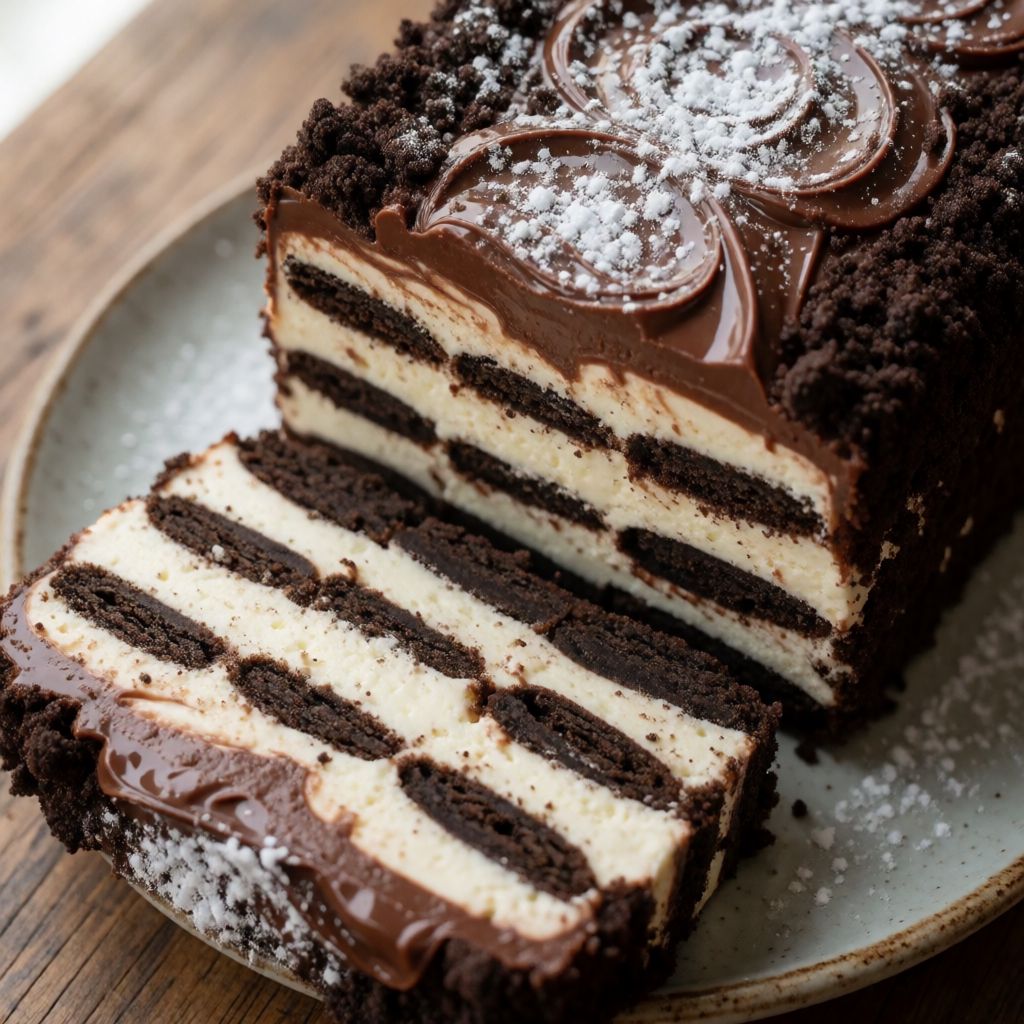
A no-bake chocolate-hazelnut cake layered with Nutella, whipped cream and Pan di Stelle biscuits, topped with cocoa and sugar stars.
Labels are worked out automatically from the ingredients and can be wrong. Check the packaging if it matters to you.
Ingredients
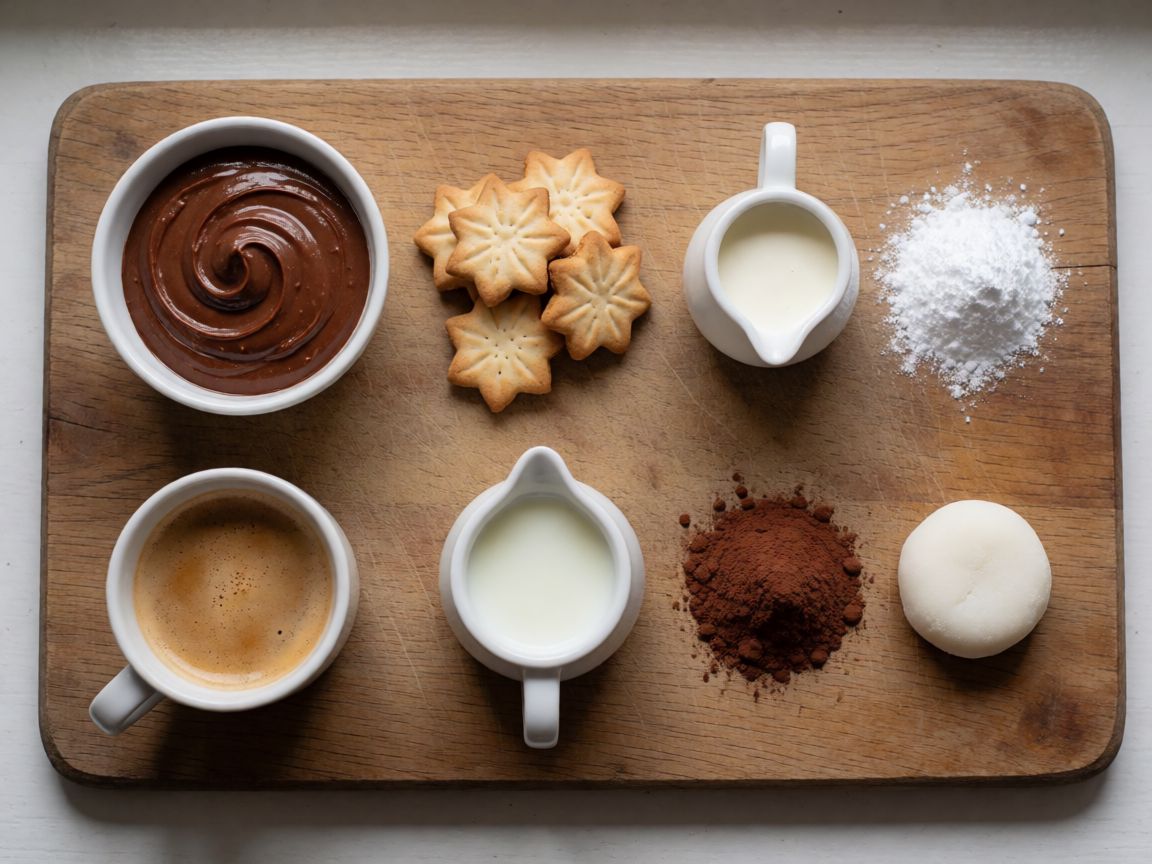
- 500 g Nutella
- 480 g Pan di Stelle biscuits
- 500 ml Double cream
- 80 g Icing sugar
- 180 ml Milk
- 1 pcs Brewed coffee
- Cocoa powder to taste
- Sugar paste to taste, optional








Steps
Whisk the double cream with the icing sugar until thick and fluffy. In a separate bowl, mix the coffee with the milk.
Take a 22 cm springform tin, line the base with baking paper, and lay a tight first layer of Pan di Stelle biscuits, each one first dipped in the coffee and milk mixture.
Melt the Nutella in a bain-marie and spread a second, even layer over the biscuits.
Add a third layer of the whipped cream.
Repeat the layers: more biscuits dipped in the coffee and milk, then another layer of Nutella.
Finish with a last layer of whipped cream and dust the cake with cocoa powder.
Chill the cake in the fridge for at least 2 hours.
120 minCarefully remove the cake from the tin and cover the sides with Pan di Stelle biscuits, sticking them on with Nutella.
Decorate the cake with sugar stars and stars cut from sugar paste.
This is not a bake — the oven never comes on. It is an assembly job: biscuits, chocolate-hazelnut spread, cream, stacked in a springform tin and left in the fridge to become one solid thing instead of four separate ones. That makes it a forgiving cake for a British kitchen with an unreliable oven, because there is no oven to argue with. But forgiving does not mean mindless — the whole structure stands or falls on timing you can't see on a clock.
What decides it: how long each biscuit sits in the coffee and milk. Some say longer soaking makes a softer, better cake — no, because a biscuit left too long in liquid stops being a biscuit and starts being wet sand; it collapses, and your neat layer becomes a brown smear that won't hold a slice together. You want a dip, not a bath — in and out, fast enough that the biscuit still remembers it used to be crisp. The coffee's job isn't to drench, it's to let just enough liquid wick into the dry crumb by capillary action, the same way a sponge finger works in tiramisu, which this cake is really a cousin of.
The cream has to be properly whipped — thick enough to hold a shape and not collapse under the weight of the layer above it — and the Nutella has to be melted gently, in a bain-marie, not blasted in a pan or microwave until it's hot enough to split. Overheated, the fat in it separates out and goes greasy and thin instead of glossy and spreadable; melted gently it stays smooth and sets back to a firm, gluey layer once it's cold again, which is exactly what holds your biscuit walls to the sides of the cake later.
Nutella here isn't flavouring, it's structural glue as much as it's taste — melted, it spreads thin over biscuits; cooled, it sets firm enough to hold loose biscuits upright against the side of the cake in step 8. Any hazelnut-cocoa spread with a similar fat content will behave the same way. Steer away from the 'no added sugar' or low-fat versions sold as healthier — they're often starch-thickened rather than fat-set, and they won't melt and re-firm cleanly; you'll get a gluey mess that doesn't release from the pan.
Pan di Stelle biscuits are a specific Italian supermarket product — small cocoa biscuits shaped like stars, made by Mulino Bianco since the 1980s as an industrial breakfast biscuit, not a family heirloom. The cake itself is a modern invention built on brand nostalgia rather than inherited technique, so there's no need to treat the biscuit as irreplaceable. What actually matters is dryness and structural nerve: a biscuit firm enough to survive one quick dip without turning to paste. A plain hard chocolate biscuit, or a digestive dusted with a little cocoa, will stand in for it; you lose the star shape on the sides, not the mechanism.
Double cream whips because it's roughly 48% fat — enough fat globules clumping together under agitation to trap air and hold a stable structure without any gelatine or stabiliser. Anything above about 35% fat will whip in the same way; single cream, at 18%, simply won't — it stays liquid no matter how long you beat it, because there isn't enough fat to build the scaffold. Icing sugar rather than granulated is deliberate: it dissolves into the cream as it whips instead of sitting there as grit, which would knock air back out of the foam as you go.
The coffee and milk mixture is there for two things at once — moisture, so the biscuit softens, and bitterness, so the final cake isn't just sweet-on-sweet. Make the coffee properly strong; diluting it with too much milk means the biscuit takes on liquid but not flavour, and you end up with a soft biscuit that still tastes of nothing in the middle. One strong brewed cup, topped up with milk, is the balance to aim for, not a jug of weak coffee.
The cocoa dust on top earns its place the same way salt does on a sweet dish — a thin bitter layer against all that Nutella and cream, cutting the sweetness rather than adding to it. The sugar paste stars are decoration and nothing else; skip them without guilt if you're feeding people rather than photographing the cake. Line the tin base with baking paper for the same reason you'd grease a tin before baking, even though nothing here gets baked — melted Nutella and softened cream will find any gap and glue themselves to the metal base, and you'll tear the bottom layer trying to free it.