
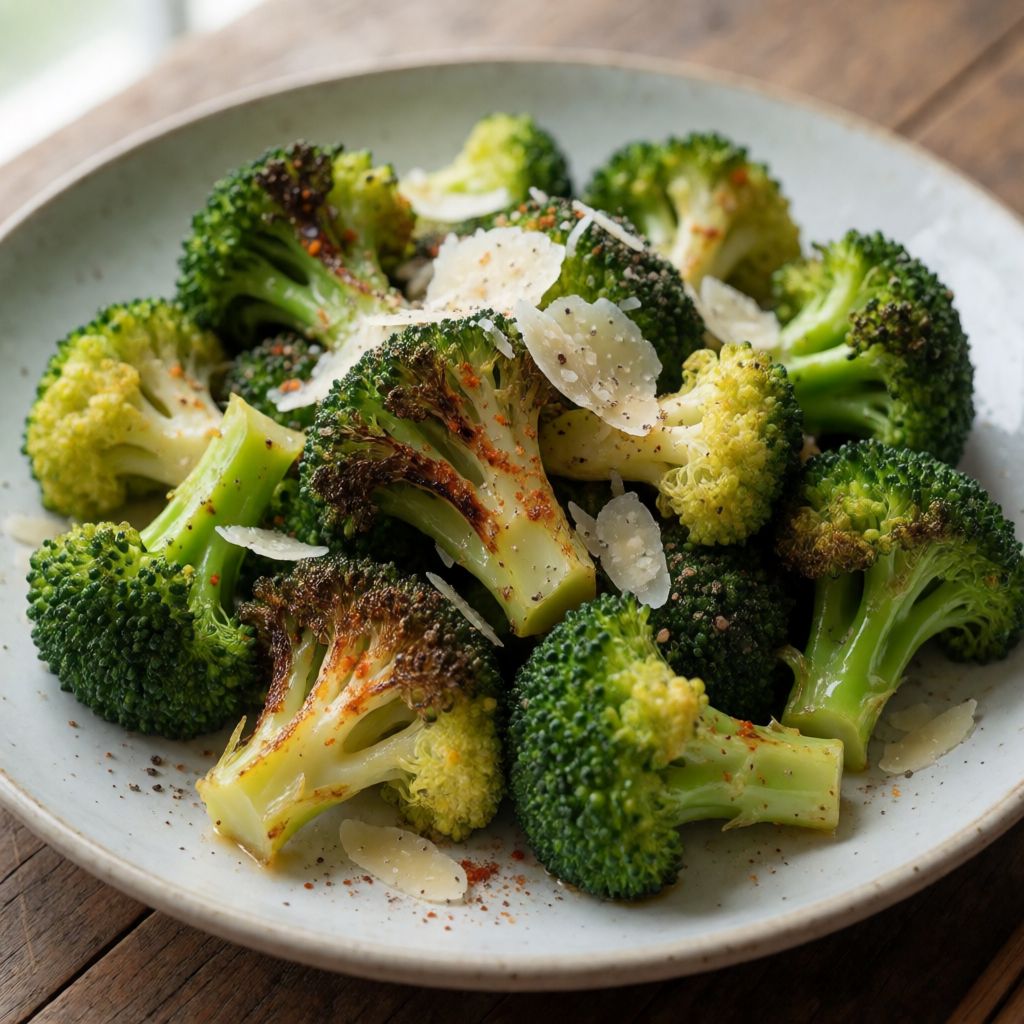
 AI photo
Pan-Fried Broccoli
A quick skillet broccoli, briefly boiled then sautéed until tender-crisp.
Labels are worked out automatically from the ingredients and can be wrong. Check the packaging if it matters to you.
Ingredients
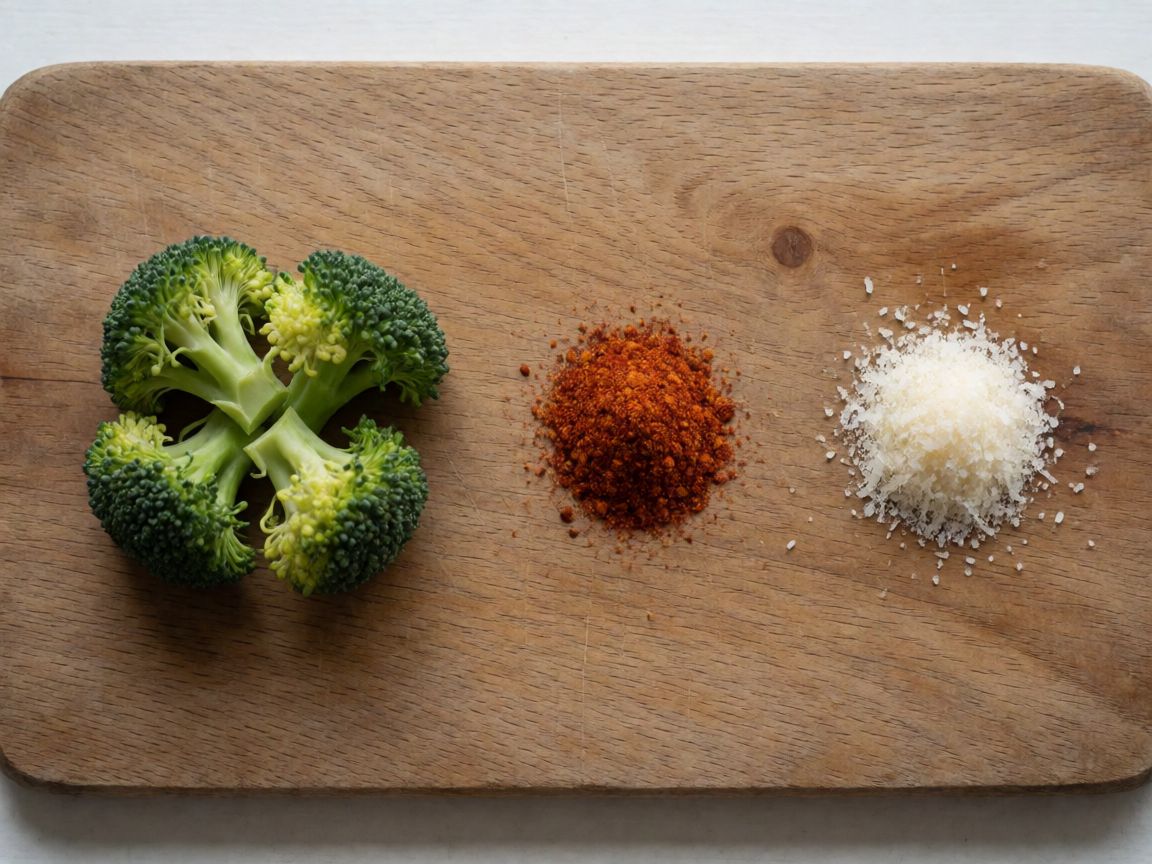
- 500 g Broccoli
- Olive oil
- Salt
- Black pepper
- Chilli powder optional
- Parmesan optional






Steps
Divide the broccoli into florets, cut the stalks into bite-sized pieces, and wash everything thoroughly under running water.
Boil the stalks in a pan of boiling water for 2-3 minutes, then add the florets and cook for a further couple of minutes; drain in a colander.
5 minHeat the olive oil in a frying pan, add the broccoli and sauté, covered, stirring occasionally.
5 minAdd salt and black pepper to taste.
Cook for a further 5 minutes until the broccoli reaches the desired texture, staying tender but crisp.
5 minAdd chilli powder or parmesan to taste, if desired.
Transfer the broccoli to a serving plate and serve hot.
This is broccoli rescued twice over. Once from being raw and fibrous, once from being the grey, waterlogged lump that so many Sunday dinners have made of it. The method is simple: a short boil to soften the stalk's fibre, then a finish in hot oil under a lid, so what lands on the plate is tender in the middle and has a bit of bite and colour at the edge — not the single texture of a vegetable that's been boiled until it gave up.
What decides whether it works has nothing to do with the minutes written down. It's what the fork meets. A floret should bend, not snap, and not collapse into mush when you press it. A piece of stalk should still push back a little — that's the fibre, still there, just not fighting you any more. The five minutes in the pan and the five before it are a floor, not a target; you stop when the texture tells you, not when the clock does.
Some say boiling vegetables before frying throws flavour down the sink — no, because a broccoli stalk is mostly cellulose and fibre, and fibre only softens with water and heat together. Put it straight into hot oil and you've got two bad outcomes racing each other: the outside scorches before the inside gives, or you turn the heat down to be gentle and the oil never does its job of browning anything. The boil isn't a shortcut round flavour, it's what lets the frying step actually be frying and not a long sad simmer in oil.
Pick a head that's tight and dark green, no yellowing florets and no soft brown patches on the stalk — that's age, and age means the fibre has toughened past what a quick boil will fix. Cut the stalk into pieces roughly the size of the florets, not left in thick slabs. That's not neatness for its own sake: a stalk four times the thickness of a floret needs four times as long to soften, and if you boil it that long the florets are long gone to mush before the stalk's even caught up. Cut it small and the two finish together.
Drain properly in the colander and give it a shake — don't just tip it and move on. Water carried over into hot oil doesn't evaporate quietly, it spits, cools the oil, and steams the broccoli from the outside in rather than letting the oil brown it. A soggy result at step five usually traces back here, not to the frying time.
Olive oil earns its place by having a flavour of its own — that's the point of it here, not a flaw to work around. The criterion for swapping it: use any oil that can take stovetop heat without smoking and whose taste you're happy to have alongside the broccoli, or go the other way and pick something with no smell of its own — sunflower, a plain vegetable oil — if you want the broccoli, and the parmesan or chilli if you use them, to be the only flavours you taste.
Salt, pepper, chilli powder, parmesan — all added once the broccoli's nearly done, not before. Salt earlier would just draw water out while it's boiling, working against the fibre-softening you're trying to do. Chilli powder and parmesan are there because broccoli, plainly cooked, is slightly bitter and a little green-tasting on its own, and both are a one-ingredient fix: chilli for heat, parmesan for salt and savour, neither of them doing anything that needs more than a stir at the end. Leave them out and you've still got a finished dish, just a plainer one.
For the Sunday table this is a straightforward swap for boiled greens: 500 g makes a side for two alongside a roast portion each, so scale the grams up by the same ratio if you're feeding more. It doesn't need a special occasion — it's exactly the kind of thing you make when you want broccoli to taste of something, not just be a green obligation on the plate.