
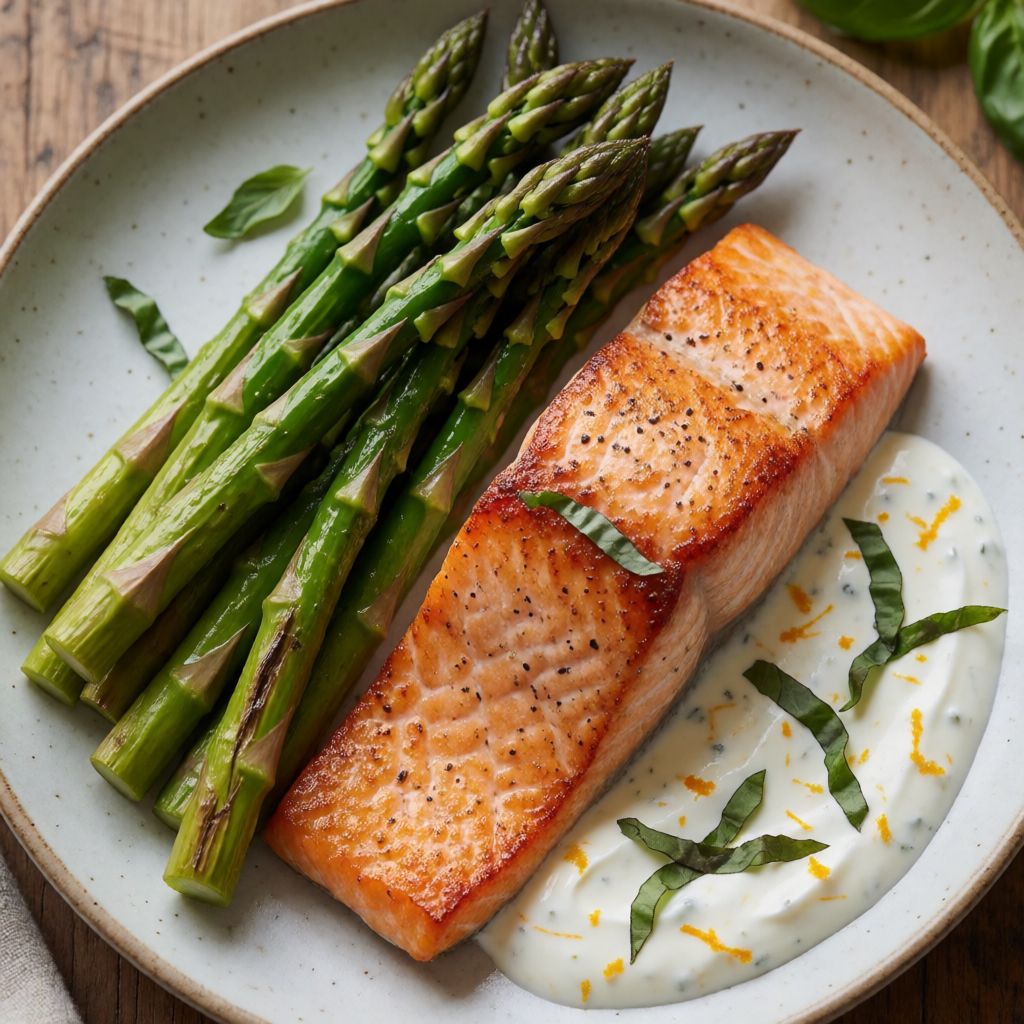
 AI photo
Pan-Fried Salmon with Yogurt Sauce and Asparagus
A quick pan-fried salmon dinner finished in the oven, served with asparagus and a herby orange-yogurt sauce.
Labels are worked out automatically from the ingredients and can be wrong. Check the packaging if it matters to you.
Ingredients
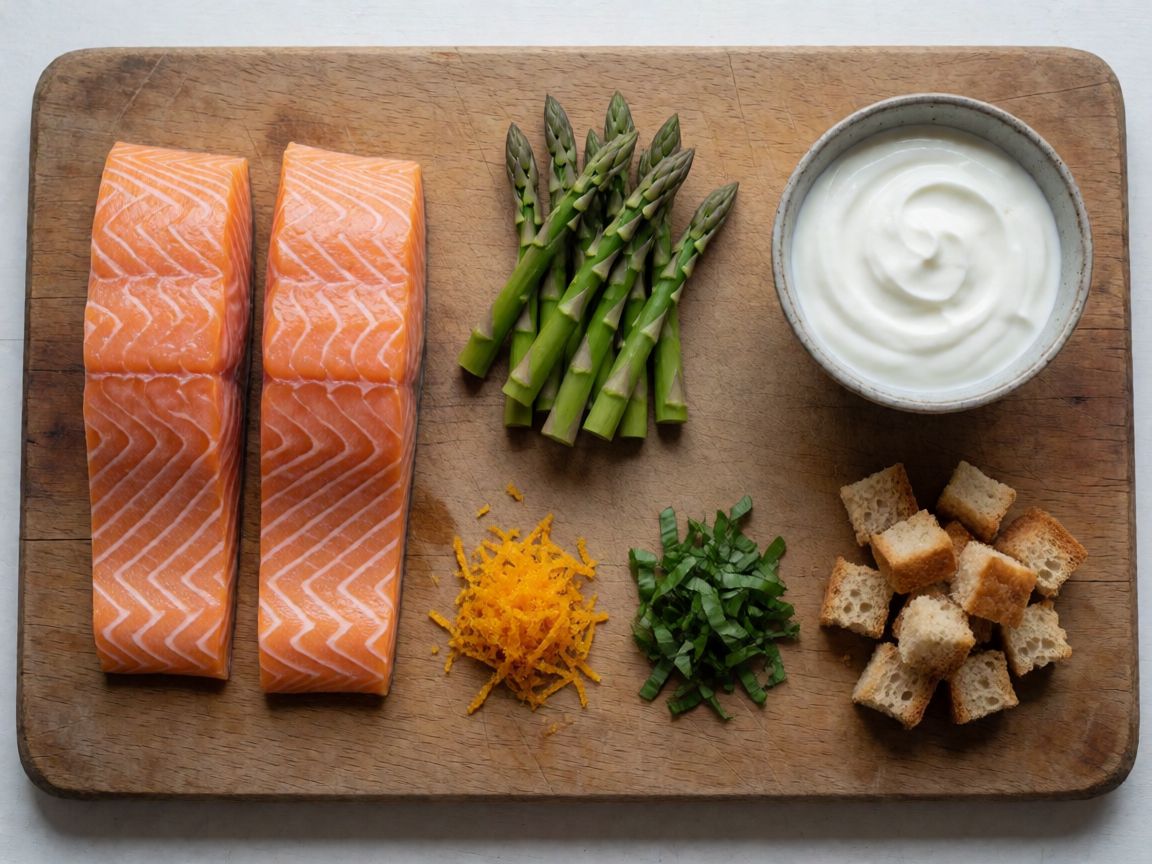
- 2 pcs Salmon fillets about 150g each
- 250 g Asparagus
- 125 g Yogurt
- 0.5 pcs Orange zest zest of half an orange
- 1 bunch Mixed herbs rosemary, thyme, sage, spring onion
- Salt to taste
- Black pepper to taste
- Olive oil to taste
- Croutons to taste








Steps
Heat a frying pan and add the olive oil. Place the salmon fillets flesh-side down and fry until lightly coloured. Season with salt and pepper.
5 minTurn the salmon over so the skin side is down, and continue frying, adding a little more salt and pepper.
5 minTransfer the salmon to an oven preheated to 180°C. It is ready when the thickest part reaches 63°C inside.
15 minFinely chop the mixed herbs and stir them into the yogurt. Add the grated orange zest, a little salt and olive oil, and mix well.
3 minPlate the cooked salmon with the asparagus, spoon over the yogurt sauce, add the croutons and finish with a drizzle of olive oil.
2 min
This is a plate built on contrast, not on complexity: hot crisp-skinned salmon against a cool herby yogurt sauce, the grassy snap of asparagus, and the hard crunch of croutons sitting on top of all that softness. Four textures, four temperatures almost, on one plate. What decides whether it works isn't the list of ingredients — it's whether you let each one stay itself. Overcook the fish and the contrast collapses into one soft, warm mush with no crunch left to argue with it.
The fish is the one place where precision actually matters here, and it isn't a matter of minutes. Salmon is "done" at a temperature, not a time — the recipe gives you 63°C in the thickest part, and that number is doing real work. Below about 50°C the proteins haven't set and the fish is still raw in texture even if warm. Push it past roughly 70°C and the white protein (albumin) that sits between the flakes gets squeezed out, you'll see it bead up on the surface, and the flesh goes from silky to sawdust. 63°C sits right in the window where the fish is cooked through but the fat hasn't had the chance to weep out of it yet. Some say salmon should be cooked until it flakes apart white all the way through — no, because by then you've already lost the moisture that made it worth cooking salmon in the first place. A cheap probe thermometer earns its price here; a kitchen without one has to go by feel — gentle give under the finger, not springy resistance, and the flesh just starting to separate along its natural seams at the edges.
Buy the fillets skin-on even though no one tells you to leave the skin on at the table — the skin is there to protect the flesh from direct metal while it renders its own fat into the pan, and it's your crunch marker against the knife later if you want it. Pat the fillets dry before they go anywhere near heat; water on the surface flashes to steam the moment it meets the hot pan, and that steam is what makes fish stick and tear instead of lifting off clean. A heavy-based pan holds heat evenly across a hob ring that is itself never quite as even as the dial suggests — a thin pan will scorch right above the element and sit lukewarm two inches away, which is exactly how you get one half of a fillet pale and the other half catching.
Flesh-side down first, before the skin, is the order given here, and it's the opposite of what most people have been told. The reasoning: searing the cut surface first sets the outer layer of muscle fibre, so the fillet holds its shape and doesn't curl when you flip it. Skin left raw and cold curls fast on contact with a hot pan because the collagen in it contracts unevenly and quickly — by the time the skin goes down, the fillet's already firm enough to resist that pull. Use an oil with a smoke point high enough to sit at a proper sear without smoking and complaining about it — ordinary olive oil, not the extra virgin bottle you're saving for the sauce; a neutral vegetable oil works just as well here, since at searing heat you're not tasting the oil anyway, you're tasting what it does to the fish.
For the sauce, yogurt is doing two jobs: acid to cut the fat of the salmon, and body to carry the herbs so they coat rather than just scatter. A thick, strained yogurt holds a spoon upright in the plate; a thin one runs off the fish before it reaches your mouth. If you've only got the thin kind, a few minutes sitting in a sieve over a bowl thickens it enough. The criterion for a substitute here is simple: something with real fat and real acidity and no sweetness — crème fraîche thinned slightly, or a thick kefir, both work; sweetened yogurt does not, because sugar fights the orange and herbs instead of supporting them.
Fresh herbs matter more than usual here because they're going in raw, straight into cold yogurt, with no heat to open them up. Dried herbs need oil and warmth to release anything — thrown raw into yogurt they taste of dust, not rosemary. If fresh sage or thyme isn't to hand, use what you've got fresh rather than reach for the dried jar; a bunch of parsley and chives will do more for this sauce than dried "mixed herbs" ever will. The orange zest is there for its aromatic oil, which sits in the coloured skin, not the pith — grate only the orange part, stop the moment you hit white, because the white underneath is where the bitterness lives. No orange to hand, any citrus zest does the same job; lemon will just pull the sauce sharper rather than sweeter.
The recipe is quiet on the asparagus, which tells you it wants no fuss: a quick turn in a hot pan or a few minutes in boiling water, judged the way you'd judge any stalk vegetable — it should bend before it snaps, holding a little resistance in the bite, not flopping. Trim the woody base off first; that's not where the vegetable is tender, and biting into it is the fastest way to make someone suspicious of asparagus for a decade. The croutons are the one ingredient here that isn't about flavour at all — their only job is to survive contact with the sauce for the length of a meal and still crunch. Stale bread, torn or cut and dried out in a low oven, holds that crunch far longer than fresh bread fried straight away, because it's already lost the moisture that would otherwise let the sauce soften it from the inside.