
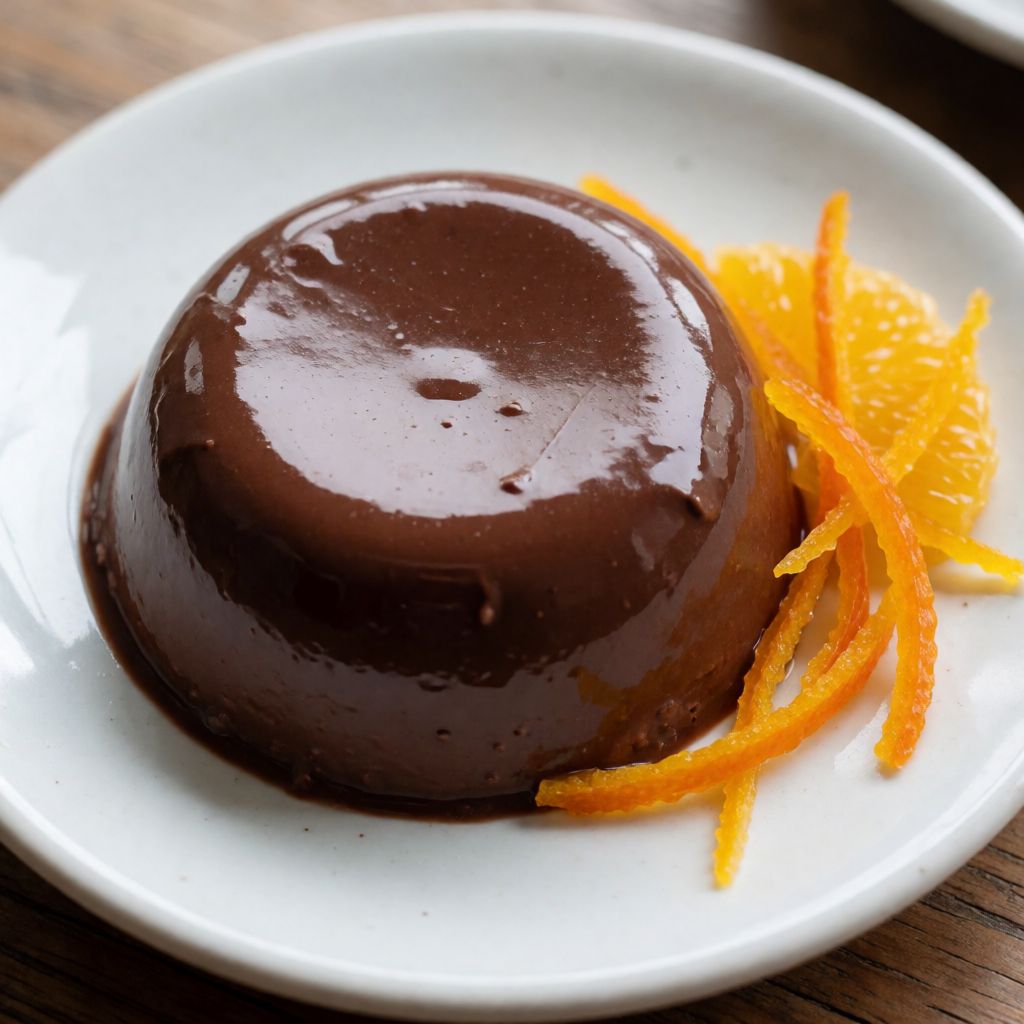
 AI photo
Chocolate and Orange Panna Cotta
A smooth chocolate and orange panna cotta, chilled until set and finished with cocoa and orange zest.
Labels are worked out automatically from the ingredients and can be wrong. Check the packaging if it matters to you.
Ingredients
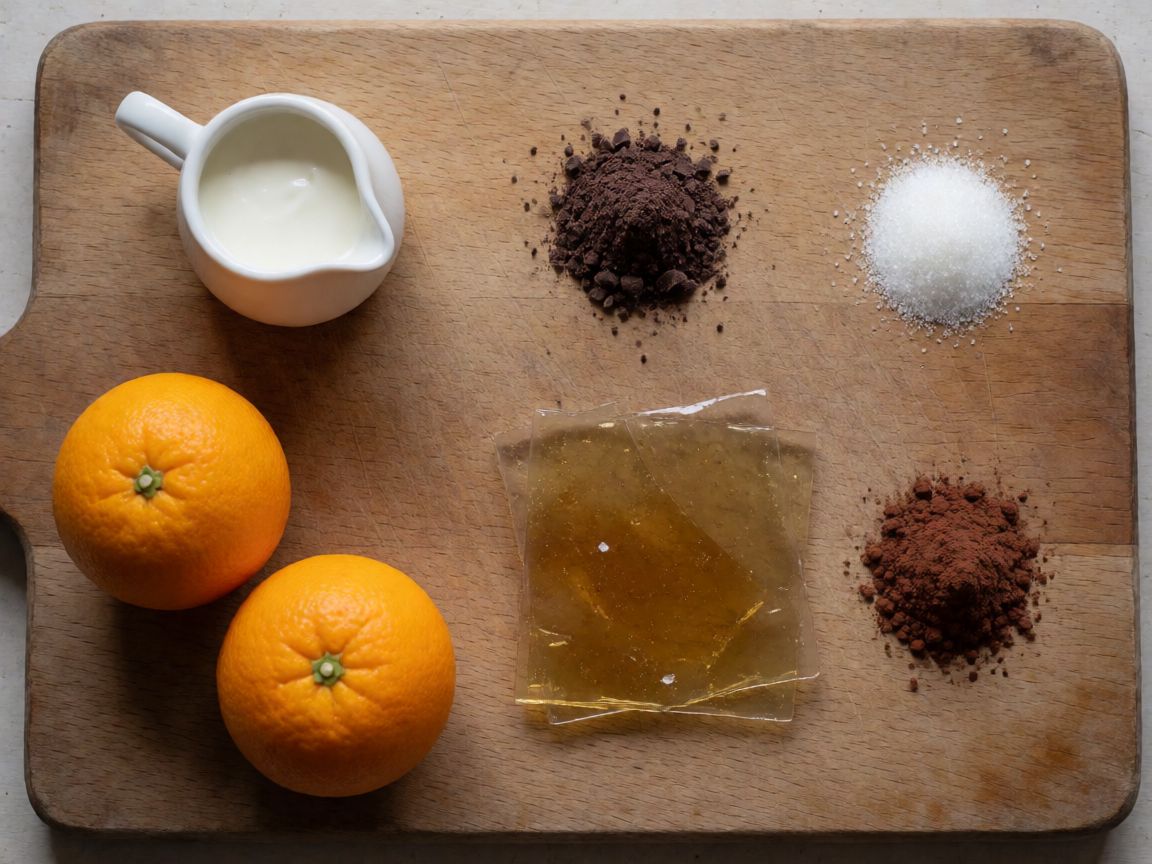
- 500 ml Double cream
- 100 g Dark chocolate
- 2 tbsp Caster sugar
- 2 pcs Orange for zest
- 2 pcs Gelatine leaves
- Cocoa powder to taste


Steps
Soak the gelatine leaves in a bowl with a little water.
In a small saucepan, combine the double cream and caster sugar, place over heat and bring almost to the boil.
Roughly chop the dark chocolate.
Add the chocolate to the cream and stir constantly until completely melted.
Wash the oranges, pat them dry with kitchen paper and finely grate the zest.
Add the zest to the chocolate-cream mixture.
Add the well-squeezed gelatine and mix the whole mixture thoroughly.
Pour the mixture into moulds or small bowls and leave to cool well.
Cover each portion with cling film and place in the fridge.
120 minServe the panna cotta dusted with cocoa powder and decorated with orange zest.
Panna cotta means “cooked cream” — though nothing here is really cooked, just warmed enough to dissolve sugar, melt chocolate, and carry the gelatine into the fat. You're building a fragile gel: cream held together not by egg, the way custard is, but by a mesh of gelatine running through fat and water. Get the balance wrong and you get chocolate orange soup, or a chocolate orange rubber brick you could bounce off the worktop. Neither is dessert.
What decides whether it works is one single moment of heat control, in step 2: "almost to the boil." That word "almost" is carrying the whole recipe. Push past it and cream can split, chocolate meeting truly boiling liquid can seize into a grainy mess instead of melting smooth, and gelatine stirred into something actually boiling starts to lose its setting power — the very thing you need it for. You don't own a thermometer for this, and you don't need one: watch for tiny bubbles creeping up the inside of the pan, a faint shimmer on the surface, steam that smells of warm cream rather than scalded milk. That's your ceiling. Pull it off heat there.
Second mechanism: how much gelatine against how much cream. Two leaves to 500ml gives you a soft set — it'll hold a shape if you turn it out, or sit contentedly in a glass if you never intend to. Some say more gelatine is the safe move, it'll "definitely set" then. No — more gelatine gives you chocolate-flavoured jelly, not panna cotta, and that's a worse pudding wearing the same name.
Double cream is doing structural work, not just flavour. Its fat content (roughly 48%) is what lets a small quantity of gelatine set something this soft and still feel rich rather than bouncy. Lighter creams — single, whipping — carry more water and less fat, so the same gelatine won't firm them properly; you'd end up adding more gelatine to compensate, and that fights the texture you actually want. If double cream isn't in the fridge, the fix is to push fat up another way — a spoonful of mascarpone stirred through whipping cream gets you close. Don't reach for the lightest cream on the shelf thinking it's healthier; here it's just structurally wrong.
Dark chocolate: look for a high percentage of cocoa solids, somewhere around 70%. That's not a snobbery mark — it means less sugar and less milk solids diluting the set, so the panna cotta doesn't end up cloying once you've also added sugar and a cocoa dusting on top. Chop it roughly rather than finely; it melts just as well in warm cream and you save your knuckles. Milk chocolate here would tip the whole dessert sweet and soft, and you'd lose the bitter backbone that makes the orange zest make sense.
Caster sugar dissolves fast in warm liquid because the grains are small — that's the whole reason to reach for it over granulated, which needs more stirring and more patience to vanish without grit on the tongue. Two oranges, zest only: the flavour lives in the oil in the skin, and the white pith underneath is just bitterness with no reward, so wash and dry the oranges properly before you grate, to take off any wax or residue sitting on the surface you're about to use.
Gelatine leaves go into cold water first, not hot — that blooming step softens them evenly so they dissolve into the cream without clumps or strings, which is the usual reason gelatine desserts come out patchy. Squeeze the water back out of them before adding to the cream; skip that and you're diluting your own set with water you didn't account for. If leaf gelatine isn't to hand, powdered gelatine works the same way by the same logic — bloom it in a small measured amount of cold water first, then warm it gently to dissolve before stirring in. Convert by weight, not by eye.
Cocoa powder at the end is bitterness as contrast, not decoration for its own sake — dusted over a fairly sweet, soft dessert, it gives the tongue something to argue with. In a British kitchen with no proper moulds, small glasses, teacups, or ramekins all do the job; cling film pressed onto the surface stops a skin forming and keeps the fridge's other smells (there's always a wedge of cheese in there) out of your dessert.
A last word on history, since the name makes people reach for reverence: panna cotta is Piedmontese kitchen economy, not ceremony — cream, sugar and gelatine set faster and cheaper than a custard that needs eggs and a water bath. The chocolate-and-orange turn is a later, restaurant-menu addition, not a rule carved in stone, so don't let anyone tell you there's only one true panna cotta. There's only one true mechanism, and you've just read it.