
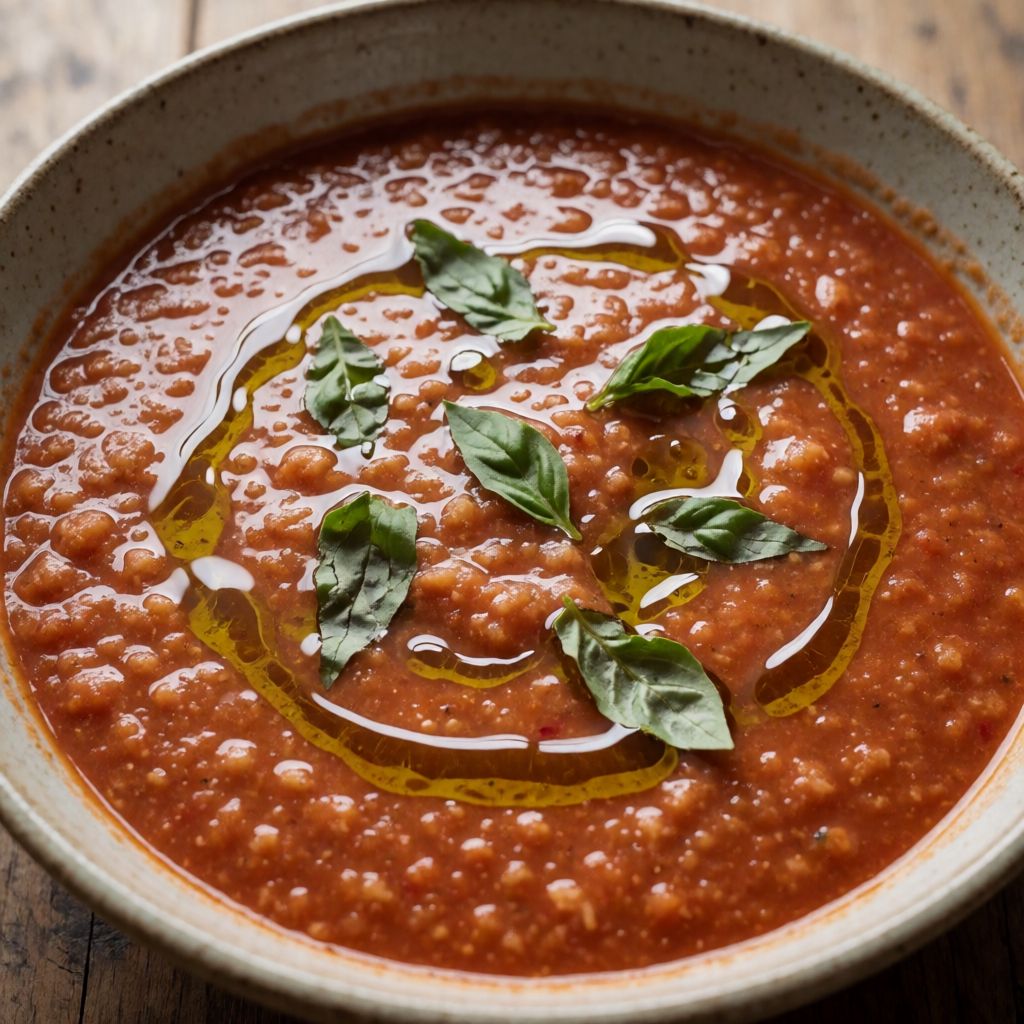
 AI photo
Pappa al Pomodoro
A simple Tuscan tomato and bread soup, finished with olive oil, garlic and fresh basil.
Labels are worked out automatically from the ingredients and can be wrong. Check the packaging if it matters to you.
Ingredients
- 700 g Tinned chopped tomatoes peeled
- 100 g Stale country bread
- 1 clove Garlic
- 10-15 pcs Basil leaves
- Water to taste; or vegetable stock
- Olive oil to taste
- Salt to taste
- Black pepper to taste; freshly ground







Steps
Soak the bread slices in a bowl of cold water until softened.
In a large pan, fry finely chopped garlic in a little olive oil until golden.
Add the peeled tinned tomatoes.
Simmer gently for 15-20 minutes.
18 minGently squeeze out the bread slices and add them to the tomato sauce along with 2 ladlefuls of warm water.
Stir gently so the bread breaks down, season with salt to taste and cook for a further 10 minutes.
10 minWhisk vigorously until the soup becomes creamy and smooth.
Before serving, add fresh basil, a drizzle of olive oil and freshly ground black pepper.
This is bread, turned back into food. Pappa al pomodoro is a Tuscan dish built on exactly two things that a poor kitchen always had too much of: tomatoes at the end of the season, and bread gone hard after a few days. The trick isn't a recipe, it's an act of thrift that got good enough to become a tradition. There's no rice, no pasta, nothing starchy added — the bread is the starch, and it has to do all the work of thickening.
What decides whether it works is the state of two things: the bread, and the simmer. Bread that's properly stale and firm soaks up water, then gives it back slowly as it breaks apart in the hot tomato — that's what makes the soup creamy rather than watery. Soft supermarket bread does the opposite: it collapses too fast, turns gluey in patches, and never binds the sauce evenly. And the tomato needs real time over low heat, not a boil, so its raw acidity cooks off and the water in it reduces — rush that step and you get a thin, sharp soup no amount of whisking will fix.
Some say you need fresh, ripe tomatoes for this to be authentic — no, because the whole dish exists to use up whatever was around, including tomatoes past their best, and tinned ones are picked and canned at the peak of ripeness. In a British kitchen in October, a tin of peeled tomatoes is honestly more reliable than what's sitting pale and firm in the supermarket crate.
Start with the bread, because everything else is built around it. You want something firm and gone dry — a day-old crusty loaf, the heel of a sourdough, the end of a bloomer you didn't get through before it went stale. The original Tuscan bread for this is unsalted, pane sciocco — the story goes back centuries, to Florence being at odds with Pisa over the salt trade and bread being made without it out of spite and economy, and that habit stuck. You don't need to hunt for unsalted bread in the UK; what matters is the structure, not the salt. A soft fresh sandwich loaf has too much air in it and too little gluten holding it together — it turns to paste the second it hits liquid, and you lose the texture that makes this dish what it is rather than tomato soup with crumbs in it. Soak it properly, then squeeze it out before it goes in — that squeeze matters, because it's how you control how much water the bread carries into the pan, rather than letting the bread decide for you.
Tomatoes: tinned and peeled, as the recipe says, because peeled means the skins — which never break down properly and turn leathery and stringy in the finished soup — are already gone. Chopped tinned tomatoes work for texture, but if yours still has whole peeled tomatoes in juice, just crush them in with your hand or a spoon before they go in; same result.
Garlic is one clove, not because tradition says so but because its job here is to flavour the oil, not the soup. Fry it gently until it turns from white to pale gold — that's the point its flavour has fully moved into the oil. Let it go past gold into brown and it turns bitter, and no amount of tomato will mask that; you'll taste it in every spoonful. If that happens, start again rather than push on — there's no fixing burnt garlic, only diluting it, and diluting it means more tomato than you planned.
Oil: use something with no smell of its own for the frying — a plain olive oil, or a light vegetable oil, since at this stage you just want heat and a medium, not flavour. Save a good, properly fruity extra virgin olive oil for the finish, poured in raw once the pan's off the heat. Heat destroys the aromatic compounds that make a good olive oil taste like something — cook it and you waste the expensive one, so don't.
Same logic applies to the basil — in raw, at the very end, torn or whole. Cooked basil goes dull and slightly bitter; its whole value is the fresh aromatic oil in the leaf, and that's gone within a minute of real heat.
Water or stock: water is fine, and historically more honest — nobody making this dish in a poor Tuscan kitchen was buying a stock cube. Stock adds a bit of savoury depth if you've got some going spare, but the soup's flavour comes from the tomato and the bread, not from what you loosen it with. Use a wide pan rather than a deep pot if you can — you want surface area for the tomato to reduce and concentrate as it simmers, not a tall narrow vessel where it just stews in its own steam. And give it the time it asks for — this is a dish where patience genuinely is an ingredient; the bread needs the full simmer to dissolve properly, and there's no shortcut that doesn't leave you with something grainier and thinner than it should be.