
 AI photo
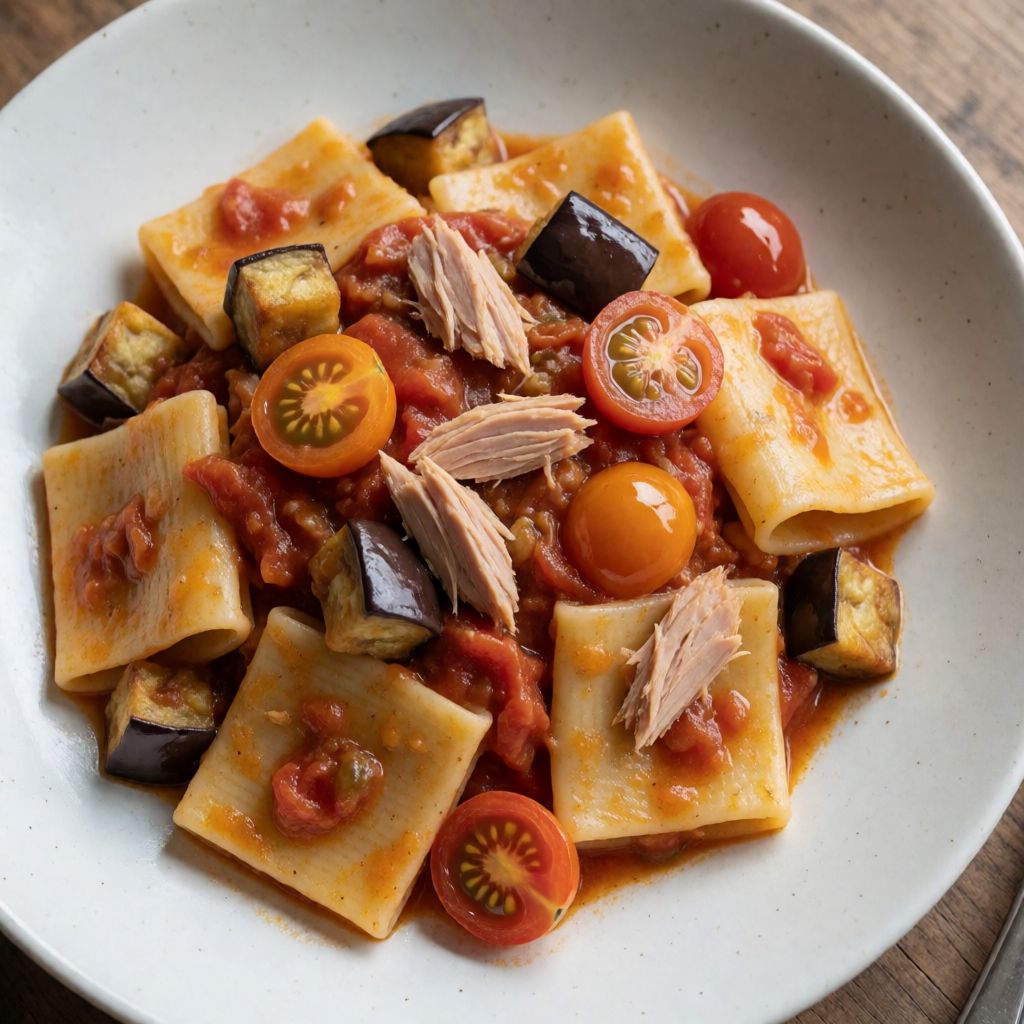
Paccheri with Tuna, Aubergine and Cherry Tomatoes
A pasta dish combining pan-fried aubergine, tuna and cherry tomatoes with olives and chilli.
Labels are worked out automatically from the ingredients and can be wrong. Check the packaging if it matters to you.
Ingredients
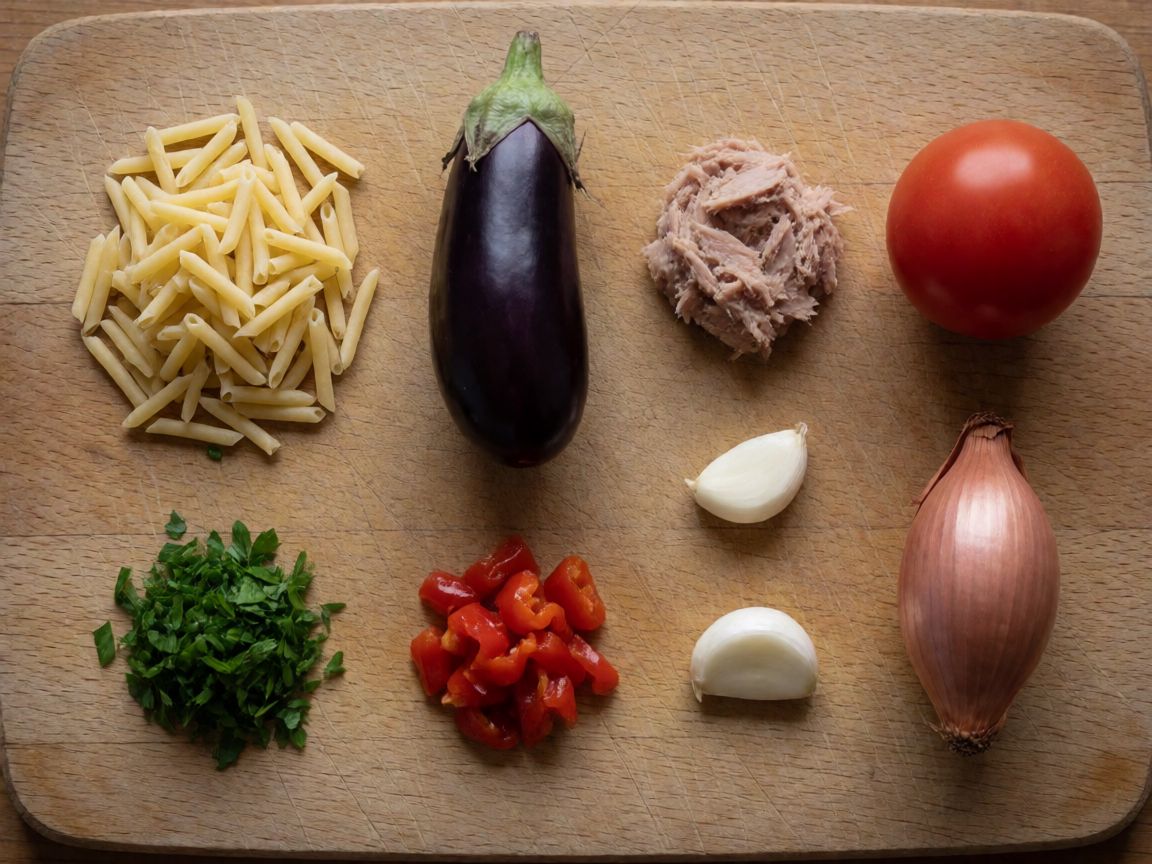
- 400 g Paccheri
- 1 pcs Aubergine
- 150 g Tuna
- 1 clove Garlic
- 200 g Cherry tomatoes
- 1 pcs Shallot
- 1 pcs Fresh chilli pepper fresh
- Olive oil to taste
- Salt to taste
- Parsley to taste, fresh chopped
- 120 ml White wine
- 1 tbsp Taggiasca olives







Steps
Fry the diced aubergine in olive oil, then drain on paper towel and keep warm.
In a saucepan, sauté the chopped shallot, garlic and fresh chilli pepper in olive oil.
Add the tuna and fry until golden, pour in the wine and let it evaporate completely.
Add the washed cherry tomatoes, cut into wedges, and continue cooking.
Season with salt to taste, add the Taggiasca olives and the fried aubergine cubes.
Cook the paccheri in plenty of salted water, drain al dente.
Toss the paccheri in the saucepan with the sauce and fry for a few minutes, sprinkling with fresh chopped parsley.
Paccheri are those wide, short tubes — the name comes from "paccare", to slap, because that's the sound the dough makes against itself when it's rolled. A tube that big isn't decorative. It's a cup. It's built to hold a sauce with texture in it: chunks of aubergine, wedges of tomato, flakes of tuna, a whole olive now and then. Put this same sauce on spaghetti and it just falls to the bottom of the bowl. Put it in paccheri and every tube arrives loaded.
What decides whether this works is the aubergine, and it's decided before the pasta water even boils. Aubergine fried badly is a sponge that drank oil and gave nothing back — soft, greasy, tasting of nothing but the fat it sat in. Aubergine fried right loses its bitterness, browns at the edges, and turns almost custardy inside while still holding its shape as a cube. That difference is salt and patience, not a trick. Dice it, salt it if you have ten minutes to spare, and fry it hot enough that it sizzles the second it hits the oil rather than sitting there weeping. Then it goes onto paper and waits. It is not finished cooking in the sauce — it's finished resting.
Start with the tuna. Fresh tuna here is a treat, not a requirement — it's expensive and this is a weeknight dish that started life as something fishermen's families made with what didn't sell. Good tinned tuna in olive oil, drained and broken up by hand rather than flaked too fine, does the job honestly. If you use fresh, sear it hard and fast so the outside goes golden while the centre stays pink; it finishes cooking later in the sauce, so don't chase it all the way through at this stage or it turns to dust.
Aubergine: one, diced, nothing fancy, but the oil matters. You want "an oil with no smell of its own" for the actual frying — a light olive oil or any neutral vegetable oil — because aubergine drinks oil like nothing else, and if that oil has a strong character it will out-shout the tuna and the tomatoes later. Save your good, peppery extra virgin for finishing the pan at the end, off the heat, where its smell actually survives to reach the plate.
The shallot, garlic and fresh chilli are the base — this is sofrito logic, not a dump of raw flavour. They go in gently, in oil, before anything else, because their job is to perfume the fat that everything else will cook in. Chop them fine; a chunk of raw garlic later in the sauce is a mistake you'll meet again at the table. No fresh chilli, no shame — a pinch of dried chilli flake in the same spot does the same warming job, just without the fresh green note.
Cherry tomatoes cut into wedges, not halved and not sliced thin — wedges hold their shape under the brief cooking they get here, so you end up with pieces of tomato in the sauce rather than a tomato purée. That's the whole point of using cherry tomatoes instead of a tin of chopped ones: texture, again, to match the tube. If cherry tomatoes aren't good where you are — and in a British winter they often aren't, pale and watery — a handful of good sun-dried tomatoes, rehydrated and chopped, will give you concentrated sweetness instead of bulk, which is a fair trade.
Taggiasca olives are small, dark, oily, mild — nothing like a fat green bar-snack olive. If you can't find them, use a small black olive and go easy, since a bigger, saltier olive will dominate where Taggiasca just murmurs. And salt the pasta water properly, then taste the sauce before you add more salt at the end — tuna, olives and tomatoes are all already carrying some, and the last thing this dish needs is to be oversalted after the fact, which you can't undo.
Finally, that last toss in the pan, pasta and sauce together over heat for a couple of minutes — that's not decoration either. It's where the pasta's own surface starch, carried over in a splash of the cooking water if the sauce looks tight, binds everything so the sauce clings to the paccheri instead of pooling at the bottom of the plate. Skip that step and you've made a good sauce and a separate pot of pasta, sitting near each other, not a finished dish.