
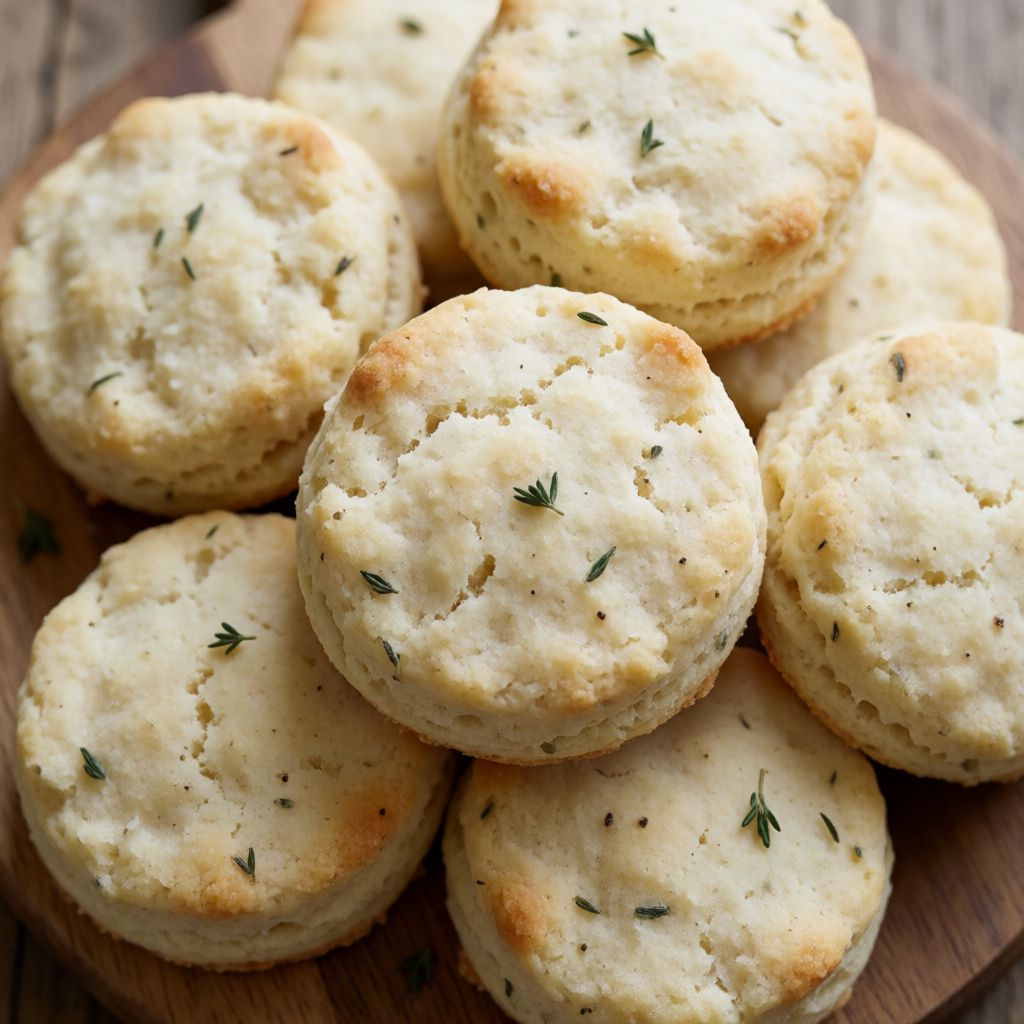
 AI photo
Savoury Parmesan and Thyme Biscuits
Crisp, savoury biscuits made with Parmesan and fresh thyme — lovely with drinks or on a cheese board.
Labels are worked out automatically from the ingredients and can be wrong. Check the packaging if it matters to you.
Ingredients
- 125 g Plain flour
- 50 g Wholemeal flour
- 1 tbsp Thyme fresh
- 1 pinch Black pepper freshly ground
- 1 pinch Salt flaky
- 125 g Butter
- 125 g Parmesan
- 1 pcs Egg beaten








Steps
Put the flour, thyme, flaky salt and freshly ground pepper into a bowl and mix well. Rub in the cold butter until the mixture looks like finely grated Parmesan. Add the freshly grated Parmesan and mix well again.
10 minPour in the beaten egg and bring the dough together until all the ingredients form a smooth dough.
Shape the dough into a log about 4-5 cm in diameter and wrap it in baking parchment. Chill in the fridge for at least 1 hour.
60 minCut the dough into slices about 5 mm thick and arrange them on a baking tray lined with baking paper.
Bake in a preheated fan oven at 180°C for about 12-14 minutes, until golden.
13 minLeave to cool on a wire rack for half an hour. The biscuits are at their crispest after 30-45 minutes, once slightly set. Then serve.
38 min
This is cheese shortbread, not a cracker and not a scone. It's built the way French sablés are built: cold fat rubbed into flour until every grain wears a little coat of butter, then just enough beaten egg to make the crumbs hold hands. No yeast, no baking powder — nothing here is meant to rise or stretch. It's meant to shatter between your teeth, the way a good biscuit should, not bend like a scone or snap like a cracker because of trapped air.
What decides whether it works is one thing: keeping the butter cold while you rub it in, and cold again when you slice it. Cold butter stays as separate flecks moving through the flour. The moment it warms — in your palms, in a hot kitchen — it smears into the flour and starts letting the egg build gluten strands when it finally goes in. Gluten is exactly the enemy here. It's what turns a biscuit chewy instead of short.
Some say the hour in the fridge is about the raw egg — food safety, let it set. No — it's about the butter. An hour firms the fat back up after your hands have warmed it rubbing it in, which is the only way you get a clean slice through the log instead of a smear, and the only way the biscuit holds its round shape in the oven instead of spreading into a flat puddle before the structure sets.
Two flours, not one, and the ratio matters. Plain flour gives you the starch that actually glues the crumbs together once baked; wholemeal brings bran, which does two things — a nutty, savoury edge, and a bit of extra gluten interruption, because bran particles get in the way of strands forming just as butter does. Go all wholemeal and the dough won't hold at all, not enough starch to bind it. The 125:50 split keeps plain flour as the backbone and wholemeal as the seasoning.
The butter needs to be the block kind, cold from the fridge, not a soft spreadable tub. Spreadable butters carry added oil and water to stay soft at fridge temperature, and that water is the problem — it loosens the dough, makes it spread further in the oven, and dulls the flavour. The criterion for any fat you'd use here is: solid at fridge temperature, almost no water in it. Butter is the obvious choice because you also want its taste; there isn't a convincing substitute that keeps both the texture and the flavour.
Parmesan does two jobs: flavour, obviously, but also more fat, worked in after the butter so the dough doesn't get rubbed to death. The criterion for swapping it is a hard, aged, low-moisture cheese that grates to a fine powder rather than curls or clumps — Grana Padano works the same way, mature Cheddar works but is wetter and saltier, so ease back the pinch of flaky salt if you use it. One thing to actually avoid: the ready-grated parmesan from a bag. It's often cut with starch to stop it clumping in the packet, and it's drier than cheese you grate yourself — it won't carry fat into the dough the same way, and the biscuits come out paler and sandier instead of toasty.
The egg is not there to make anything rise — there's no baking powder in this recipe, and that's deliberate, because a flat, dense crumb is what gives you crispness rather than a soft puff. It's purely the binder, the minimum liquid to bring the rubbed-in mixture into a dough. Use only enough of it to bring the dough together; working in more egg than it takes starts building gluten you spent the whole rubbing-in stage trying to avoid.
Thyme and the two pinches are there for lift, not for bulk — fresh thyme because its leaves are small and dry enough not to add moisture, unlike something leafier. Rosemary, chopped fine, is a fair stand-in if that's what's in the garden; the flavour note shifts, but the mechanism doesn't change.
Fifty of these is a tin's worth, sized for a cheeseboard after a meal rather than a single sitting — it fits a very British habit of ending a roast with cheese and a dry glass of something rather than pudding, a leftover of the Victorian savoury course. It's also a decent use for the stray, hardening knob of parmesan at the back of the fridge door rather than letting it sit there going sadder by the week — grate it, and it's done its job twice over. On a domestic fan oven, 180°C holds fairly evenly, but ovens vary more than recipes admit; bake one tray first, watch where it browns fastest, and adjust position for the rest rather than trusting the dial blindly.