
 AI photo
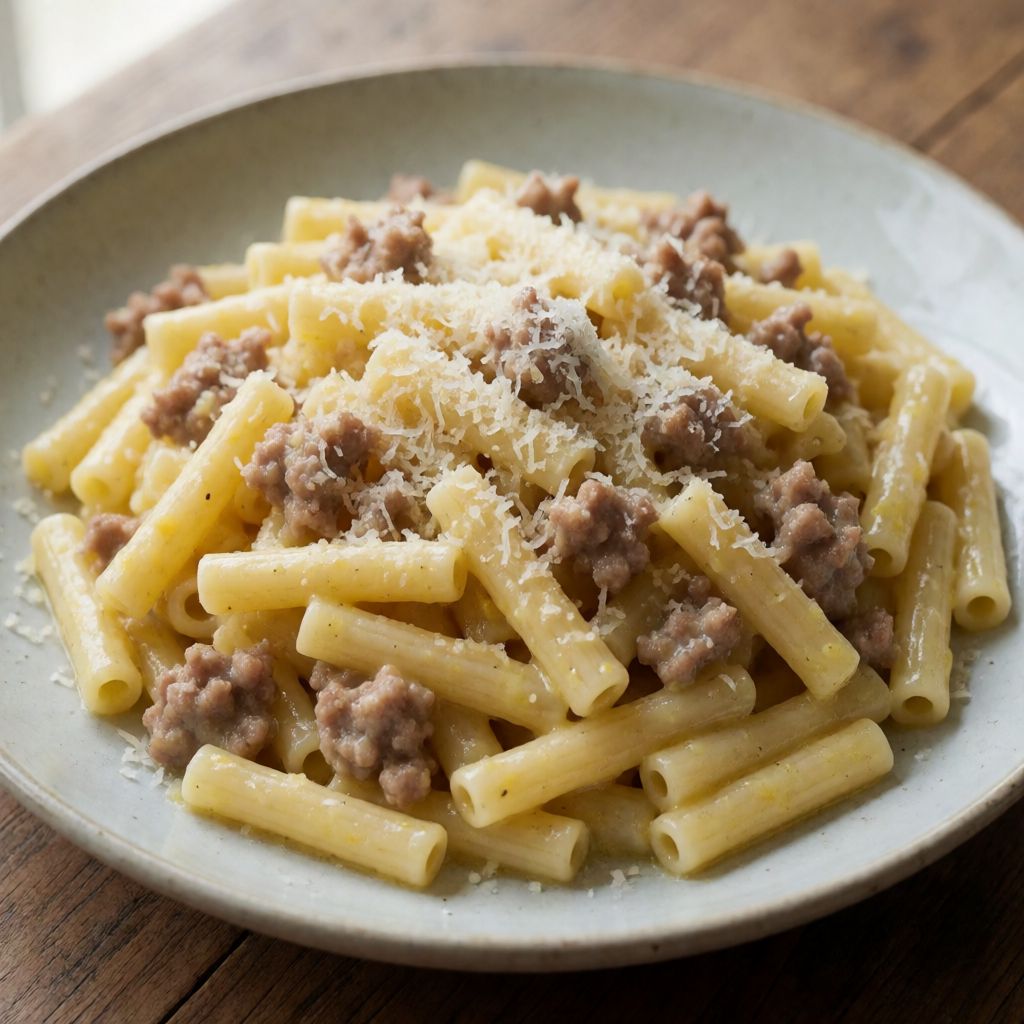
Monza-Style Pasta
A creamy pasta from Monza with crumbled sausage, a touch of saffron and plenty of parmesan.
Labels are worked out automatically from the ingredients and can be wrong. Check the packaging if it matters to you.
Ingredients
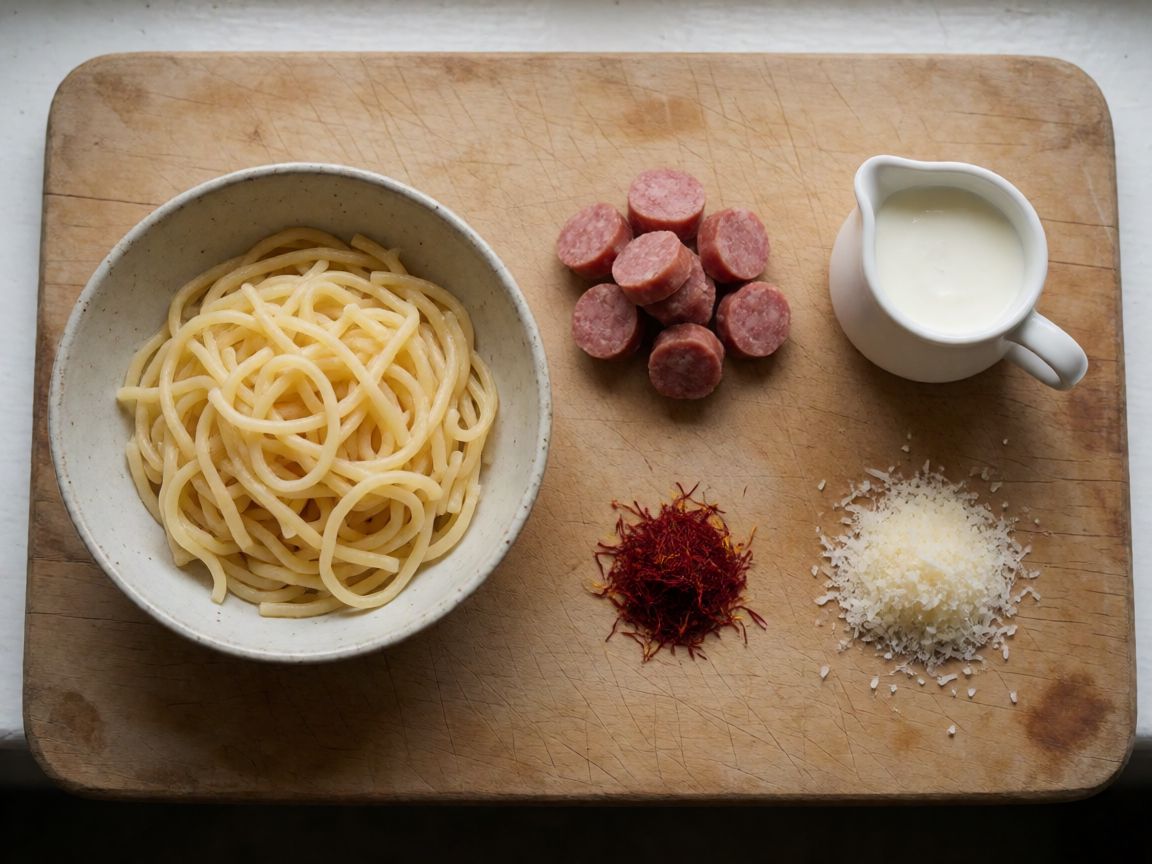
- 320 g Short pasta
- 250 g Italian sausage skins removed
- 200 ml Double cream
- 1 pcs Saffron sachet
- 40 g Parmesan
- Salt to taste
- Black pepper to taste
- Vegetable oil to taste, for frying







Steps
Remove the sausage from its skin and crumble it finely into a non-stick pan. Fry without adding any oil.
Add the double cream and cook together.
5 minAdd the saffron, season with salt and black pepper to taste, and cook until the sauce is smooth and combined. It should reach an internal temperature of around 70°C.
Bring a large pot of salted water to the boil.
Cook the pasta until al dente, then drain, keeping back one or two ladles of the pasta water.
10 minTip the pasta into the pan with the sauce and stir for a few minutes so it soaks up the sauce.
5 minAdd plenty of parmesan and serve the pasta hot.
This is a trattoria dish, not a grandmother's dish — Monza sits a few kilometres from Milan, and Milan owns saffron in Italian cooking because of risotto alla milanese, the saffron rice that fed the city's feast days when saffron was priced like gold thread, which, biologically, it almost is: three stigmas per crocus flower, hand-picked, nothing else like it. Someone took that same yellow and put it where it's cheaper to feed people — into a pan of pasta and sausage instead of rice that needs standing over for twenty minutes. That's the whole history: not magic, just arithmetic.
What decides whether it works is fat, not oil. The sausage goes into a dry pan on purpose. Crumble it and it starts leaching its own fat within a minute or two — you'll see grease pool at the edges and the meat start to catch colour at the pan floor. That fat is the only cooking fat this dish needs. Pour oil in on top of it and you drown the browning before it starts: the meat steams grey instead of crisping at the edges, and you've added a layer of flavourless slick that fights the cream later. "You need oil to fry meat" — no, not meat that's already a third fat itself. Fennel-seedy Italian salsiccia is built that way; a decent fatty pork sausage from a UK butcher, skin peeled off, behaves the same.
Pasta: pick a short shape with ridges or a hollow core — penne, rigatoni, something with somewhere for the sauce to sit, because this sauce is thick enough to slide off anything smooth. If you only have spaghetti in the cupboard, it'll still taste fine; it just won't carry as much per forkful, and you'll know why the recipe specifies short pasta rather than treating it as a style note.
Sausage: what you want is meat with enough of its own fat to render out and brown in a dry pan, sold in a casing you can slit and strip away. In the UK that's not hard to find — a butcher's pork sausage with a decent fat content, not the lean 97%-meat kind supermarkets push as "healthier", because that one will dry out and stick rather than fry in itself. Crumble it fine, not in big lumps, because fine crumbs give more surface touching hot metal, which is where the browning — and the flavour — actually happens.
Cream: double cream is specified because its fat content (around 48%) makes it stable under heat; the fat coats the protein and keeps it from clumping when it meets salt, acid from the cheese, or a slightly too-eager flame. Single cream will split faster and give you a thinner, looser sauce — if that's what's in the fridge, keep the heat gentler and lower, and don't let it come anywhere near a hard boil.
Saffron: the recipe calls for a sachet, which is the Italian habit of buying saffron pre-measured in powdered single-dose packets calibrated for exactly this kind of quantity of liquid — convenient, but not the only form. Threads work the same way and arguably taste better, you just want roughly the same dose (a sachet is usually about a tenth of a gram) crushed between your fingers into the warm cream rather than dropped in whole, so it has more surface to give up its colour and smell.
Parmesan: it's doing two jobs — salt and the savoury depth that stops the dish tasting like plain cream and meat. Add it once the pan's off the hardest heat or at least once things have calmed to a slow simmer; blast cheese with too much heat too fast and the proteins in it seize up into grit instead of melting smooth into the sauce. Any hard, well-aged grating cheese with real salt and crystalline bite works if parmesan isn't on the shelf — grana padano, an aged pecorino if you want more bite, though pecorino's saltier so taste before you add more on top.
Oil: notice it's on the ingredient list but never actually used in the method, because step one tells you to fry the sausage without it. That's not a mistake in the recipe — it's there as insurance, not instruction. A domestic non-stick pan, especially an older one with the coating going thin at the base, can grab and scorch meat before any fat's rendered out. If yours is new and behaving, skip the oil entirely and let the sausage fat do the only frying this dish needs. If the pan's seen some years, a half-teaspoon just to stop the first thirty seconds of sticking is a reasonable concession to an ordinary kitchen, not a betrayal of the method.