
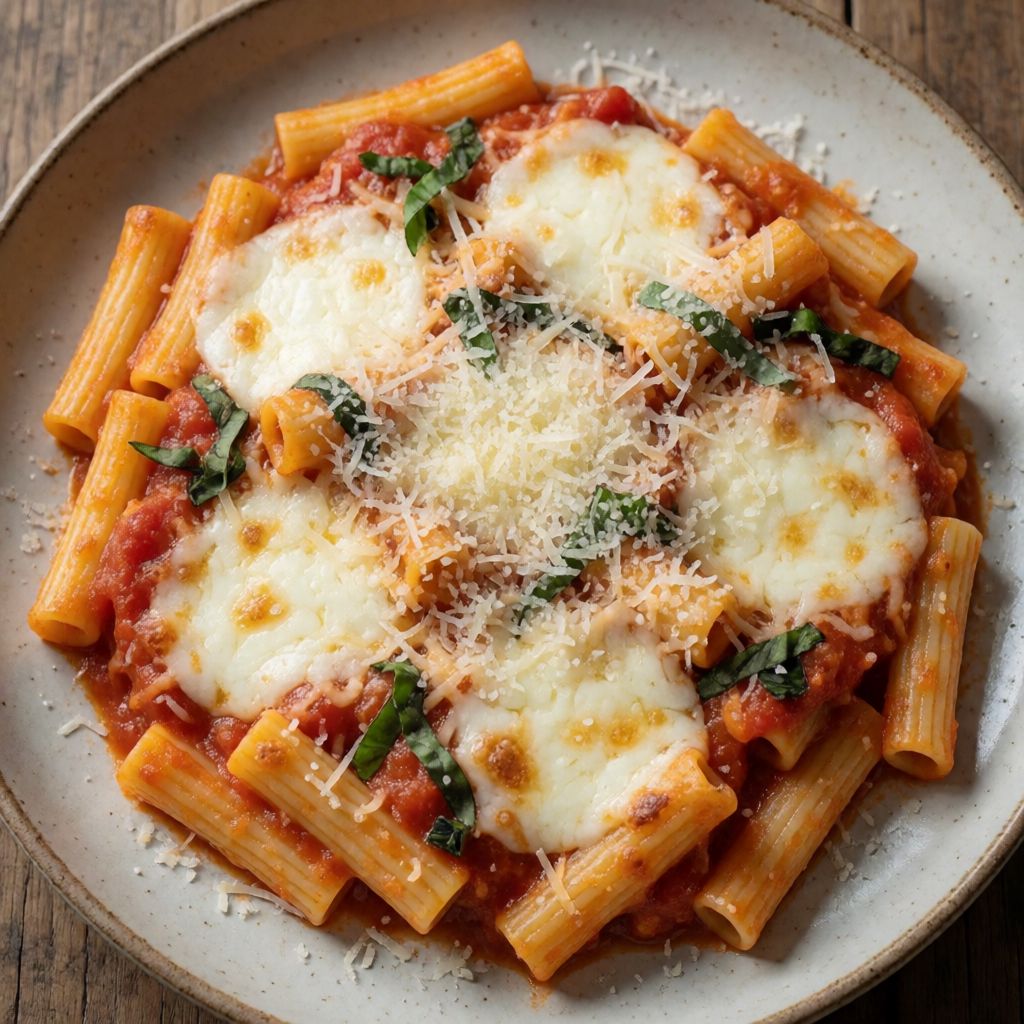
 AI photo
Pasta alla Sorrentina
A baked pasta dish with tomato sauce, mozzarella and parmesan, inspired by the flavours of Sorrento.
Labels are worked out automatically from the ingredients and can be wrong. Check the packaging if it matters to you.
Ingredients








Steps
In a wide pan, heat the olive oil with a crushed garlic clove.
Pour in the tomato passata, add a few basil leaves and cook over low heat, stirring occasionally.
22 minSeason with salt to taste at the end.
Cook the pasta in plenty of salted water, draining it very al dente — it should be almost firm.
When the sauce has thickened, mix the pasta with 3-4 ladles of sauce.
Spread a thin layer of sauce on the bottom of a baking dish, add half of the cooked pasta, half the mozzarella and three tablespoons of grated parmesan — this is the first layer.
Top with the remaining pasta, add more mozzarella, then sprinkle with the rest of the parmesan.
Bake in a well-preheated oven, top and bottom heat, at 180°C.
15 minIn the last ten minutes, add a little olive oil and switch on the grill for 10 minutes at 200°C for a nice crust.
10 min
What was changed
Fior di latte has been replaced with Mozzarella, and the tomato ingredient has been corrected to Tomato Passata to match the intended passata-based sauce.
This is not really a pasta dish — it is a tomato-and-mozzarella casserole that happens to use pasta as its skeleton. Sorrento is a port town on the Naples coast, surrounded by dairies and tomato fields, and the dish is exactly what a trattoria kitchen does with yesterday's surplus: leftover pasta, a pot of reduced tomato sauce, a ball of local mozzarella, into the oven, out comes something that feeds more people than the ingredients suggest. No magic, just thrift turned into a classic.
What decides whether it works is the boundary between two cookings. The pasta goes into the dish seriously undercooked — 'almost firm' is not a typo, it is the whole trick. It still has one more cooking ahead of it, in the oven, bathed in sauce and cheese. If you boil it soft first, as if it were going straight to the table, it has nowhere to go but mush: two cookings stacked on top of each other and the tube collapses. Al dente here is not a texture to admire, it is a reserve of bite you are banking for later.
The second thing that decides it is the sauce. Twenty-two minutes is the floor, not the target — what you are watching for is the sauce losing its watery shine and starting to sit heavy on the spoon, holding a shape instead of running off it. Low heat through all of this is not caution for its own sake: tomato has sugar, and sugar on a hot bottom catches and turns bitter before it thickens properly. Slow is how you get body without scorch.
Ziti is the traditional shape because it is a tube, and a tube does two jobs here: it carries sauce inside itself, not just on its surface, and its ridgeless straight wall doesn't collapse under the weight of a second cooking the way something more delicate might. Any short pasta with either a hole or decent ridges will do the same job — penne, rigatoni, even fusilli at a push. What you are choosing for is surface and cavity, not the name on the packet.
Tomato passata is tomato that has already been sieved for you — no skin, no seed, smooth from the start, which matters because it reduces evenly instead of leaving bits that scorch while the liquid around them is still thin. If you only have whole tinned tomatoes, blitz them smooth first; you are not changing the dish, you are just doing the sieving job the passata already did.
Garlic goes in crushed, not minced, because you want its oil-soluble perfume in the fat before the tomato arrives, and a crushed clove is easy to fish out later if you don't want bits of it turning bitter in the finished sauce — which they will if they catch dry heat on their own, another reason the heat under that oil stays gentle rather than aggressive. The oil itself only needs one quality: no smell of its own strong enough to fight the tomato and basil. Olive oil is traditional because that is what grows on that coast, not because any other decent oil would betray the dish — a neutral sunflower or rapeseed oil will carry the garlic just as well, you simply lose the olive's own flavour, which here is a feature, not an accident.
Mozzarella: choose for drainage, not brand. A ball of fresh mozzarella sitting in its own whey is fine once you've let it sit on a plate or paper towel for a few minutes to shed that whey — skipping this step is the real cause of a watery, sliding bake, not the oven, not the cheese itself. Buffalo mozzarella has more character and more water; fior di latte (cow's milk) is milder and a touch firmer, easier for a first attempt. A block mozzarella meant for pizza works too, as long as you drain it the same way.
Parmesan is there for salt and savoury weight, not for stretch — that job belongs entirely to the mozzarella. Grana Padano or a hard Pecorino will stand in without the dish losing its footing; you're after an aged, hard, grateable cheese, and the brand matters less than the age.
On the oven: top-and-bottom heat at 180°C cooks the dish through gently, melting the cheese and warming the pasta's second cooking without racing it. The grill at the end is a different tool doing a different job — dry heat from above only, browning the surface the way the main oven never could on its own, because it heats everything evenly rather than hitting one spot hard. A British domestic oven usually keeps these as separate elements or settings; use the grill function specifically for those last minutes, don't try to get a crust out of the main bake alone, that's asking one heat source to do two jobs and you'll get neither properly. And give it the patience the floor numbers imply — thickened is a state you see, not a stopwatch you trust.