
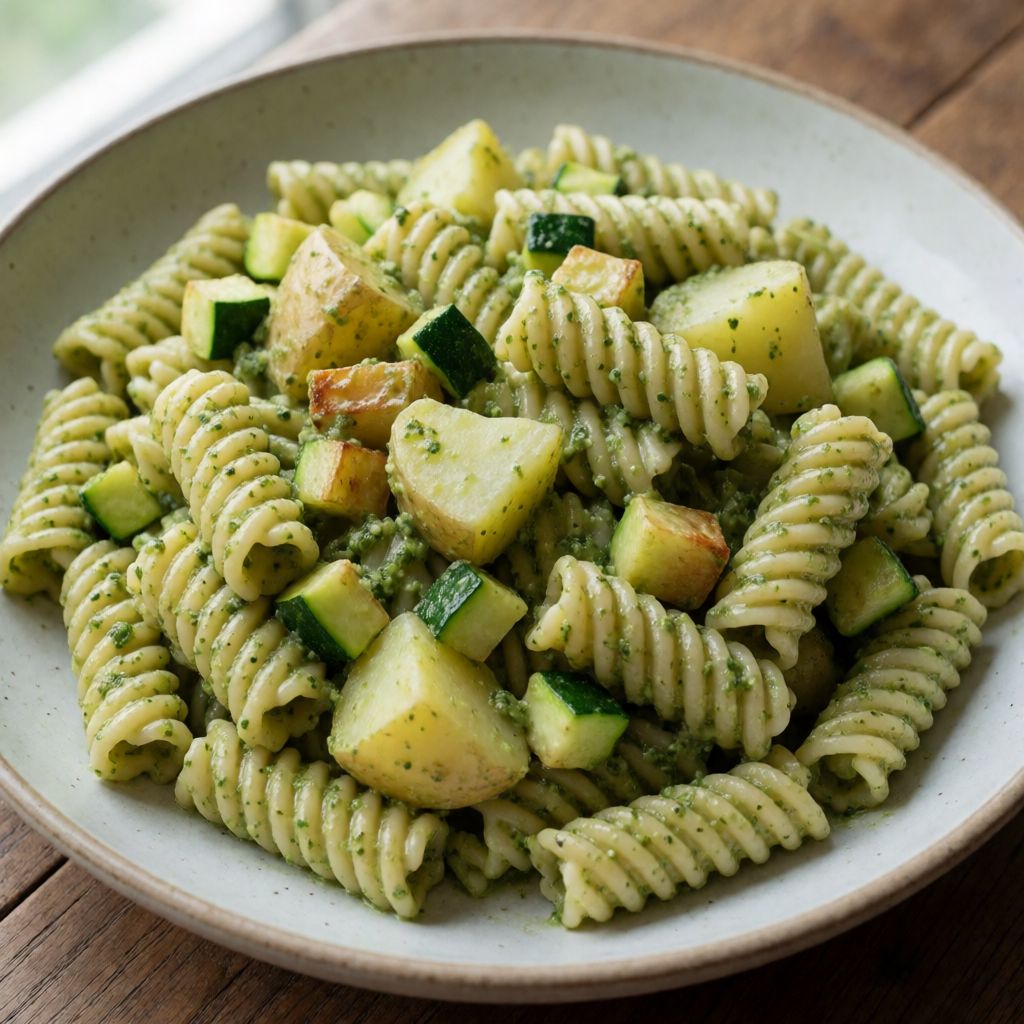
 AI photo
Radiatori Pasta with Courgette, Potato and Pesto
A quick pasta dish of radiatori cooked with potato, pan-fried courgette and a generous spoonful of pesto.
Labels are worked out automatically from the ingredients and can be wrong. Check the packaging if it matters to you.
Ingredients
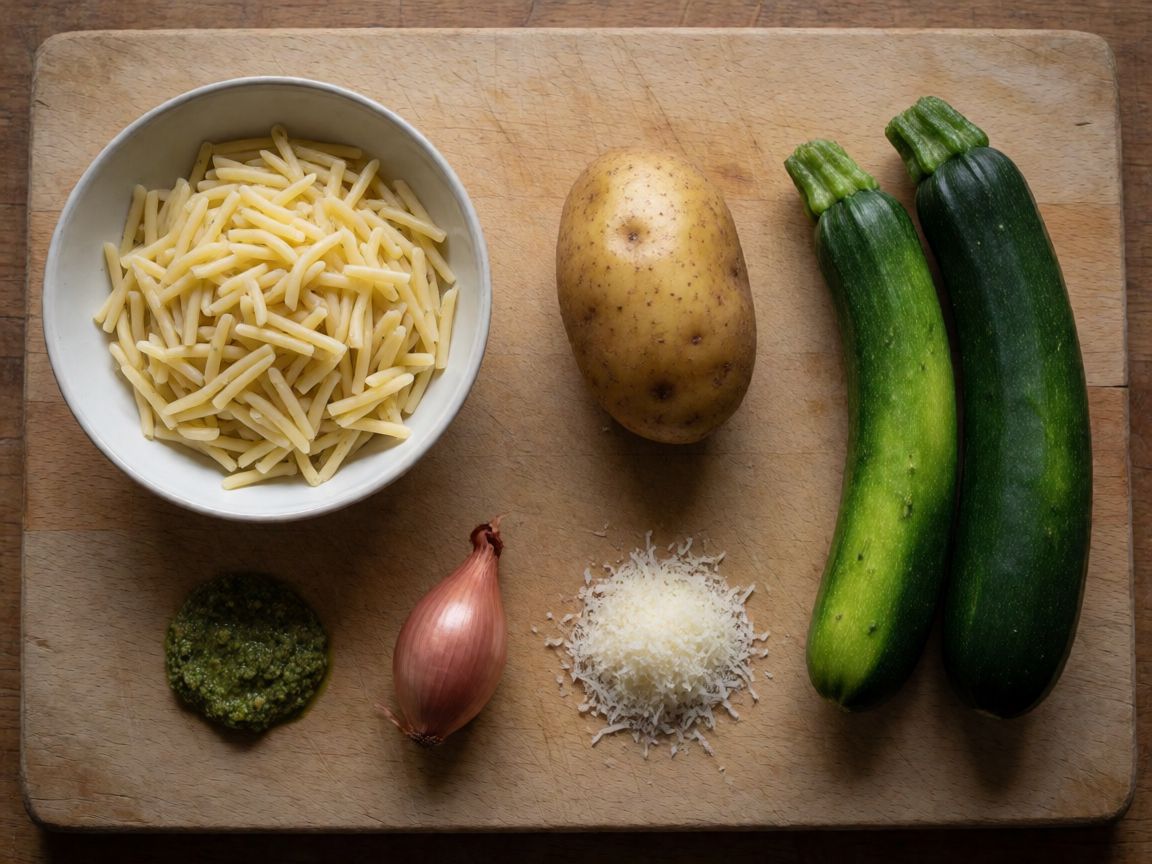








Steps
Cook the radiatori pasta together with the potato chunks in salted boiling water.
10 minHeat 2 tbsp of olive oil in a frying pan and sauté the chopped shallot.
3 minAdd the courgette chunks and cook for a few minutes so they stay crisp.
4 minDrain the pasta just before it reaches al dente, then toss it with the potato in the pan.
2 minStir in 3 tbsp of pesto and black pepper.
2 minSprinkle with parmesan to taste, if you like.
1 min
This is a lazy, clever trick borrowed from Liguria: instead of making a separate vegetable side, you boil a potato right in the pasta water and let pesto do the rest. The potato isn't a garnish here — it's there to bulk out the dish cheaply and, as it breaks down a little at the edges, to thicken the starchy water that will carry the pesto over the pasta instead of letting it just sit on top in oily patches.
What decides whether this works is timing in the pan, not timing on the clock. You pull the radiatori out before it's properly al dente — this feels wrong if you've been taught to trust the packet minutes, but the packet time is written for pasta that goes straight to a plate, not for pasta about to spend another minute or two finishing in a hot pan with sauce and courgette. Drain on the later side and you get mush by the time it's plated; drain early and the pasta arrives at the table exactly right.
The courgette is the part people get wrong most often. The instinct is to cook vegetables until soft, because that's what "cooked" usually means. Here the opposite is true: a few minutes, no more, just enough for the pan's heat to hit the surface and raise a hiss, not enough for the courgette to give up its water and go the colour of a wet towel. Crisp courgette against soft potato and chewy pasta is the whole point of texture in this dish — lose that contrast and you've made a green mush with pasta shapes floating in it.
Radiatori is the right shape for a reason, not fashion: its ridges and folds act like little pockets, so a thick, clingy sauce like pesto has something to hold onto. A smooth pasta — penne lisce, say — would let most of that oily sauce slide straight off onto the plate. If radiatori isn't in the shop, reach for anything with ridges or a hollow — fusilli, conchiglie, gemelli — the criterion is surface and grip, not the specific shape.
For the potato, waxy wins over floury. A waxy potato (new potatoes, Charlotte, Jersey Royals if you can get them) holds its shape as a chunk and still softens enough to eat with a fork. A floury one, like Maris Piper, will start falling apart in the boiling water — not a disaster, since the starch it sheds only thickens your sauce further, but you'll get fewer distinct chunks and more of a creamy backdrop. Cut the pieces small and even; a potato cut too large simply won't be done when the pasta is, and you'll be fishing out raw lumps.
Before you tip the pasta water away, take a cupful out. It's cloudy with starch from both the pasta and the potato, and that's exactly the liquid you want if the pan looks dry once the pesto goes in — a splash loosens everything without watering down the flavour, the way oil alone can't.
Courgette: pick ones that feel heavy and firm for their size. A large courgette is mostly water around a core of seeds, and that water is your enemy here — it weeps out under heat and turns your pan into a shallow poach rather than a sauté, which is exactly what stops it staying crisp. Two medium ones, cut into decent chunks rather than thin coins, give you more surface to brown and less surface to leak.
The shallot goes in before the courgette because it needs a gentler, longer warmth to turn sweet rather than harsh — drop it into oil that's shimmering, not smoking, or the outside catches and turns bitter before the inside softens. Shallot is milder than onion by nature, which suits a dish this light; if you've only got onion, a small mild one will do, just give it a little longer and keep the heat honest rather than fierce — a domestic ring will scorch a crowded pan faster than you expect, since it struggles to recover heat the way a professional stove does.
Olive oil here is doing double duty: it's the cooking medium and it's meant to taste of something, carrying through into the pesto's own oil. If you're out of it, any oil without a smell of its own will cook the shallot and courgette fine, but you lose a layer of flavour that olive oil alone supplies — a mild rapeseed oil is the closest stand-in. Parmesan at the end is seasoning, not decoration: pesto already carries hard cheese, so some will tell you adding more is unnecessary — no, because once pesto is spread thin over 400g of pasta and vegetables, it's diluted, and a last grating restores the savoury edge that got lost along the way. Any firm, salty, well-aged hard cheese — pecorino, Grana Padano — does the same job.