
 AI photo
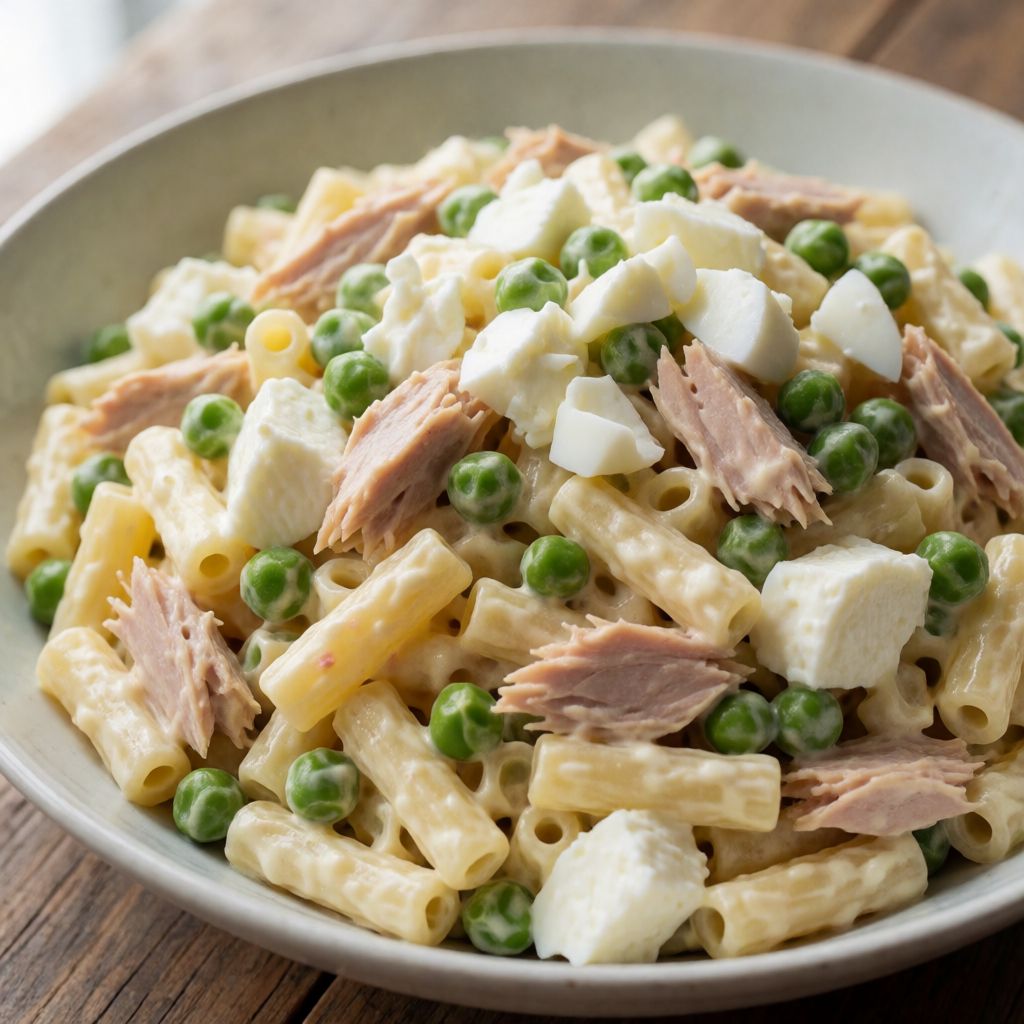
Pasta Salad in Egg Sauce
A creamy pasta salad with tuna, peas, mini mozzarella and a tangy egg-based dressing.
Labels are worked out automatically from the ingredients and can be wrong. Check the packaging if it matters to you.
Ingredients
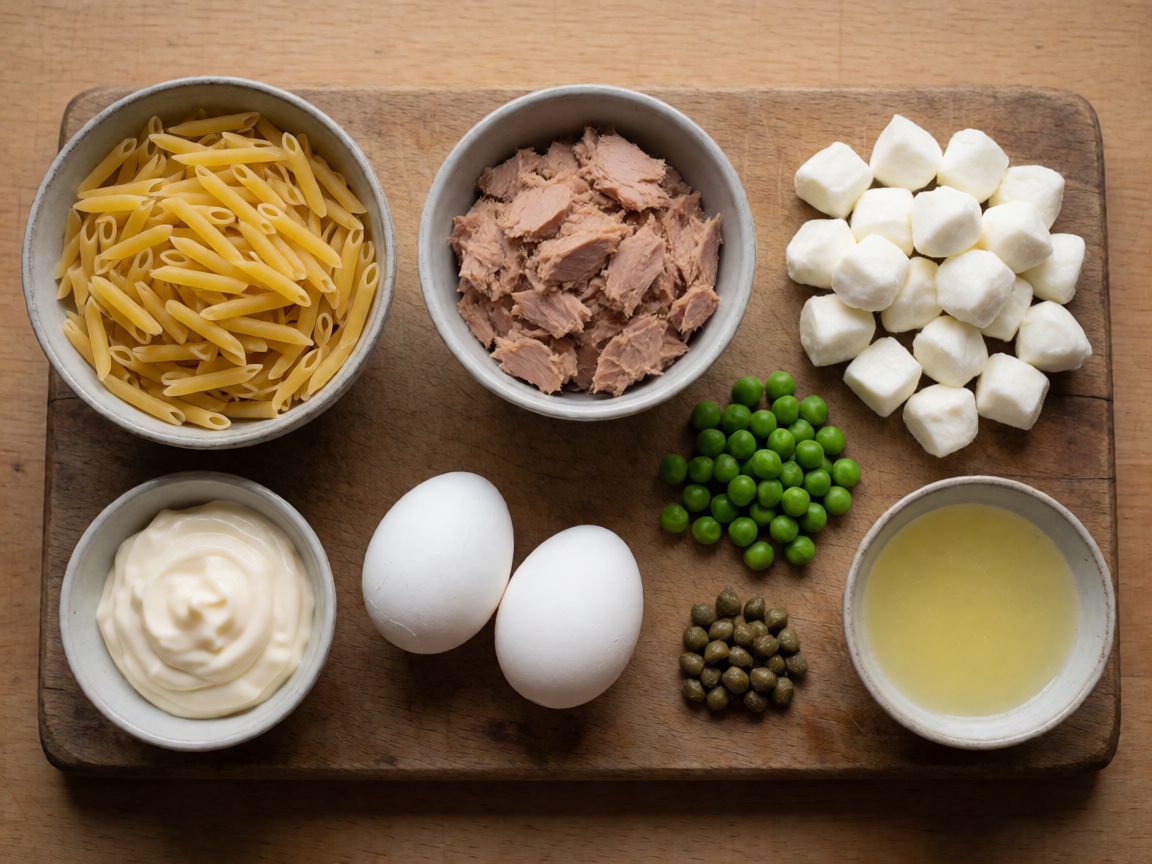
- 500 g Pasta
- 200 g Tuna canned
- 150 g Peas
- 15-20 pcs Mozzarella mini
- 100 g Mayonnaise
- 2 pcs Egg hard-boiled
- 1 tbsp Capers
- 30 ml Lemon juice
- 50 ml White wine
- 1 bunch Basil leaves
- 1 pinch Salt to taste






Steps
Bring a large pot of salted water to the boil and blanch the peas, then cook the pasta in the same water.
10 minCook the pasta until al dente, drain it in a colander and let it cool slowly in a separate bowl.
5 minFinely chop the hard-boiled egg, add the mayonnaise, capers and basil, pour in the white wine and lemon juice, and season with salt to taste.
5 minPour the sauce over the cooled pasta and mix well, then add the peas, canned tuna and mini mozzarella.
5 minPlace the salad in the fridge to let it rest before serving.
5 min
This is a cold pasta salad, but not the limp supermarket kind you get at a picnic — it's held together by a proper egg-and-mayonnaise sauce sharpened with lemon and wine, closer in spirit to a French niçoise than to anything from a deli tub. Feeds six as a side next to a roast, or on its own for lunch with bread. It travels well, which is why it earns its place at a buffet rather than a hot table.
What decides whether it works is heat management, and almost nobody thinks about it because the dish looks so simple. Mayonnaise is an emulsion — egg yolk holding oil in suspension by sheer stubbornness. Pour it over pasta that's still steaming and the heat will loosen that bond; the sauce goes thin and greasy instead of clinging. That's why the pasta gets drained and left to cool on its own in a bowl, spread out rather than piled, so the heat escapes instead of sitting trapped and cooking the middle of the pile further.
Some say you should dress pasta while it's hot, because hot pasta 'drinks in' the sauce better. True for oil and garlic, where heat helps the pasta absorb fat. False here — mayo isn't oil, it's an emulsion, and heat is exactly what kills it. Wait for the pasta to lose its steam.
The other thing people get wrong is rinsing pasta under the cold tap to stop it clumping. It works, but it also washes off the starch on the surface — the very thing the sauce needs to grip onto. Better to just spread it out, let air do the cooling, and toss it now and then so it doesn't set into one solid block.
Pasta: 500 g for six is generous as a side, tight if this is the whole lunch. Use a shape with somewhere for the sauce to sit — a shell, a twist, a short tube — rather than a long strand, because the sauce here is thick with chopped egg and capers and needs pockets, not a smooth surface to slide off. Boil it in a wide pan, properly salted water, the kind of pan most UK kitchens already have for Sunday veg — no need for anything bigger.
Peas go into the same water before the pasta, which isn't corner-cutting, it's just not wasting a second pot of boiling, salted water for thirty seconds of blanching. One pot, one wash-up, same result. Fresh peas taste better but frozen are bred for exactly this — bled of excess starch, uniform, quick — use them without apology.
Tuna: tinned, drained well. Oil-packed has more flavour than water-packed because the oil carries what little fat-soluble flavour the fish has; water-packed is leaner but blander. Either works, but if you use oil-packed, drain it properly or the sauce goes slick instead of creamy.
Mini mozzarella is there for a different texture against the softness of the pasta and the egg sauce — something that gives slightly before it breaks. If you can't find the mini balls, buy a block and tear it into pieces that size; don't dice it with a knife, torn edges hold the sauce better than cut faces.
Mayonnaise: 100 g isn't much, which tells you it's a binder here, not the main event. Choose one made with egg yolk and a neutral oil, nothing sweetened — salad cream, with its sugar and vinegar tang, will fight the lemon and wine instead of backing them up. The two hard-boiled eggs do double duty: bulk for the sauce, and a reminder of why it's called egg sauce at all. Boil them gently rather than at a hard rolling boil — a violent boil is what gives you the grey-green ring round the yolk, from sulphur and iron reacting under too much heat, not from the egg being old.
Capers, lemon juice and white wine are the whole balancing act. Mayonnaise plus tuna plus mozzarella is three mild, fatty things in a row — without something sharp and salty cutting through, the salad goes heavy on the tongue by the third forkful. Capers bring brine, lemon brings clean acid, the wine brings a faint, grown-up sourness that lemon alone can't. No wine in the house — a splash more lemon juice, or a dry vermouth if you have it open for something else, gets you close enough. No capers — chopped gherkin or a green olive, for the same job: salt and bite.
Basil wants to be fresh; dried basil is a different herb in all but name, mostly aroma lost to the drying. If you can't get it, parsley will do the job of freshness without trying to mimic basil's particular sweetness.
The fridge rest at the end isn't just for serving it cold — it's patience doing the final bit of cooking. Given time, the pasta keeps drinking in the sauce and the capers' brine spreads through the whole bowl instead of sitting in pockets. Five minutes is the stated minimum; longer, even a few hours, makes a better salad, because nothing about this dish improves by rushing it to the table.