
 AI photo
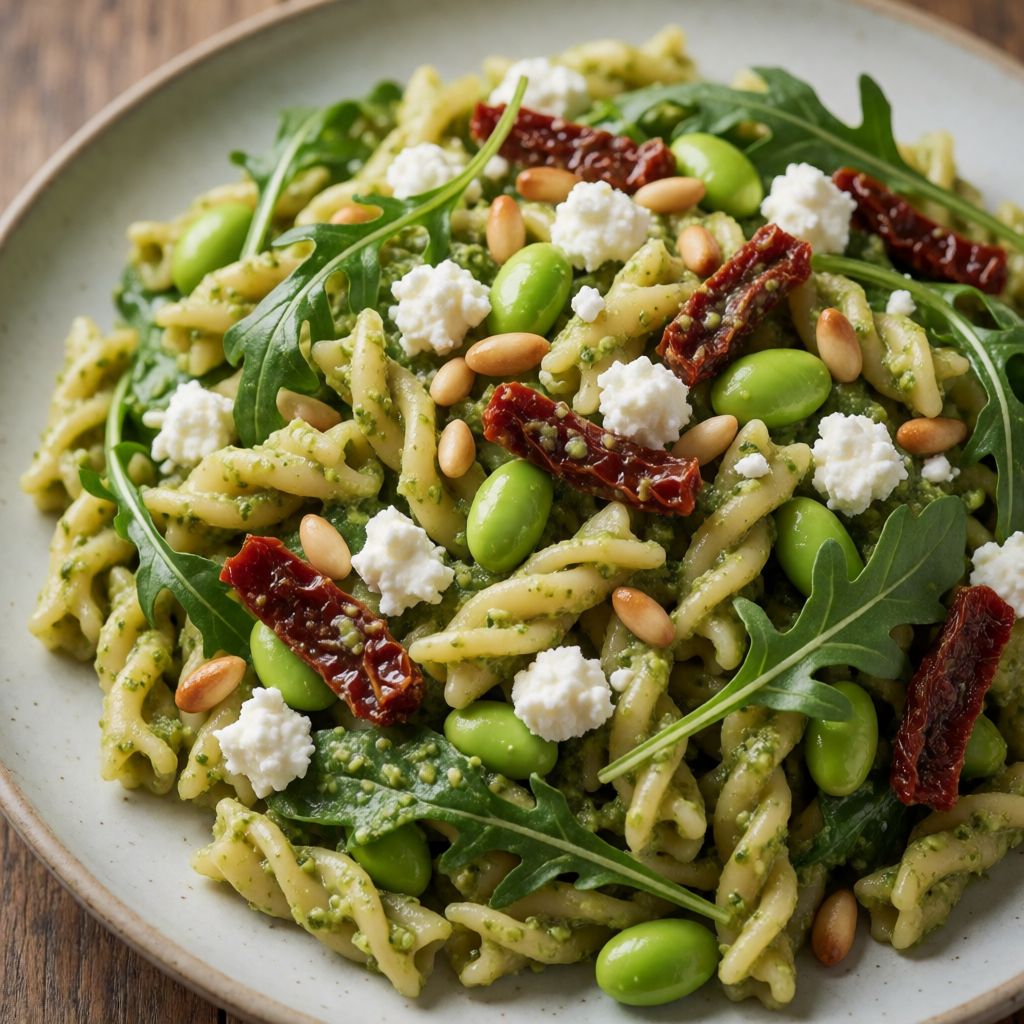
Pesto and Feta Pasta Salad
A hearty pasta salad with pesto, feta, rocket and avocado, finished with toasted pine nuts.
Labels are worked out automatically from the ingredients and can be wrong. Check the packaging if it matters to you.
Ingredients
- 400 g Pasta
- 200 g Edamame beans shelled, frozen
- 50 g Sun-dried tomatoes finely chopped
- 50 g Pine nuts
- 100 ml Pesto
- 120 g Rocket
- 1 pcs Avocado diced
- 70 g Feta
- 100 g Parmesan freshly grated






Steps
Cook the pasta according to the pack instructions.
Add the frozen edamame beans to the boiling water with the pasta once it is al dente, then drain.
Drain the pasta and edamame well in a colander.
Toast the pine nuts in a dry frying pan, stirring, until golden brown.
Toss the pasta and edamame with the pesto and sun-dried tomatoes.
Add the rocket, avocado, feta and Parmesan. Transfer to a plate and sprinkle with the toasted pine nuts.
This isn't really a sauced pasta dish, it's a composed salad that happens to use pasta as its base. You cook one hot component, toss it with a cold-logic sauce, then build cold and raw things on top. The whole success of it hinges on three invisible decisions: how dry the pasta is when it meets the pesto, how hot the pasta still is when it meets the pesto, and the order in which the raw bits go on. Get any of those wrong and you get a bowl of good ingredients that still tastes like a mistake.
First: dryness. Pasta water carries starch and salt, and if you tip it into the bowl still wet, that water dilutes the pesto and turns it thin and sour-tasting instead of rich. A colander shake, maybe a second shake after a minute's rest, matters more than any seasoning you add afterwards. This is also why the edamame goes into the same pot near the end — one pot, one drain, one less puddle of water to manage on a hob that only has so many rings free.
Pasta: 400 g for four people, about 100 g a head, a normal portion for a salad that's carrying other weight — beans, cheese, avocado. Shape doesn't matter mechanically here as much as it does in a sauced dish, because the pesto isn't clinging by capillary action into ridges the way a tomato sauce would; it's coating. A shape with some surface texture — fusilli, conchiglie — just holds a bit more pesto per forkful, which is a nicety, not a requirement.
Edamame: frozen, shelled, and dropped straight into the pasta water near the end rather than cooked separately. This is pure kitchen economy — one pot of boiling water instead of two, which matters on a domestic hob where you've only got so many rings and the pasta pot is already the biggest thing you own. Frozen is also simply more reliable than fresh shelled edamame, which barely exists in UK shops anyway; frozen vegetables are blanched before freezing, so a couple of minutes in the pasta water is really just reheating and finishing, not cooking from raw.
Pine nuts: toasted dry, no oil, because they're roughly half fat themselves — add oil and you're just frying them in their own substance with extra mess. The defect this step prevents is a specific one: raw pine nuts taste waxy and a little resinous; toasting breaks that down into something sweet and roundly nutty. If pine nuts are expensive or you haven't got any — and they often are the priciest thing in the bowl — flaked almonds or sunflower seeds toasted the same dry way do the same job of crunch and roasted-fat flavour; they just won't have the pine nuts' particular soft, buttery bite.
Pesto: shop-bought is fine and this recipe is clearly built around that convenience — 100 ml is a small jar's worth. The one thing worth knowing is that pesto is an emulsion that separates with time and cold, oil floating up, so give the jar a proper stir before it goes anywhere near the pasta, otherwise you'll dress the pasta mostly in oil and leave the basil-and-cheese paste stuck to the jar.
Sun-dried tomatoes: these aren't there for juiciness, they're there for concentration — all the water's already gone, so what's left is sweetness and acidity packed into something chewy. That chew is a deliberate contrast to the soft pasta and creamy avocado. If you've only got the kind packed in oil rather than dry, drain them well first for the same reason you drain the pasta: extra oil just dilutes the pesto's balance rather than adding anything.
Avocado: dice it last, right before it goes in, because cut avocado browns on contact with air — that's oxidation, not spoilage, but nobody wants grey patches in a fresh-looking salad. Choose one that gives gently to a thumb press near the stem end; rock-hard won't dice, it'll bruise, and overripe turns to paste the moment you touch it with a fork.
Feta and Parmesan: two different jobs, not interchangeable despite both being "the cheese." Feta is young, brined, crumbly and sharp with salt — it's there to break into soft salty pockets through the salad. Parmesan is aged, dry, hard, and its flavour is concentrated umami rather than salt; grate it yourself if you can, because the pre-grated bagged kind has usually dried out and lost most of its aroma sitting on a shelf. Any firm, well-aged hard cheese stands in for Parmesan; any salty, crumbly brined cheese — a mild feta-style block, even a crumbled young pecorino — stands in for feta. What matters is the texture contrast between the two, crumbly against grainy, not the labels.
Last thing: don't rush the assembly stage because it looks like "just mixing." Give the pasta that short rest to come off the boil before dressing it, let the pine nuts cool before they go anywhere near the rocket, and the whole bowl holds its structure — crisp leaves, firm avocado, distinct cheeses — instead of collapsing into a warm, wilted mush that tastes fine but looks like you gave up halfway through.