
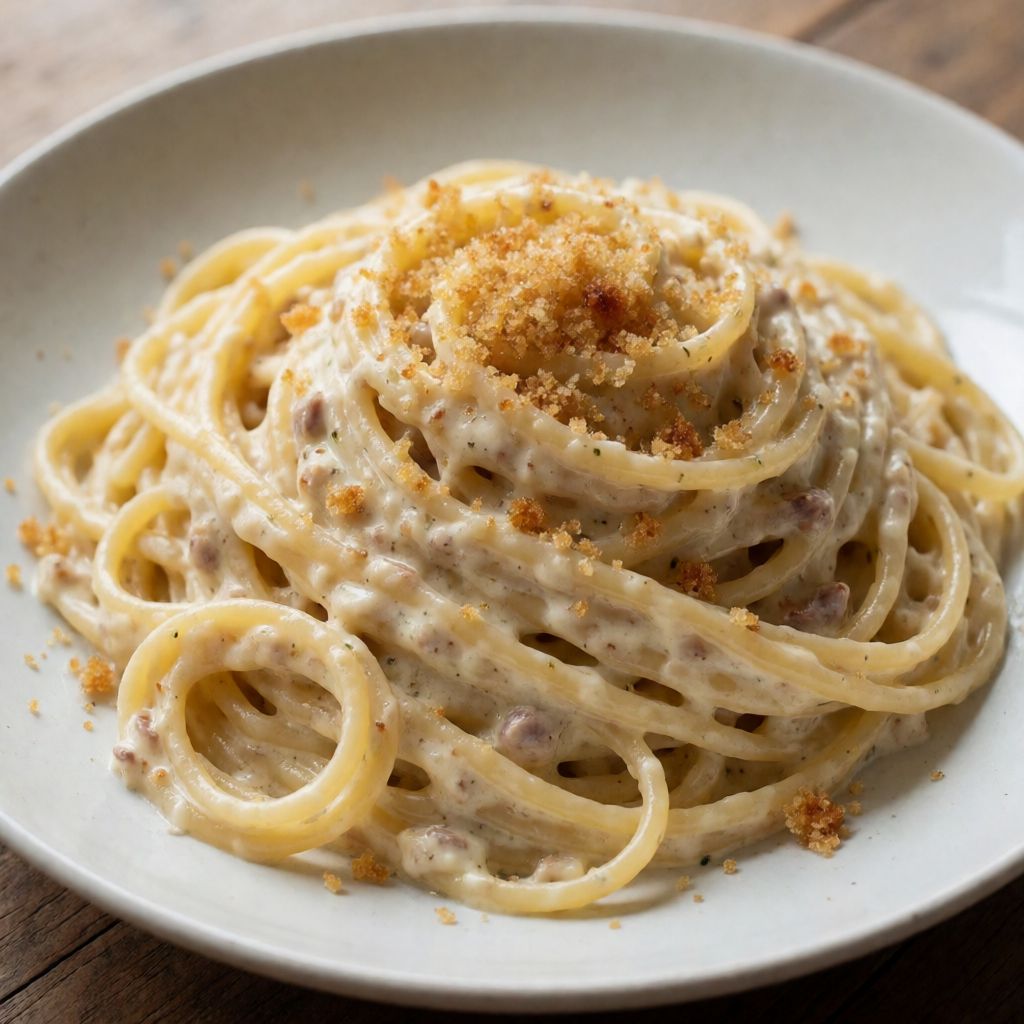
 AI photo
Pasta with Anchovy Cream
A simple pasta tossed in a creamy anchovy and pine nut sauce, finished with crispy breadcrumbs and parsley.
Labels are worked out automatically from the ingredients and can be wrong. Check the packaging if it matters to you.
Ingredients
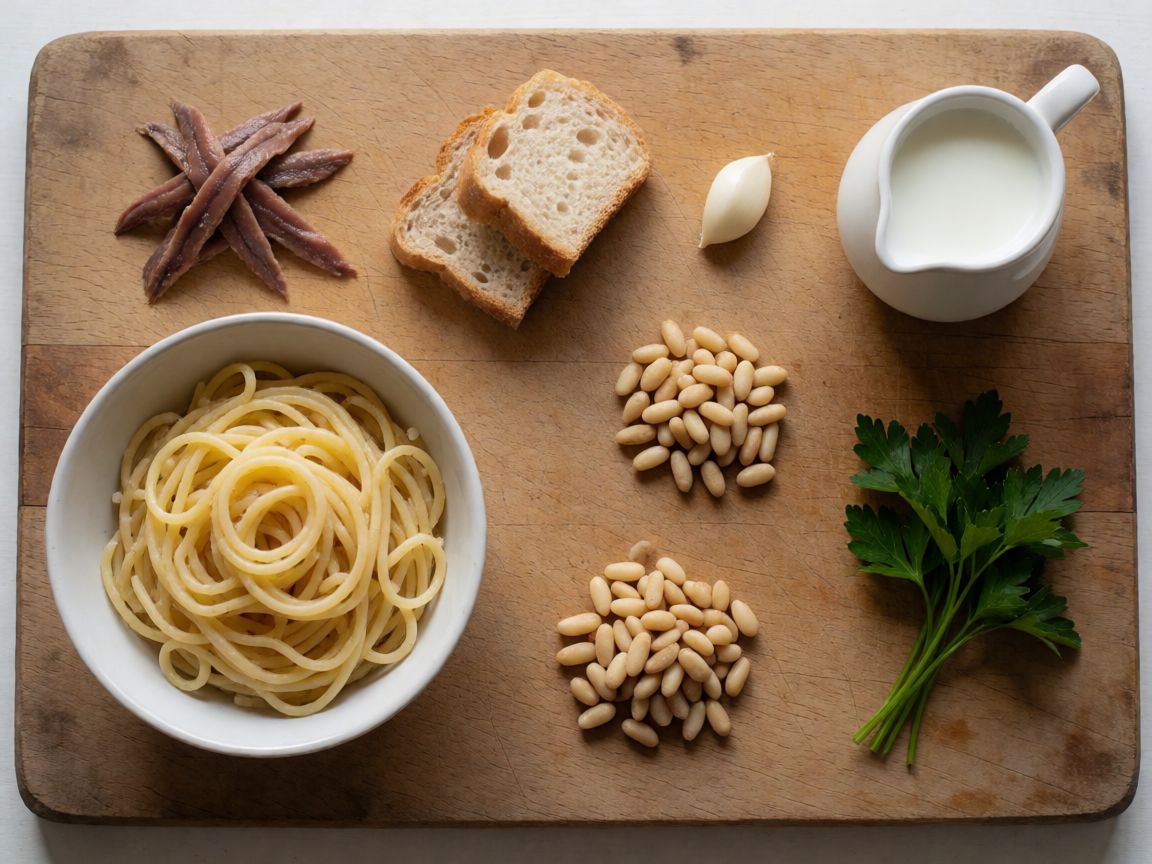
- 400 g Spaghetti or linguine
- 80 g Anchovies
- 50 g Toasting bread crusts removed
- 1 clove Garlic
- 80 ml Milk
- 50-60 ml Olive oil
- 20 g Pine nuts
- 30 g Fresh breadcrumbs torn, for frying
- 1 bunch Parsley chopped






Steps
Bring a large pot of unsalted water to the boil.
Tear the toasting bread into pieces and put it in a blender with the anchovies, milk, olive oil, pine nuts and garlic. Blend until smooth.
Cook the spaghetti or linguine until al dente.
In a frying pan with a little olive oil, fry the breadcrumbs until lightly golden and crisp.
Transfer the anchovy cream to the pan and loosen it with a few spoonfuls of the pasta cooking water.
Add the pasta to the sauce and toss for a few seconds until well combined.
Garnish with the crispy breadcrumbs and chopped parsley, and serve immediately.
Strip away the Italian name and this is anchovy-bread cream, tossed through hot pasta and finished with crumbs for crunch. No cream, no cheese — the body comes from bread drinking up milk and oil until it turns into something that behaves like a sauce. That's the whole trick of the dish: a blender does what cream usually does, and anchovies do what parmesan usually does, for salt and depth.
What decides whether it works is the emulsion, not the anchovy count. Blend bread, milk, oil, anchovy and garlic together and you want a paste that pours — thick enough to coat a spoon, loose enough to run off it slowly. Too much bread and you get wallpaper paste; too little and it splits into oil and fish grit the moment it hits heat. The milk is doing real work here, not just softening the bread: its proteins bind the compounds that make fish smell like fish, which is why this cream tastes rich and salty rather than oceanic. That's also why you blend raw anchovy straight in rather than frying it first — fried, the smell escapes into the kitchen instead of staying bound in the sauce.
The fried crumbs on top aren't decoration, they're damage control. A smooth blended sauce has no bite of its own — eat it without the crumbs and the whole plate is soft, spoon-food, nothing for the teeth to do. Fry them loose and separate in a little oil until they go gold and start to crackle, not brown — a few seconds past gold and they turn bitter, because sugars in toasted bread scorch fast once they start. That bitterness would fight the anchovy's saltiness instead of propping it up.
Anchovies are the engine, so buy the better kind if you can — oil-packed or salt-cured fillets, not the thin vinegary ones meant for pizza. What you're after is fermented depth, not fish-shop smell; good anchovy tastes of salt and savoury weight, almost like a cured ham, before it tastes of the sea. If anchovies genuinely aren't to hand, a splash of fish sauce or even a dab of Worcestershire will get you the same salty-umami push, but you lose the fat they carry, which is part of what makes the cream silky rather than watery.
The bread-and-milk step is an old trick, not a fussy one: stale bread, torn and soaked, is how cooks without cream or flour to hand have always thickened a sauce — it's the same logic behind meatball mixtures and some soup finishes. Use the crust-off, toasting kind specified, because dense white bread drinks milk evenly without collapsing into slime the way very fresh soft bread does; crust left on blends gritty rather than smooth. You likely already keep milk in for tea, which is the only ingredient here that isn't a special trip — the rest comes from a tin and a jar.
Pine nuts bring a soft, almost sweet richness when blended smooth, rounding off the saltiness rather than adding crunch — any mild nut that melts into a paste does the same job; blanched almonds or cashews work, walnuts don't, because their bitter skin fights the anchovy instead of cushioning it. Olive oil is doing double duty, carrying flavour and helping the emulsion hold; a flavourless oil will still blend but the sauce loses the faint bitter edge that keeps it from tasting purely of salt and fish. One clove of raw garlic blended straight in is sharp on its own — that's fine, the brief time in the hot pan at the end takes the raw edge off without cooking it long enough to turn bitter.
The fresh breadcrumbs for frying are a separate ingredient from the toasting bread in the sauce — don't double up and use the same loaf for both unless you have plenty, since you want these drier and coarser so they crisp rather than soak up oil and go soft. Parsley goes in raw at the very end, off the heat, because its job is colour and a clean green smell against all that salt and fat — cooked even briefly, it goes dull and loses the point of being there.
A stick blender or a small food processor does this job fine; you don't need anything stronger. One wide frying pan does everything after the pasta's boiled — fry the crumbs in it first, tip them out, loosen the cream in the same pan with a splash of pasta water, then toss the drained pasta straight in. Using one pan for both isn't laziness, it's how the dish stays one thing instead of three separately cooked elements reunited on a plate. And don't rush the blending stage waiting for the pasta — a cream blended properly, with patience, holds together in the pan; one blitzed in a hurry separates the second it meets heat, and no amount of pasta water brings it back.