
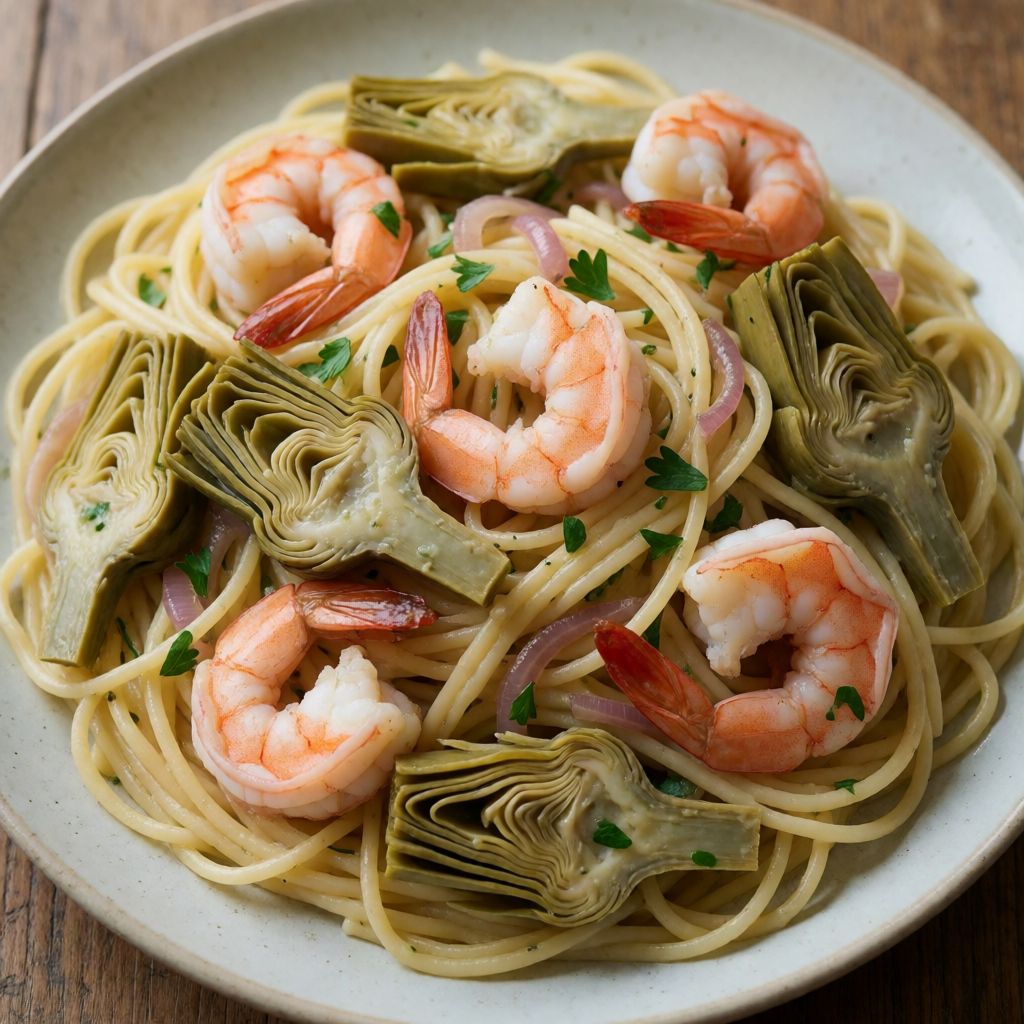
 AI photo
Pasta with Artichokes and Prawns
A quick pasta of tender artichokes and prawns, finished with white wine and parsley.
Labels are worked out automatically from the ingredients and can be wrong. Check the packaging if it matters to you.
Ingredients
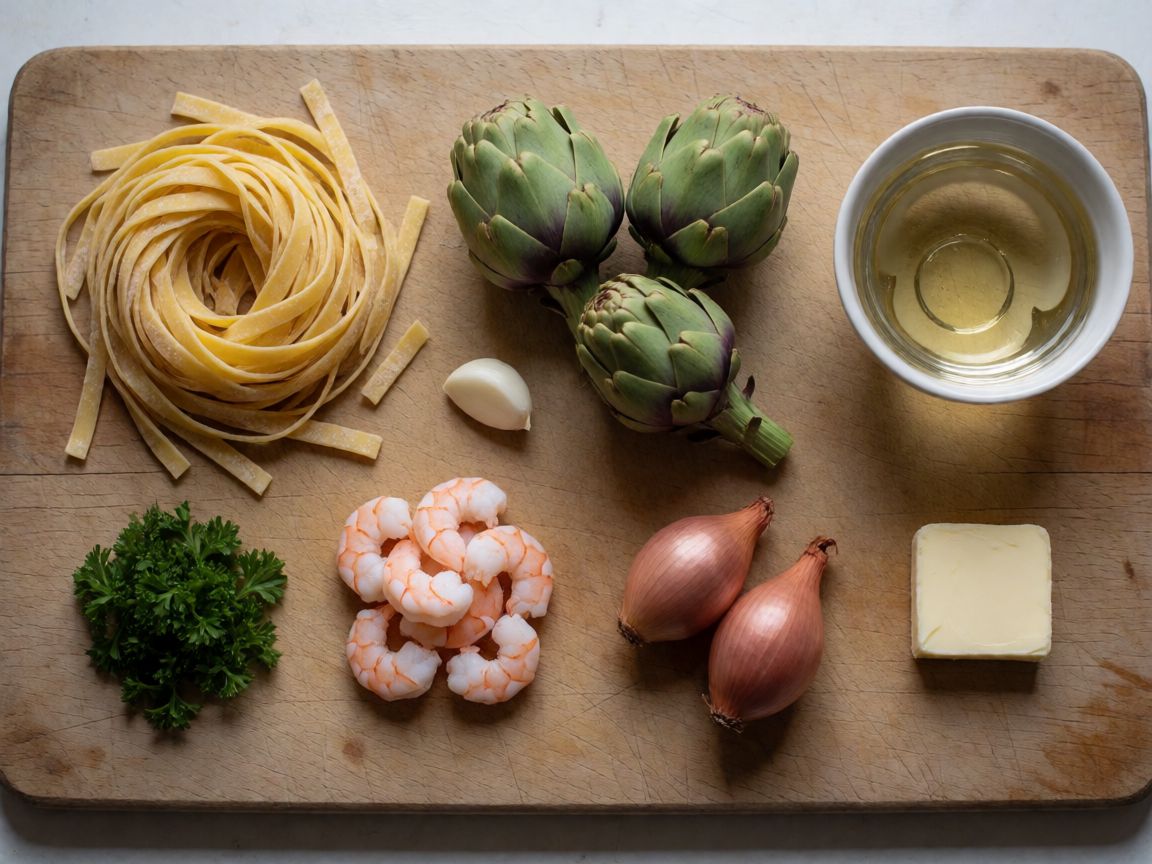
- 320 g fresh pasta
- 3 pcs artichoke
- 1 clove garlic
- 200 g prawn tails
- 2 pcs shallot
- 1 bunch parsley
- 125 ml white wine
- 1 pcs butter a knob
- salt to taste
- black pepper to taste










Steps
Rinse and chop the parsley.
Clean the artichokes, removing all the tough outer leaves, trim the stem, cut in half and remove the fuzzy centre. Slice thinly.
Peel the garlic clove and set it aside whole; peel and finely chop the shallot.
Melt the butter in a frying pan.
Add the artichokes, the whole garlic clove, shallot and parsley. Fry for a few minutes.
Add the prawn tails, shelled and cut into pieces.
Pour in 125 ml of white wine and let it evaporate.
Add salt and black pepper to taste.
Bring water to the boil, salt it and add the pasta.
Cook the pasta until al dente, then drain it straight into the pan with the sauce. Toss together.
Add half a ladle of pasta water to bind the sauce. Plate up.
This is a quick sea-and-garden dish, built on one idea: artichoke and prawn both cook fast, so the whole thing lives or dies on timing, not on a long simmer. There's no tomato to hide behind, no cream to smooth over mistakes. What you taste is butter, wine, shallot and whatever the artichoke gave up in the pan — so the artichoke has to be treated right from the start.
The artichoke is the awkward one. Fresh, in the UK, it usually means supermarket imports, tough outer leaves and all, and most people's first instinct is to boil them soft the way you'd boil a potato. Don't. Here you want it raw-prepped and sliced thin, then fried just long enough to lose its rawness and pick up butter — closer to how you'd treat a fennel than a vegetable you boil to death. Slice it too thick and it stays chalky in the middle no matter how long you leave it in the pan; the test is a sliver bending between your fingers, not going translucent on the clock.
Prawns go in late and briefly, because prawn tails turn from sweet to rubbery the moment you stop paying attention — a minute or two of pink, curling flesh is the whole window. This is also why the wine goes in after the prawns: the alcohol needs to cook off and reduce to something that smells of wine, not tastes of it, and that happens fast over proper heat, not a gentle simmer. If your hob runs weak, give it the time it needs rather than rushing the pasta in before the wine's lost its sharp edge.
Fresh pasta here is doing a specific job: it cooks in minutes, so by the time your artichoke and prawns are ready, the pasta can hit the pan still slightly underdone and finish in the sauce rather than sitting in a colander going stiff. If you only have dried, that's fine — just pull it a touch earlier than the packet says, because it keeps cooking once it's in with the butter and wine. 320 g feeds four as a starter-sized plate, which is how Italians actually eat pasta — not the mountain-on-a-plate version that's become normal in British kitchens.
Artichokes: three fresh globe ones, and yes, the prep is fiddly — trimming leaves down to the pale heart, scooping the fuzzy choke, all while it oxidises brown in front of you (a cut lemon rubbed over the flesh slows that down, though it's not in the method here and won't change the taste). If fresh artichokes aren't to be found, or the fiddling puts you off, artichoke hearts in oil or brine are a reasonable stand-in — drain them well, pat dry, and fry a little harder since they're already cooked and only need colour and heat, not time. What you're chasing either way is the same: a vegetable that still has bite, not mush.
Prawn tails: raw if you can get them, because they'll take the wine and butter into themselves as they cook. Pre-cooked prawns aren't wrong, just add them even later — a minute at most, purely to warm through, since there's no raw stage left to manage and all you'll do otherwise is toughen them.
Garlic goes in whole, not chopped — that's deliberate, not a shortcut taken too far. A whole clove in butter gives you the smell without the bitterness that chopped garlic throws off if the pan runs hot for even a few seconds too long. Some recipes tell you garlic must always be minced to "really flavour" a dish — no, because here the opposite is true: whole and gently warmed, then pulled or left in at the end, is exactly how you get garlic's perfume without its sharp edge taking over prawns this delicate.
Shallot rather than onion because it's milder and sweeter — if you've only got a regular onion, use half of one, finely chopped, and give it slightly longer in the butter so it softens without colouring; it's coarser than shallot and needs the extra few minutes to settle down.
Butter, not oil, because this is a dish built on richness rather than fruitiness — a "knob" is a household measure, not vague cooking: it means enough to coat the pan generously, roughly a heaped tablespoon, enough that it's still visibly glossy, not absorbed, by the time the artichokes go in.
The wine should be a dry white you'd actually want in a glass — the cheap habit of cooking with whatever's gone slightly off punishes you here, because with so few ingredients, a sour or sweet wine is the whole dish's backbone and it shows. If you don't drink wine at all, a splash of dry vermouth does the same acidic, evaporating job; stock with a squeeze of lemon is the fallback, further off but workable.
And give it the time it actually needs rather than the time on paper — patience here isn't about long cooking, it's about not rushing the handful of short, sequential moments that make the dish: letting wine properly lose its edge, letting the pasta water properly thicken the sauce, letting prawns go pink and stop rather than pulling them early out of nerves.