
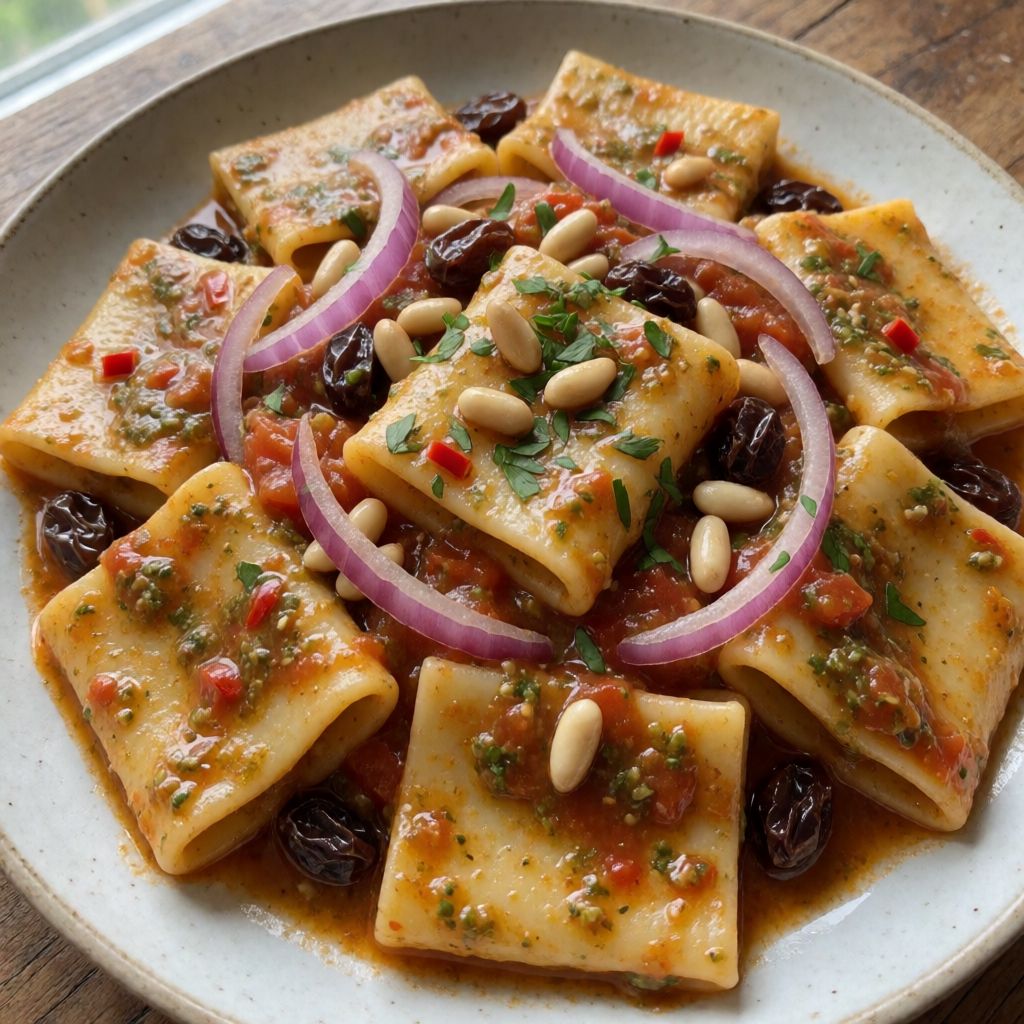
 AI photo
Paccheri Pasta with Datterini Tomatoes and Pesto
A simple pasta with paccheri, sweet datterini tomatoes and pesto, finished with Grana Padano.
Labels are worked out automatically from the ingredients and can be wrong. Check the packaging if it matters to you.
Ingredients
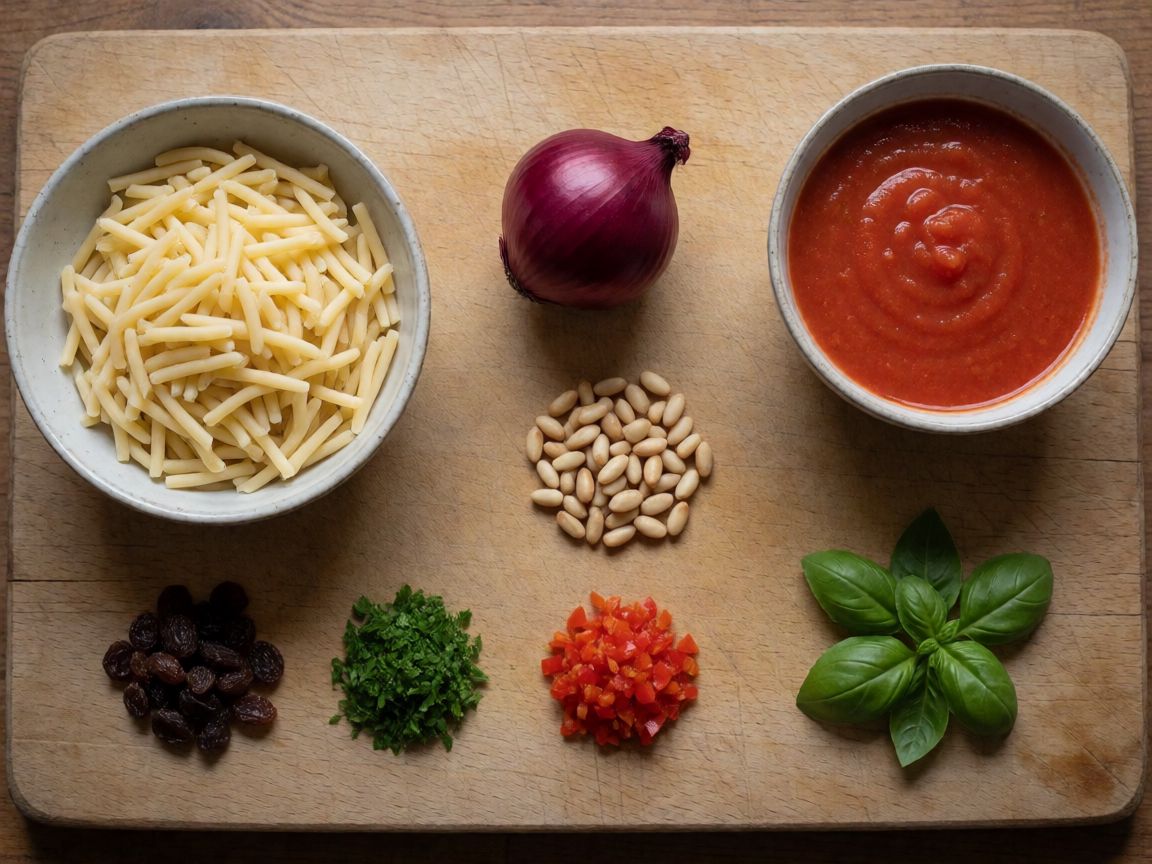












Steps
Fry the onion in a little oil together with the parsley and chilli pepper.
Add the pine nuts and raisins, and cook for a couple more minutes.
2 minAdd the chopped datterini tomatoes and basil, season with salt to taste and let the sauce finish cooking.
Cook the paccheri and toss with the hot sauce, adding a little pasta water if needed.
Stir in the pesto and generously sprinkle with grated Grana Padano cheese.
Paccheri are the fat tubes that look like they escaped from a plumbing supply shop — and that shape isn't decoration. A tube that wide needs a sauce with body, something that can sit inside it and not just slide off, which is why this dish isn't a thin tomato splash but a thick, sweet-sharp mix of onion, pine nuts, raisins and tomato, finished with pesto stirred in raw at the end rather than cooked.
What decides whether this works is the onion stage. You're not softening it, you're building a base flavour — the onion, parsley and chilli fry together in oil until the onion goes from sharp-raw to sweet and a bit translucent at the edges. Some say onions just need "a few minutes" — no, because what you're watching for is the smell changing from sulphurous and raw to something rounder; time is just the minimum it takes, not the test.
The pine nuts and raisins are the Sicilian signature here — sweet and savoury sitting in the same spoonful, a combination that reads strange to a British palate trained on savoury-then-pudding, but it's an old southern Italian trick (via Arab trade routes centuries back) to stretch a poor larder with a bit of sweetness. They go in for only a couple of minutes because pine nuts turn bitter fast once they pass golden, and raisins just need to plump, not stew.
Paccheri themselves: a short, wide tube, no ridges needed because the sauce here is thick enough to cling on its own. If you can't find them, any large tube pasta — rigatoni, even cannelloni tubes cut down — will take the sauce the same way; what you're after is width and a hollow, not a brand name. Thin pasta (spaghetti, linguine) will just sit under this sauce rather than carry it, so don't substitute down in size.
Datterini tomatoes are small, date-shaped, sweeter and less watery than a standard salad tomato — that low water content matters, because it means the sauce thickens by evaporation in a sensible time rather than needing twenty minutes to boil off excess liquid. If you can't get datterini, cherry tomatoes are the nearest match; a big beef tomato will work but expect to cook the sauce longer to drive off the extra water, and taste for sweetness — you may need a pinch of sugar to compensate.
Pine nuts bring a resinous, faintly bitter richness and go bitter further if pushed past golden — watch colour, not the clock, and pull them the moment they turn from pale to light gold. No pine nuts in the cupboard: flaked almonds, lightly toasted, do a similar job of textural crunch against soft tomato, though you lose some of that resin note.
Raisins are there for sweetness that isn't sugar — a trick from lean kitchens where fruit was the only sweetener to hand, and tomato sauce with a bit of dried fruit through it was a way to make a plain base taste "finished" without spending money on meat. Sultanas work exactly the same way if that's what's in the tea cupboard already.
Pesto: use a genuine basil pesto if you can, with its own oil and a bit of grit from the pine nuts and parmesan already in it — that fat is doing double duty, loosening the sauce and carrying flavour. Jarred is fine; just taste it first, because some jars are heavier on cheese than basil and will throw the balance. Stir it in off the heat, not simmered, or you cook the green right out of it and it turns a tired khaki.
The butter is a small finishing trick, not a frying fat — a knob stirred in with the pasta water helps the sauce look glossy and cling rather than pool, the same reason a British cook finishes mash with butter rather than frying in it. Grana Padano (the recipe's own choice, interchangeable with Parmesan) goes on generously at the table, not cooked into the pot, because cheese melted straight into hot sauce can seize into little rubbery threads rather than disappearing smoothly — better added once things have calmed down slightly.
On your hob: a wide pan does this better than a narrow saucepan, because you want the tomatoes to reduce by evaporation across a wide surface, not stew in their own liquid in a tall pot. One portion, thirty minutes total, and the only patience required is at the onion and the tomato-reduction stage — don't rush either, because a sauce finished early is thin and a sauce finished late has burnt sugars from the raisins at the bottom of the pan.