
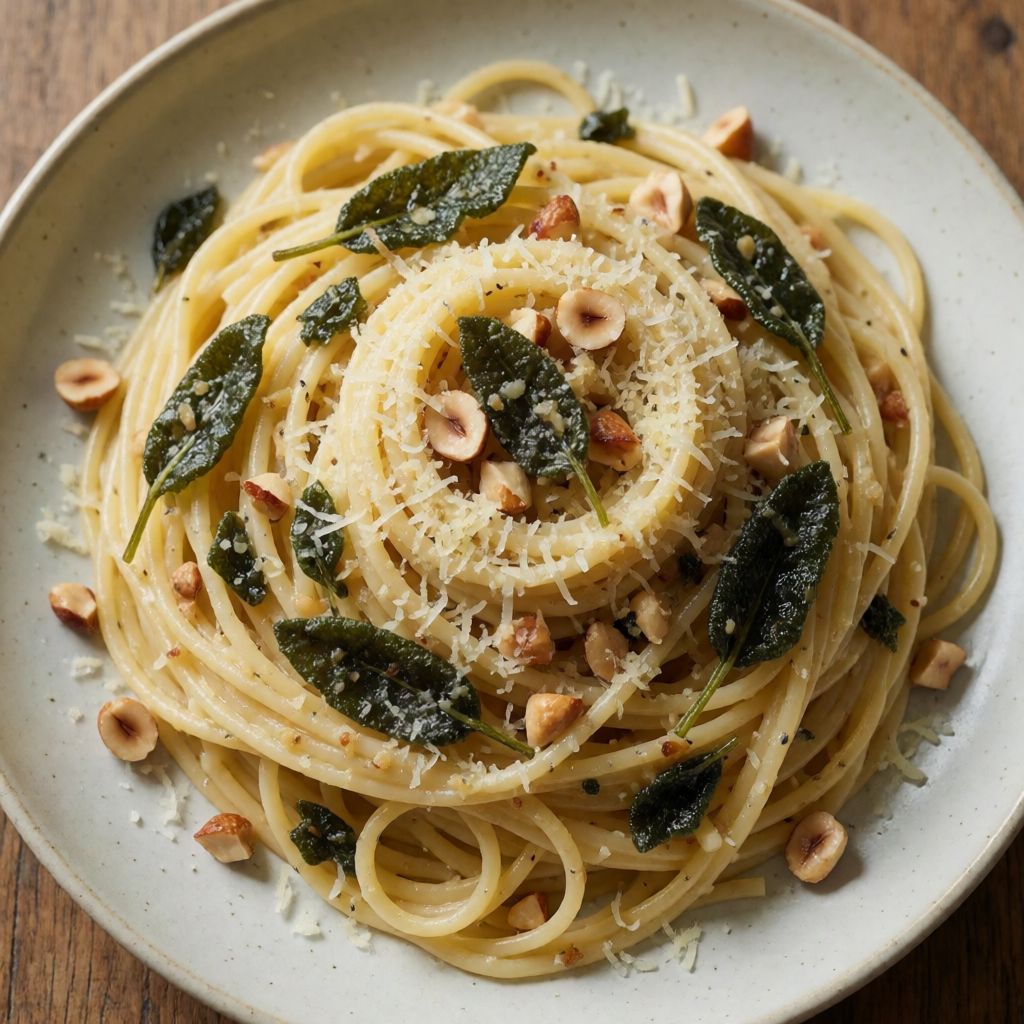
 AI photo
Hazelnut and Sage Pasta
A simple pasta dish with toasted hazelnuts, sage and parmesan.
Labels are worked out automatically from the ingredients and can be wrong. Check the packaging if it matters to you.
Ingredients







Steps
Cook the pasta in lightly salted water until just shy of al dente, while preparing the rest of the dish.
Toast the hazelnuts in a dry pan until the skins start to crack, then tip them onto a clean cloth and rub to remove the skins, before chopping them finely.
Melt the butter in a pan with the sage and garlic over medium-low heat. Let it sit so the flavours develop, until the pasta is almost ready.
Add some of the pasta cooking water to the pan. Drain the rest of the water from the pasta and add the pasta to the pan along with the fresh parmesan.
Mix well with the chopped hazelnuts. Season with freshly ground black pepper on top and sprinkle with freshly grated parmesan.
This is not a sauce you pour over pasta — it's a sauce you build in the same pan the pasta lands in, out of three things that have no business making a sauce on their own: a spoon of butter, the water the pasta boiled in, and grated cheese. The butter carries sage and garlic as flavour, not as bulk. The pasta water carries starch, which is what lets fat and cheese hang together instead of splitting into grease and grit. Toasted hazelnuts give the only texture in the whole dish — everything else is soft, so they have to do the crunching.
What decides whether this works is heat control at three separate moments, and none of them is "medium heat" — that phrase tells you nothing about what's happening in the pan. First: toasting the hazelnuts just long enough that the skins crack and lift, no further — push past that and the oil inside the nut turns, and bitterness replaces nuttiness. Second: the butter with sage and garlic sits over gentle heat so the garlic releases its flavour into the fat slowly; let it colour and you've traded sweetness for the sharp, scorched bitterness garlic gets the moment it browns too fast. Third: the cheese goes in off the worst of the heat, folded through rather than fried — parmesan is a protein, and protein seized by too much heat seizes into rubbery threads instead of melting into the sauce.
Pasta: anything short with some grip — a ridge, a twist, a hollow — holds a loose, buttery sauce far better than a smooth long strand, which the sauce just slides off. 400 g for four people is the ordinary 100 g-a-head measure; don't be tempted to cook it fully before it meets the pan, for the reason above.
The 100 ml of water isn't an ingredient you buy — it's the pasta's own cooking water, saved before you drain, and it's doing the actual thickening. Starch leaches out of pasta as it boils; that starchy water, worked into fat and cheese, is what turns three separate things into one coating sauce instead of a slick on top of dry noodles. This is also most of why Italian kitchens never throw that water straight down the sink — habit looks like superstition until you know the mechanism.
Hazelnuts: buy them whole and skin-on if you can, toast them yourself, and rub the skins off in a cloth while they're still warm — the skin is bitter and tannic, the reason pre-peeled "blanched" hazelnuts taste gentler but flatter. No hazelnuts in the cupboard: walnuts will do the same job of giving crunch and a faint bitterness that plays against the butter, though they won't taste the same.
Parmesan: grate it yourself, from a block, right before it goes in. The tubs of ready-grated cheese are cut with anti-caking starch so the shreds don't fuse in the packet — the same coating stops it melting smoothly in a hot pan, which is why it clumps instead of binding. If you've only got a mild hard cheese, use it, but expect a flatter, less salty result; parmesan's sharpness is doing real work here, not just flavour decoration.
Sage: fresh leaves only — dried sage is a different, dustier, more medicinal thing, closer to what you'd put near a Sunday roast than near butter and nuts. Five leaves for four people isn't much because the point is aroma in the fat, not a mouthful of leaf. Garlic goes in finely chopped rather than crushed, so it releases flavour steadily into the butter rather than dumping it all at once and burning at the edges.
Butter: unsalted if you have it, so you control the salt yourself rather than guessing how salty the butter already is. It's there for richness and as the medium the sage and garlic infuse into — one tablespoon is not trying to be a sauce on its own. If you need to avoid dairy, use any oil with no smell of its own — a neutral vegetable or light olive oil — knowing you'll lose the roundness butter gives and gain nothing in its place. Salt the pasta water properly, since that's the only seasoning the pasta itself ever gets; pepper, grind it fresh at the end, because pre-ground pepper has already lost most of the oils that make it smell like pepper rather than just taste hot.