
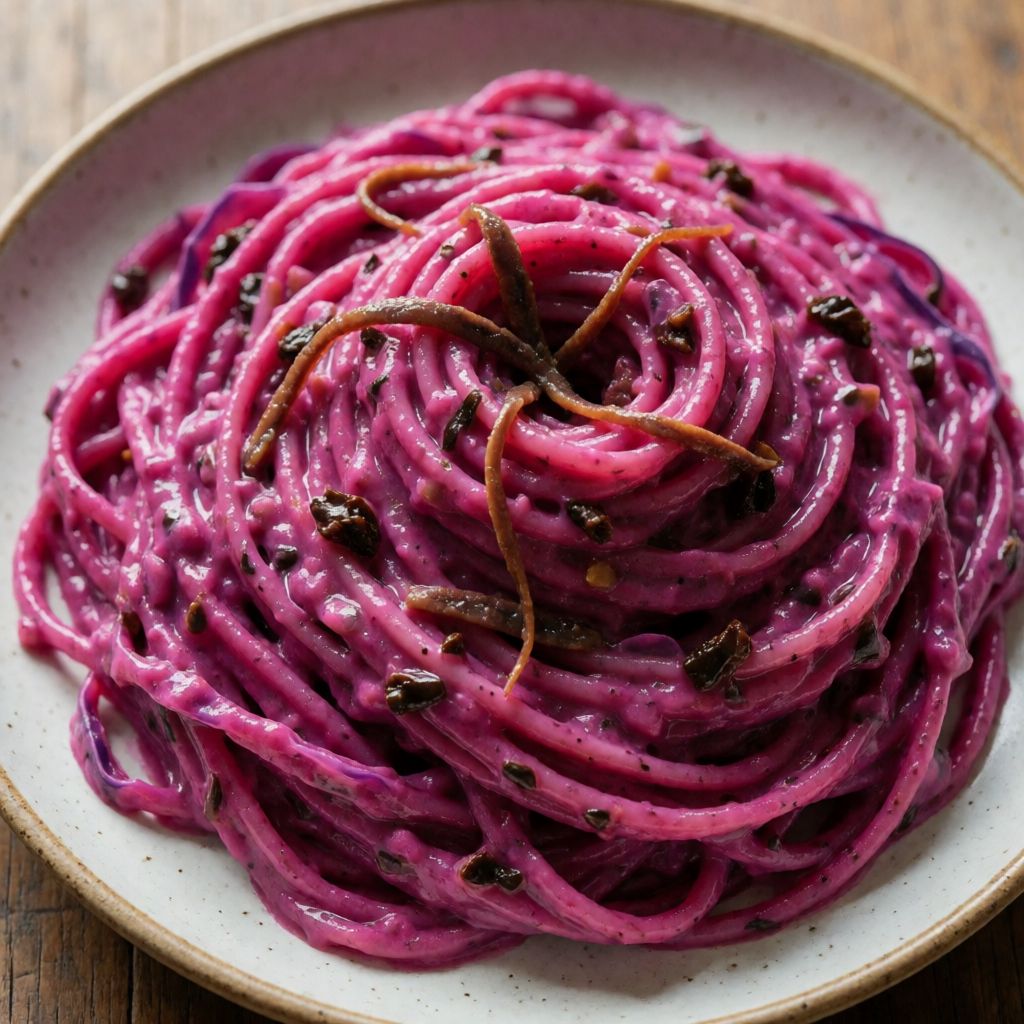
 AI photo
Pasta with Red Cabbage Cream
A creamy red cabbage sauce coats pasta, finished with anchovies, chilli and crispy breadcrumbs.
Labels are worked out automatically from the ingredients and can be wrong. Check the packaging if it matters to you.
Ingredients
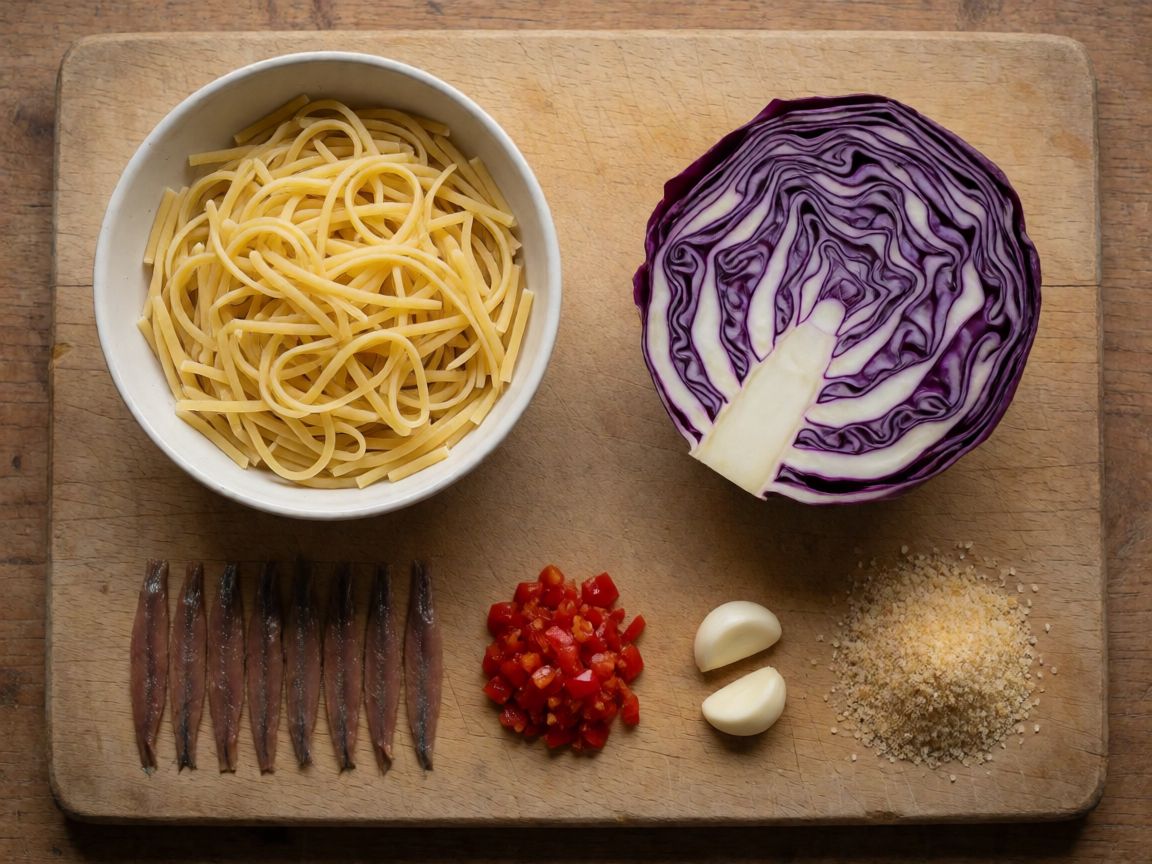
- 400 g Pasta
- 0.5 pcs Red cabbage
- 8 pcs Anchovies
- 1 pcs Chilli pepper
- 2 clove Garlic
- Olive oil to taste
- Salt to taste
- Black pepper to taste
- Breadcrumbs to taste, dried









Steps
Wash the red cabbage, cut it in half, and remove the outer leaves and the white central rib. Finely shred half of it into thin strips.
Heat the olive oil in a frying pan, fry the cabbage over high heat for a few minutes, then add water, cover and cook.
15 minTransfer the cabbage to a bowl, pour more olive oil into the pan, add the chopped garlic and anchovies, and fry briefly.
Add the cabbage back in, mix well, season with salt, and add the sliced chilli pepper.
Bring a pot of water to the boil, add salt, and cook the pasta according to the time on the packet.
Transfer the cabbage with the anchovies to a blender and blitz until creamy, adding a little water if needed.
Drain the pasta, toss it with the cream, and season with black pepper.
Toast the breadcrumbs in a frying pan and sprinkle them over the pasta before serving.
This isn't a cabbage side dish parked next to pasta — it's a cream. The cabbage is cooked down until it gives up its crunch entirely, anchovies melt into it until you can't find a trace of fish, and the whole thing becomes a sauce that coats the pasta the way a ragù would. What decides whether it works is almost entirely in how the cabbage is treated before the water goes in.
Start with the sear. Hot oil, high heat, cabbage in for a few minutes before any water touches the pan — that step caramelises the cut edges and locks in sweetness. Skip it and go straight to water and a lid, and you get exactly what every British Sunday table has taught people to fear: grey, sulphurous, boiled cabbage. The smell people associate with overcooked cabbage isn't cabbage's fault, it's a pan that never got hot enough before the steam took over. Here the sear comes first on purpose, so the steaming that follows is finishing a job already half done, not doing all the work itself.
The anchovies are not there to taste of fish. They're there to vanish. Fried briefly in oil with the garlic, they break down into the fat — by the time you blend, there should be nothing left that looks like a fillet, only a savoury backbone holding up the sweetness of the cabbage. If you can identify a piece of anchovy in the finished cream, it didn't cook long enough or hot enough before it went in.
Half a red cabbage for four people is generous, and that's deliberate — cabbage shrinks hard once it loses its structure, so you need more raw bulk than it looks like you'll need. Red cabbage specifically, not white, because its tighter leaves carry more sugar for that first high-heat sear to work with, and because the colour is the whole point visually. Swap in white cabbage and you'll get a pale, flatter version of the same idea — edible, but you're not making this dish anymore, you're making a different one with the same method. One small chemistry note, since red cabbage is famous for it: its colour shifts with pH, pink in acid, dull blue-grey in anything alkaline, including hard tap water. Nothing in this recipe adds acid, so don't be alarmed if the cream leans more purple-brown than postcard-pink — that's the cabbage behaving normally, not a mistake you made.
Anchovies here are doing the job cheese usually does in a lot of pasta sauces — rounding out the salt, adding a savoury weight without announcing themselves. There's an old rule in Italian kitchens against putting cheese on fish dishes, and people treat it like superstition. It isn't. A sharp, hard cheese would fight the delicate, half-dissolved salt of the anchovies instead of supporting it — that's the actual reason, not magic, not tradition for its own sake. Anchovies themselves are a pantry habit born of economics: salted, oil-preserved fish keeps for months, costs little, and was a reliable source of savoury depth in coastal kitchens where meat was expensive and fresh fish didn't always keep. If you've genuinely got none, look for the same job done by something else salty and self-dissolving — a spoon of fish sauce, or a mashed caper-and-olive paste, will get you partway there, though neither disappears into the dish quite as cleanly.
Garlic and chilli are the counterweight to all that sweetness the cabbage is building. The criterion for the chilli isn't a type, it's a clean burn with no bitterness behind it — taste a sliver before it goes in, because old, stale chilli can taste dusty rather than hot, and no amount of it will fix that, it'll just make the dish taste of dust more loudly.
The breadcrumbs are not a garnish, they're a texture decision. Once the sauce is a smooth cream, the dish needs one contrasting bite or it reads as monotonous no matter how good the flavour is — that's what the breadcrumbs are for, toasted in oil in a dry pan until golden, not just scattered raw and pale. Golden means they've picked up some fat and crisped; black means the pan ran too hot too fast and they'll taste burnt rather than toasted, which is the one real way to ruin this step.
Olive oil appears twice and "to taste" really does mean what it says here — enough each time to coat the base of the pan in a thin layer, not a pool. Any oil with no flavour of its own strong enough to compete with the cabbage will do the job if you've no olive oil to hand; it just won't carry quite the same background note.
On kit: nobody needs a kazan for this, a wide frying pan is exactly right and does the sear-then-steam job the recipe wants. If your lid doesn't fit, a plate set on top will hold the steam in well enough for fifteen minutes of covered cooking — treat that fifteen as a floor, not a target. The cabbage is done when the ribbons go properly limp, bending rather than holding any shape at all; if they still have spring in them, they haven't finished becoming the thing you're about to blend, and more time in the pan costs you nothing but patience, which is the one ingredient this recipe doesn't list but absolutely requires.