
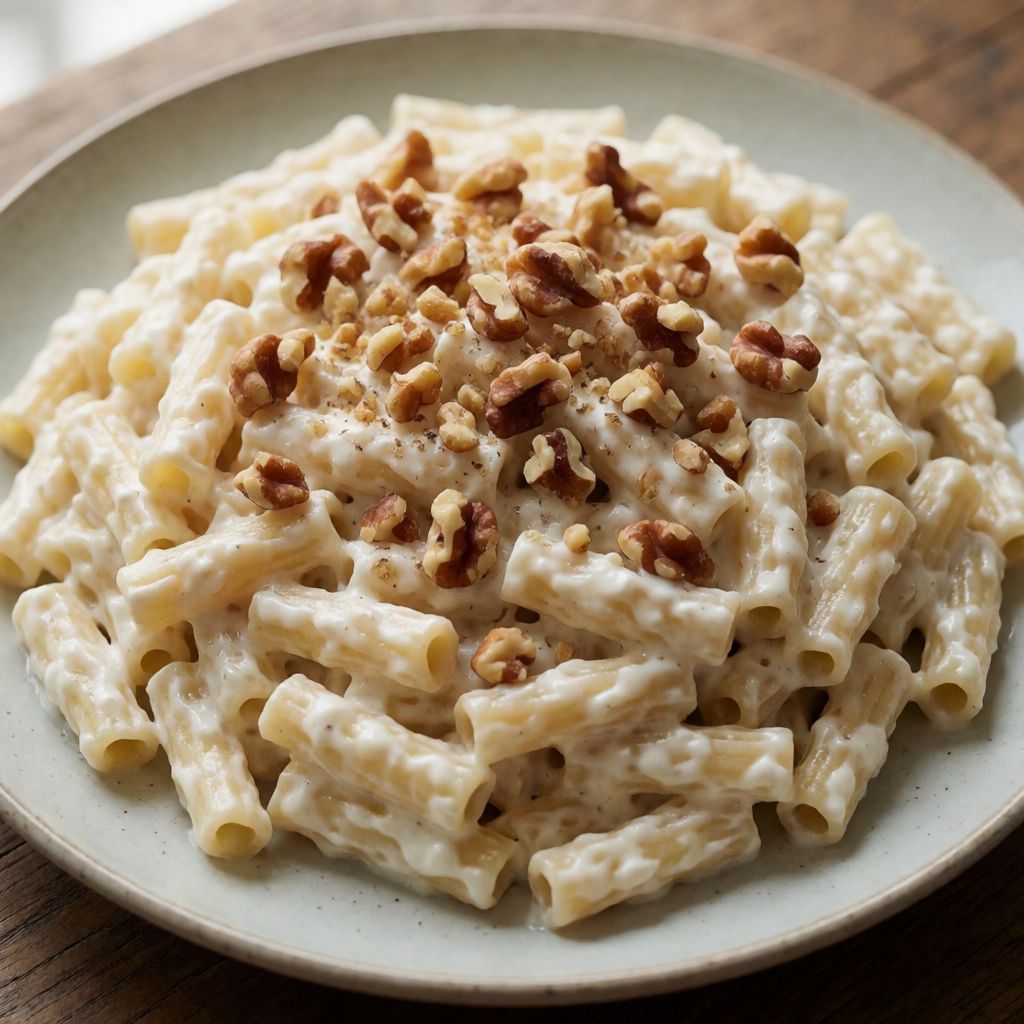
 AI photo
Pasta with Ricotta and Walnuts
A quick pasta tossed with creamy ricotta and crunchy walnuts.
Labels are worked out automatically from the ingredients and can be wrong. Check the packaging if it matters to you.
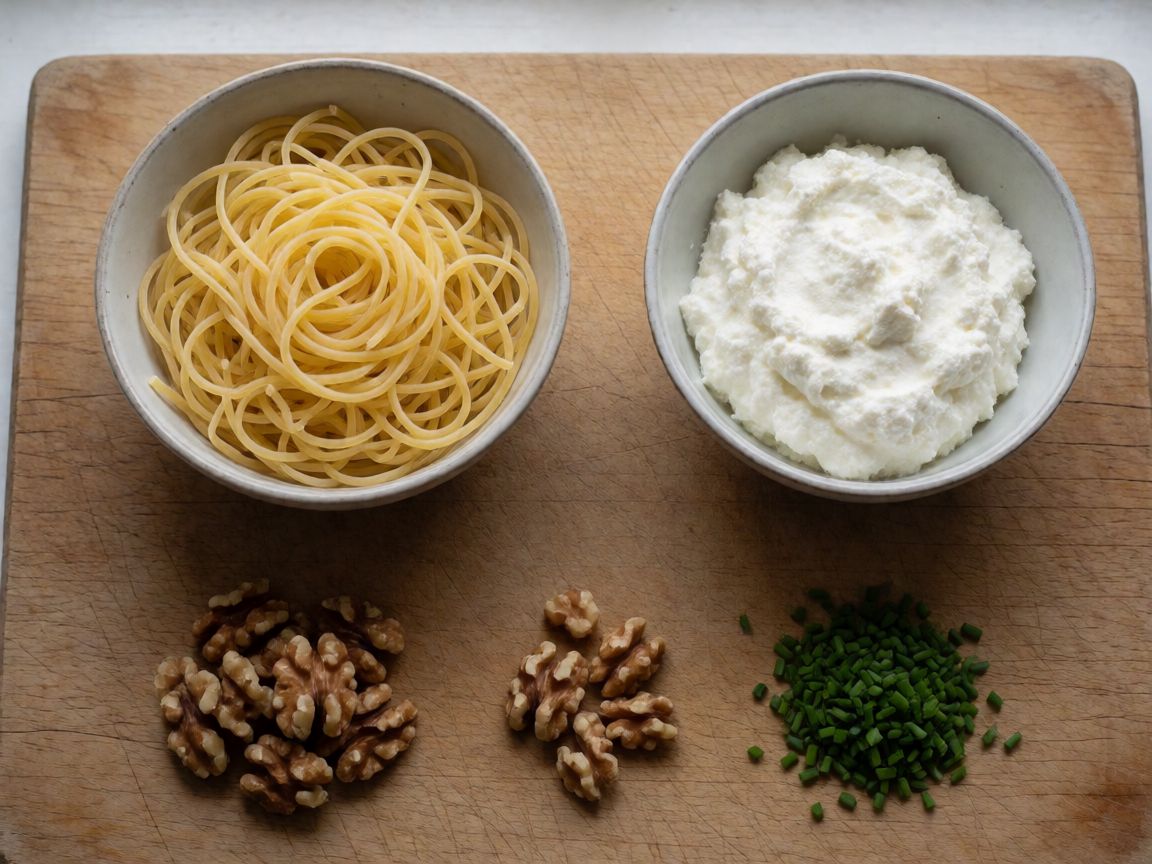
Ingredients







Steps
Heat the olive oil in a non-stick pan, add the ricotta, and cook the pasta in salted water.
5 minCook gently, stirring the ricotta and loosening it with a little pasta water, then season with salt and pepper.
5 minRoughly chop the walnuts and stir most of them into the ricotta, mixing well.
3 minDrain the pasta and tip it into the pan with the ricotta sauce, tossing to coat.
2 minPlate up and garnish with chives and the remaining chopped walnuts.
2 min
This isn't a sauce you cook — it's a curd you talk into behaving like one. Ricotta has no stretch, no casein net the way mozzarella does, so it will never "melt" onto the pasta the way people expect cheese to. Warm it and it just loosens at the edges, grain by grain, and the loosening only becomes creamy once you give it fat and starchy water to hold onto. That's the whole mechanism of this dish: emulsion, not melting.
Some say ricotta is a soft cheese so treat it like a sauce from the start, straight into a hot pan — no. Push the heat and the curd does what overcooked egg does: it tightens, squeaks between your teeth, and throws off water instead of taking it in. Gentle heat here isn't a style choice, it's the only way the protein stays loose enough to accept the pasta water you're about to feed it.
What decides whether this works is pace, not time. You loosen the ricotta a little at a time with pasta water — starchy, salted, warm — until it coats a spoon instead of sitting in it like cottage cheese. Rush that and you get wet lumps around dry pasta; go too hard on the heat and you get a pan with a scorched crust on the bottom, because curd catches on metal the way milk catches on a saucepan, and a scorched patch tastes of burnt milk in every forkful even if you scrape round it. That's why a non-stick pan earns its place here — not fashion, just less for the ricotta to grab onto.
Pick ricotta by how wet it looks in the tub, not by brand. The fresh, drier kind from a deli case needs more pasta water to loosen — it's basically curd with less whey left in it. Supermarket tub ricotta is already closer to a spread, wetter, so it needs less persuading and you'll add water more cautiously or you'll thin it past the point of coating anything. If you can't get ricotta at all, full-fat cottage cheese blitzed smooth, or mascarpone cut with a splash of milk, will behave close enough — the thing you're protecting either way is a soft curd with no stretch, not a flavour.
Pasta shape matters more than people admit for a sauce this heavy. Something with ridges or a hollow — penne, fusilli, orecchiette — gives the curd somewhere to sit; a smooth strand like spaghetti will just wear it as a coat and most of it ends up in the bottom of the bowl. Use what you've got, but know that's the trade-off.
Walnuts here do a job, not a garnish: bitterness and crunch cutting through something that's otherwise soft all the way through. Taste one before you chop — rancid walnuts taste of damp cardboard, and no amount of pepper fixes that, so if yours have been in the cupboard since last Christmas, bin them and use almonds or hazelnuts instead, roughly chopped, roughly bitter, same job. Splitting them — most into the sauce, a few saved for the top — means you get crunch in the mouthful instead of crunch only on the first bite.
Olive oil is doing almost all the fat work alongside the ricotta, so this is not the dish to use up a neutral bottle for drizzling later. Use one that still smells of itself — any oil with real character, olive or otherwise, as long as it isn't flavourless — because with four ingredients doing the talking, a bland oil just goes quiet and leaves the dish flatter than it should be.
Salt the pasta water properly, coarse salt dissolved before the pasta goes in, not sprinkled on after — that water is also your sauce-loosening liquid later, so its seasoning carries straight through to the ricotta. Chives at the end aren't decoration either: a sharp green bite against all that richness. No chives, use the green tops of a spring onion, finely cut — same cold, grassy snap.
The only ingredient missing from the list that this dish actually needs is patience at the loosening stage. Add the pasta water a spoonful at a time, stir, look at the pan, add more. It's two minutes you can't skip by turning up the heat — turning up the heat just gets you grains again, and you're back where you started.