
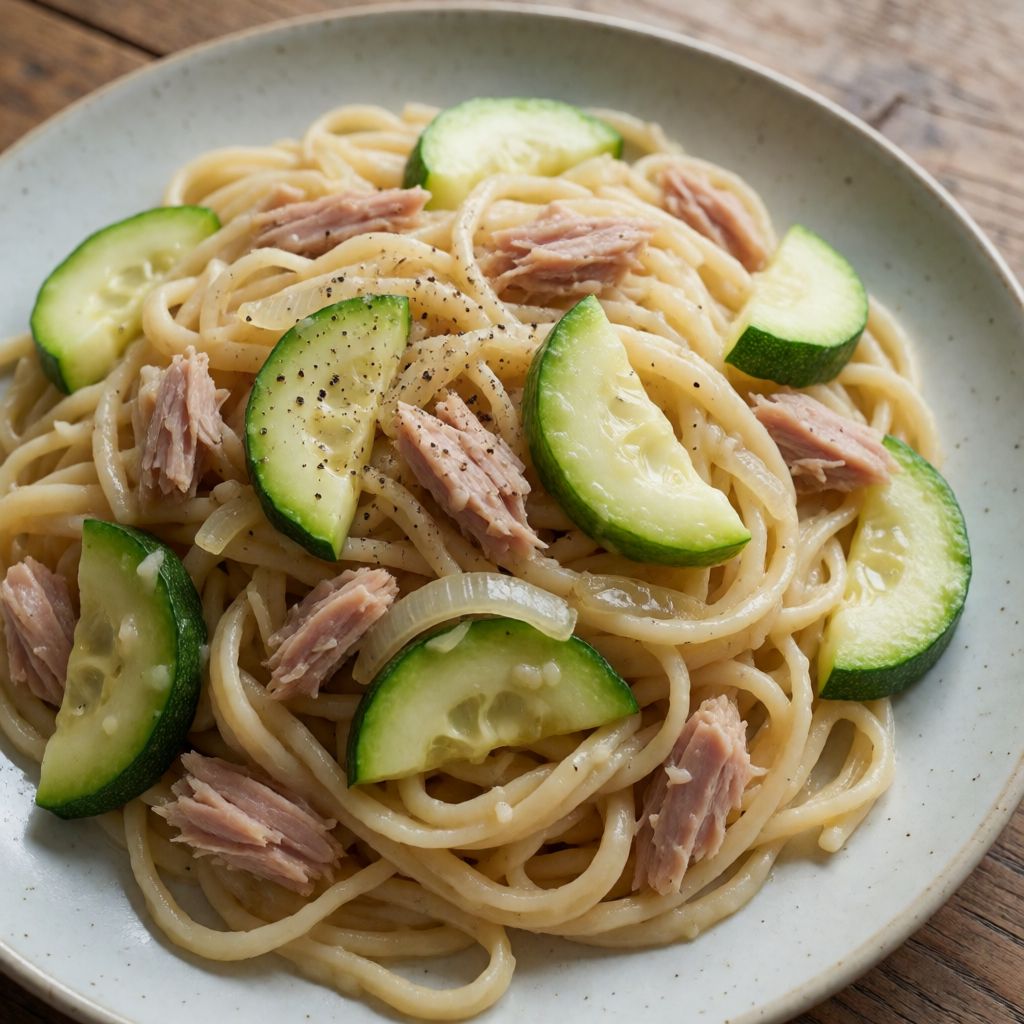
 AI photo
Pasta with Courgette and Tuna
A quick pasta dish with courgette, tuna and cream, ready in under half an hour.
Labels are worked out automatically from the ingredients and can be wrong. Check the packaging if it matters to you.
Ingredients
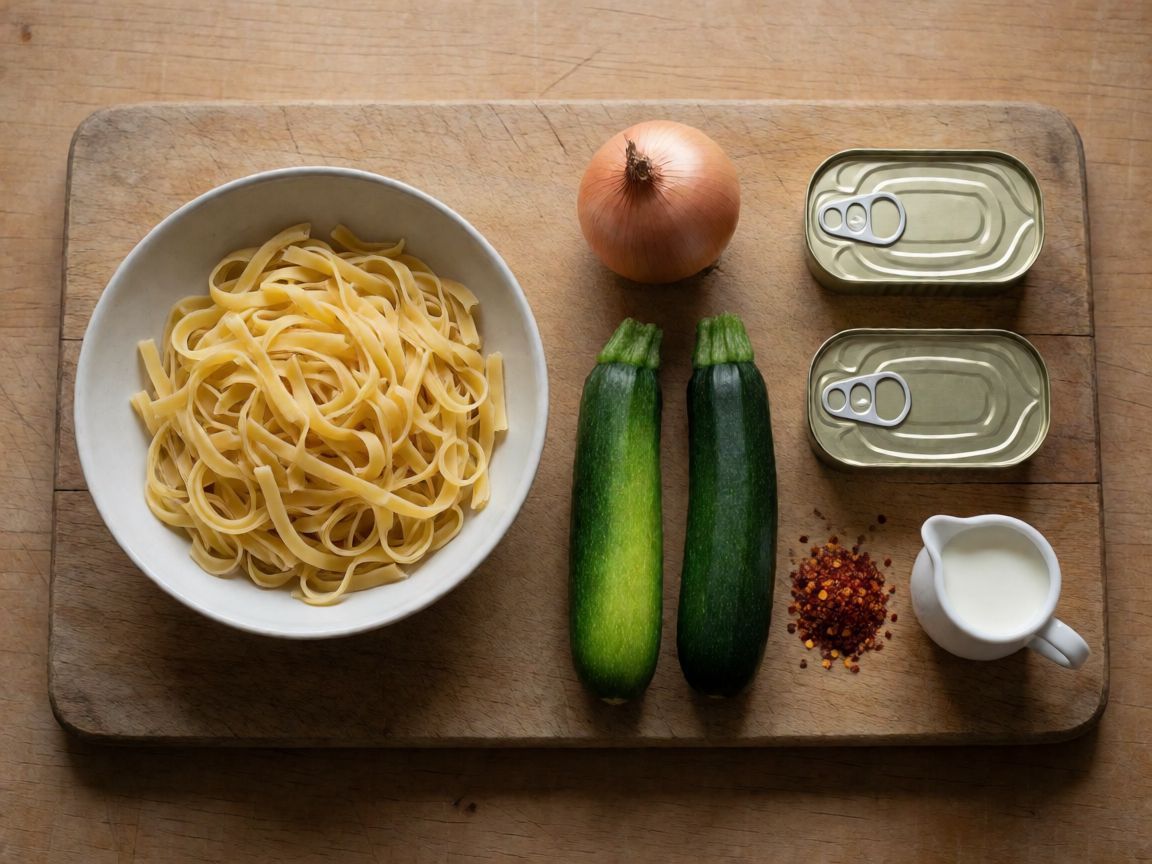
- 180 g Pasta
- 1 pcs Onion
- 2 pcs Courgette
- 2 can Tinned Tuna in spring water
- Salt to taste
- Black pepper to taste
- Chilli flakes to taste
- 1 package Double cream








Steps
Fry the onion with the grated courgette.
Once the vegetables are soft, stir in the drained tinned tuna.
Fry everything together for 2–3 minutes, seasoning with salt, black pepper and chilli flakes to taste.
3 minTake off the heat and stir in the double cream.
Add the cooked pasta to the pan and warm it through briefly with the sauce.
This is a weekday compromise dish, not a showpiece — built from three things that are either already cooked, nearly cooked, or need no cooking at all: tinned tuna (done the moment the can was sealed), grated courgette (fast once it meets heat), and cream (none at all). That's why the whole pan job takes twenty-odd minutes and feeds two off one wide pan and one pot of water for the pasta — nothing here wants a long simmer.
What decides whether it works is the courgette's water. Grate it, don't dice it — grating breaks open far more of the vegetable's cell walls at once, so the water it's holding comes out fast and has time to cook off while there's still bite left in the shreds. Dice it instead, or crowd the pan so it steams rather than fries, and you get a thin, watery, bland base no amount of cream will fix afterwards.
Some say fry the tuna a good while longer, to "cook it properly." No — because tinned tuna is already cooked; canning is itself a heat process, done at the factory under pressure. Give it much more than two or three minutes in the pan and you're not cooking it, you're drying it, and it goes stringy. That short time in the pan is there so the fish can pick up the fat and chilli already in there, nothing more.
Onion first, because it's the only thing here that benefits from a slow start — cook it until it turns from pale and sharp to soft and faintly translucent, not brown. This isn't a dish built on deep caramelisation; a few minutes of gentle colour change is the job, giving a mild sweetness to sit under the fish rather than compete with it. Any mild allium does this: a standard onion, a couple of banana shallots, even a finely sliced leek if that's what's open in the fridge.
Courgette is mostly water held inside cell walls, and that's the entire story of this vegetable in a hot pan. Grating ruptures far more of those walls in one go than slicing does, which is why the water runs out quickly rather than slowly, and why the flesh keeps some texture instead of collapsing into mush waiting for the moisture to find its way out of a chunk. Use the coarse side of a box grater, or a food processor's grating disc if you've got one; no grater at all, slice it as thin as your knife allows and expect the softening stage to take a little longer. Courgette carries almost no flavour of its own — that's not a flaw here, it's the point. It's bulk and bite, the sauce's volume, not its taste.
Use tuna tinned in spring water rather than oil, because that lean fish leaves exactly one fat doing the flavour-carrying work later — the cream. Oil-packed tuna arrives already carrying fat, and that fat would be competing with the cream rather than letting it do its job cleanly. Drain the tin properly before it goes in the pan, or you're adding brine-flavoured water to the sauce before the cream's even arrived. If oil-packed is what's in the cupboard, drain it the same way and go a shade lighter on the cream, since there's already fat in the dish that wasn't there in the recipe as written.
Double cream is specified, not chosen out of habit, because its fat content is high enough to survive the reheating stage without splitting the way single cream or milk would. If what's in the fridge is crème fraîche, or even a thick full-fat yoghurt, it'll work, but add it further off the heat still, and don't let the pan go anywhere near a flame again after that. Leaner dairy breaks faster and gives you a grainy sauce with no way back.
Cook the pasta on its own, in its own pot of well-salted boiling water — not in the sauce, and not in the same pan. A domestic frying pan simply can't hold enough water to cook pasta evenly while also doing duty as a sauté pan for onion, courgette and tuna; that's a kazan trick, not a Sunday-hob one. Before you drain it, take out a cupful of that cloudy pasta water and keep it by the stove. It isn't listed in the ingredients because it isn't an ingredient so much as insurance — if the sauce looks tight once the pasta goes in, a splash loosens it without watering down the taste, since what you're adding back is starch, not plain water.
Salt goes in carefully and late, because the tin of tuna has already salted itself in brine before it ever reached your kitchen. Taste before you reach for more. Chilli flakes and black pepper are a matter of what the eaters at your table can stand, so add them in stages and taste again — there's no fixing an oversalted or over-chillied pan, only diluting it, and dilution here means more cream or more pasta than you'd planned for. The patience this dish asks for isn't about long cooking at all; it's about not rushing the courgette's water out and not letting the cream anywhere near a hot pan. Everything in it arrives nearly ready — your job is the order you do things in, not how long you stand over them.